Ferrous Sulphate and Phosphate Removal: Understanding the Treatment Chemistry
A deep dive into the reaction chemistry of phosphate removal using ferrous sulphate. Understand precipitation kinetics, Fe:P stoichiometric molar ratios, simultaneous dosing in aeration basins, and sludge generation.
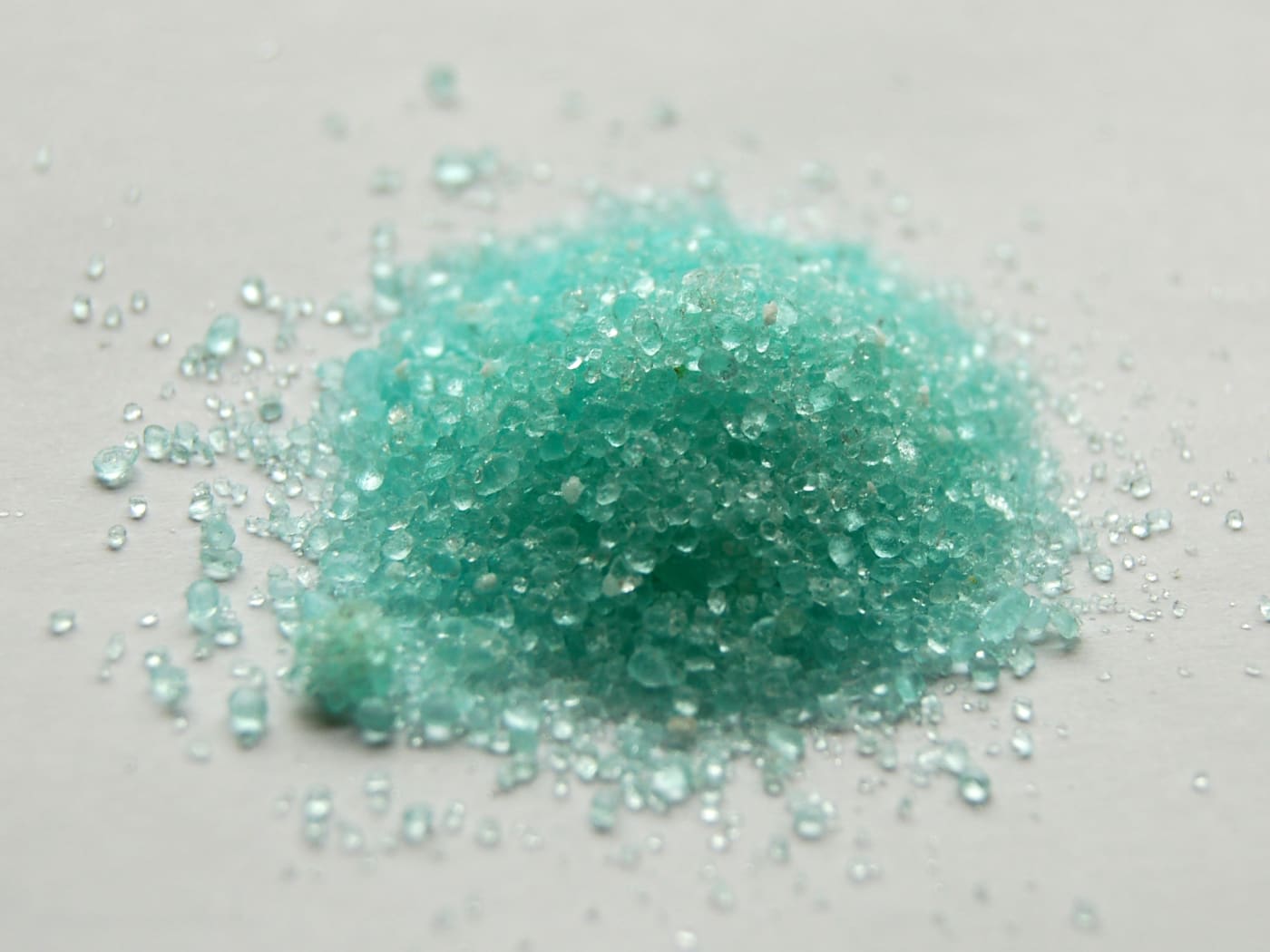
Crystalline structure of Ferrous Sulphate Heptahydrate (FeSO₄·7H₂O), CAS 7782-63-0.
Quick Answer — Ferrous Sulphate and Phosphate Removal: Understanding the Treatment Chemistry
Phosphate removal with ferrous sulphate occurs through chemical precipitation. In anaerobic or anoxic zones, Fe2+ reacts directly with orthophosphate (PO4 3-) to precipitate vivianite [Fe3(PO4)2·8H2O]. In aerobic zones, Fe2+ rapidly oxidizes to Fe3+, forming insoluble ferric phosphate (FePO4) and ferric hydroxide flocs that adsorb additional phosphorus. While the theoretical stoichiometric Fe:P molar ratio is 1:1, practical wastewater matrices require 1.5:1 to 2.5:1 to achieve discharge standards below 1.0 mg/L total phosphorus.
1. The Environmental Challenge of Phosphorus in East Africa
Phosphorus is the primary limiting nutrient controlling algal blooms and eutrophication in freshwater ecosystems across East Africa, including Lake Victoria, Lake Naivasha, and the Athi River basin. Municipal sewage, agricultural run-off, beverage manufacturing, and textile effluent discharge elevated levels of dissolved orthophosphates.
Environmental standards enforced by regional authorities (such as Kenya's NEMA) mandate strict discharge ceilings for Total Phosphorus (typically < 2.0 mg/L for municipal sewers and < 1.0 mg/L for direct water bodies). Chemical precipitation with iron salts remains the most cost-effective technique to achieve compliance.
2. Chemical Precipitation Pathways: Vivianite and Ferric Phosphate
The behaviour of ferrous iron (Fe²⁺) in phosphorus precipitation depends heavily on the dissolved oxygen status of the reaction basin:
Pathway A: Anaerobic / Anoxic Precipitation (Vivianite Formation)
In anaerobic zones or anaerobic sludge digesters, Fe²⁺ reacts directly with orthophosphate without oxidation, precipitating crystalline vivianite:
3Fe²⁺ + 2PO₄³⁻ + 8H₂O → Fe₃(PO₄)₂·8H₂O(s) ↓
Vivianite precipitation offers a dual benefit: it locks up phosphorus permanently in sludge and suppresses corrosive hydrogen sulphide (H₂S) biogas production by simultaneously precipitating insoluble ferrous sulphide (FeS).
Pathway B: Aerobic Precipitation (Oxidation to Ferric Phosphate)
When ferrous sulphate is dosed into activated sludge aeration basins, dissolved oxygen rapidly oxidizes ferrous iron to ferric iron:
4Fe²⁺ + O₂ + 10H₂O → 4Fe(OH)₃(s) + 8H⁺
The oxidized ferric iron reacts instantaneously with orthophosphate to form highly insoluble ferric phosphate:
Fe³⁺ + PO₄³⁻ → FePO₄(s) ↓
Simultaneously, the co-precipitating ferric hydroxide [Fe(OH)₃] sweep floc provides an enormous surface area for surface complexation and adsorption of polyphosphates and organic phosphorus.
3. Stoichiometric vs. Real-World Dosing Ratios
On paper, the molar ratio of iron to phosphorus in FePO₄ is strictly 1:1 (corresponding to 1.80 g of Fe per 1.0 g of P). However, plant operators who dose strictly at 1:1 will consistently fail to meet phosphorus targets.
In real industrial effluent:
- Bicarbonate alkalinity competes with phosphate for iron precipitation (forming iron carbonates and hydroxides).
- Complexing organic ligands bind iron ions.
- As phosphate concentration drops below 2.0 mg/L, reaction kinetics slow down dramatically.
To achieve final total phosphorus concentrations < 1.0 mg/L, actual chemical dosing requires an Fe:P molar ratio between 1.5:1 and 2.5:1. For strict limits (< 0.5 mg/L), ratios of 2.5:1 to 3.0:1 may be necessary.
Calculate chemical requirements using certified Ferrous Sulphate Heptahydrate 98% Min specifications.
4. Selecting the Optimal Dosing Point
Plant engineers can introduce ferrous sulphate at three distinct stages in a wastewater facility:
- Pre-Precipitation (Primary Clarifier): Added to raw wastewater. Removes 50%–70% of phosphorus upfront and reduces organic load (BOD/COD) on secondary biological treatment by 25%–35%.
- Simultaneous Precipitation (Aeration Tank): Dosed directly into activated sludge basins or the aeration basin effluent channel. The vigorous aeration ensures rapid oxidation of Fe²⁺ to Fe³⁺, maximizing phosphorus removal with minimal equipment footprint.
- Post-Precipitation (Tertiary Clarification): Dosed into a tertiary rapid-mix flocculator followed by a final sand filter or lamella clarifier. Delivers the lowest final phosphorus concentrations (< 0.2 mg/L), but requires dedicated dosing tanks and chemical clarifiers.
5. Impact on Alkalinity and pH
Every mole of ferrous sulphate oxidized and precipitated consumes bicarbonate alkalinity, releasing hydrogen ions (acidity). In poorly buffered wastewater, heavy iron salt dosing can depress basin pH below 6.5, inhibiting biological nitrification bacteria. Operators must monitor alkalinity and supplement with hydrated lime or soda ash if total alkalinity falls below 50 mg/L as CaCO₃.
Review plant dosing and coagulant pairing: Ferrous Sulphate in Water Treatment: Chemistry & Dosing.
Control effluent pH and jar testing: Ferrous Sulphate for Industrial Effluent: Process Control.
Article Frequently Asked Questions
Chemicals Mentioned in This Guide

Ferrous Sulfate Heptahydrate 98% Min
Ferrous Sulphate Heptahydrate 98% Min (FeSO₄·7H₂O, CAS 7782-63-0) is an industrial-grade iron(II) salt supplied in 25…
CAS 7782-63-0 · Industrial Grade · Crystal

ABS/LAS 80% for Industrial Use (ABS/LAS)
ABS/LAS (80%) supplied by Kiki's Industrial Chemicals Ltd in 25kg bags across Kenya and East Africa.
Technical Grade · Powder

ATMP (50%)
ATMP (50%) supplied by Kiki's Industrial Chemicals Ltd in 200kg drum. Ideal for Water treatment chemicals.
50% · Standard Packaging

ATMP 50% for Industrial Use (ATMP)
ATMP (50%) supplied by Kiki's Industrial Chemicals Ltd in 200kg drums across Kenya and East Africa.
Technical Grade · Liquid
Related Technical Guides & Insights
View all →Ferrous Sulphate vs Ferric Chloride for Water Treatment
A technical comparison of Ferrous Sulphate and Ferric Chloride in municipal and industrial water treatment. Analyze corrosivity, concrete protection, sludge settling, and costs.
Product OverviewsFerrous Sulphate vs Ferric Sulphate: Understanding the Chemistry
A comparative guide exploring iron(II) vs iron(III) chemistry. Understand oxidation states, coagulation mechanisms, floc dynamics, and cost trade-offs.
Water TreatmentFerrous Sulphate for Wastewater Treatment: Chemistry, Applications and Procurement
How industrial effluent plants in East Africa utilize Ferrous Sulphate for decolorization, Fenton oxidation, sulfide odour abatement, and chromium reduction.