Ferrous Sulphate vs Ferric Chloride for Water Treatment
A technical comparison of Ferrous Sulphate and Ferric Chloride in municipal and industrial water treatment. Analyze corrosivity, concrete protection, sludge settling, and costs.
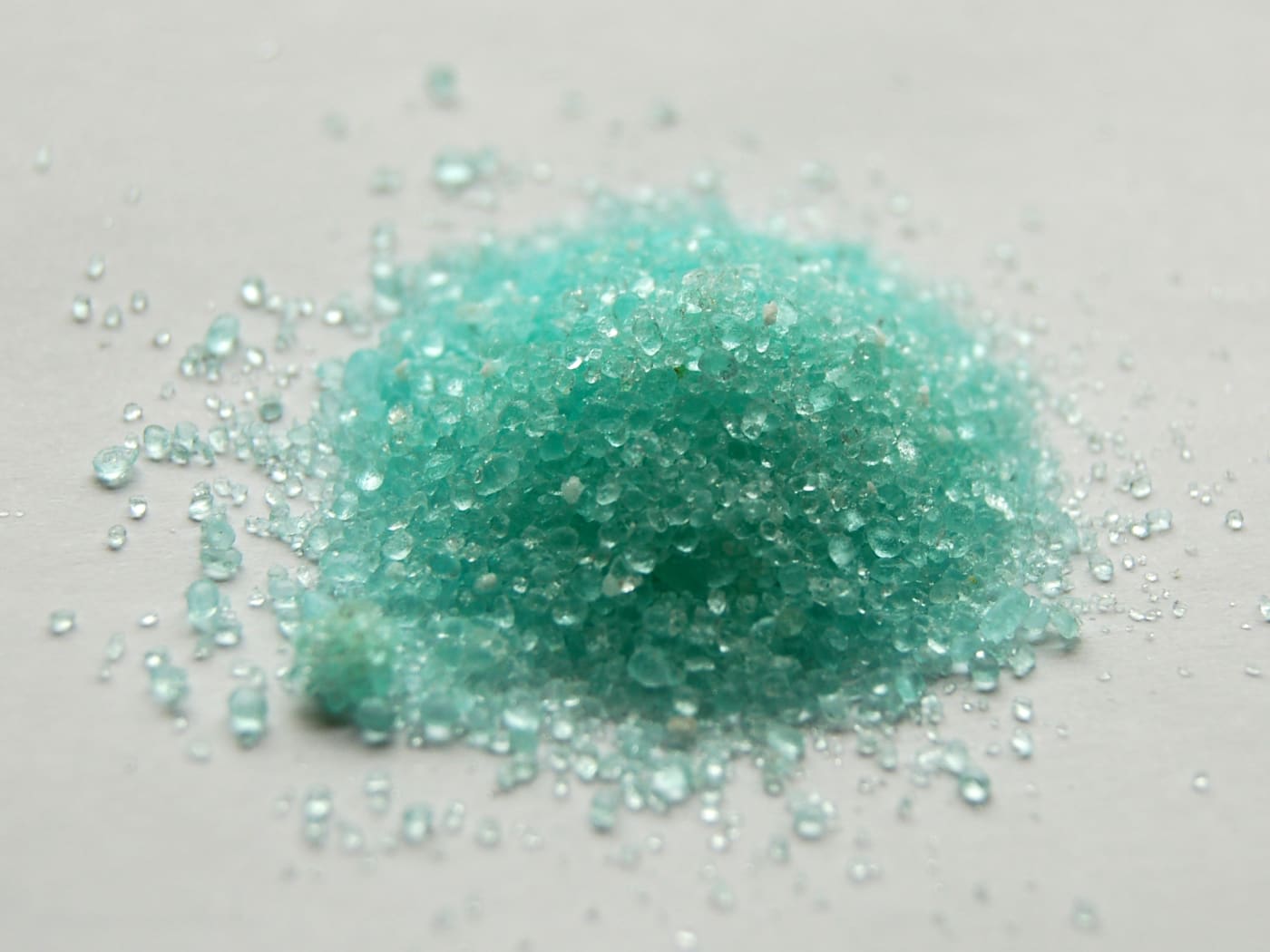
Crystalline structure of Ferrous Sulphate Heptahydrate (FeSO₄·7H₂O), CAS 7782-63-0.
Quick Answer — Ferrous Sulphate vs Ferric Chloride for Water Treatment
While Ferric Chloride (FeCl₃) is an aggressive, fast-acting trivalent coagulant, it introduces high chloride concentrations that cause pitting corrosion on stainless steel and accelerate concrete sewer degradation. Ferrous Sulphate Heptahydrate provides a non-chloride alternative that is safer to handle in dry 25 kg bags, significantly less corrosive to plant infrastructure, and more economical for large-scale phosphate precipitation and Fenton oxidation.
A comparative chemical engineering evaluation examining coagulant efficacy, infrastructure corrosion risks, and logistics safety between iron sulfate and iron chloride.
Key Facts
- •Ferric chloride introduces corrosive chloride ions (Cl⁻) that attack concrete and stainless steel.
- •Ferrous sulphate supplies sulfate anions (SO₄²⁻), avoiding chloride-induced pitting.
- •Ferric chloride is typically handled as a dangerous fuming liquid (Class 8 corrosive).
- •Ferrous sulphate is supplied as stable crystalline solid sacks with lower transport hazard classifications.
Primary Use Cases
The Two Dominant Iron Salts in Modern Water Treatment
When consulting engineers design coagulation and effluent treatment flowsheets in East Africa, the choice often narrows to two iron-based chemistries: Ferrous Sulphate and Ferric Chloride. Both provide effective turbidity removal, sludge conditioning, and phosphorus precipitation, but their operational consequences on plant infrastructure and safety differ markedly.
KIKI'S supplies Ferrous Sulphate Heptahydrate 98% Min as the preferred infrastructure-friendly coagulant across Kenyan manufacturing operations.
The Chloride Threat: Concrete Degradation and Metal Pitting
Ferric chloride (FeCl₃) releases three chloride ions (Cl⁻) for every iron ion. In wastewater collection basins, clarifiers, and downstream piping, high chloride levels penetrate concrete, depassivating reinforcing rebar and initiating severe spalling. Furthermore, chlorides cause localized pitting corrosion on 304 and 316 stainless steel dewatering presses and pipe welds.
Ferrous sulphate delivers sulfate ions rather than chlorides. In facilities where treated wastewater is recycled to cooling towers, irrigation systems, or boilers, avoiding chloride buildup is essential to protect high-value capital machinery.
Handling Safety and Hazardous Material Logistics
Commercial ferric chloride is typically shipped as a 40–43% liquid solution. It is classified under UN 2582 as a Class 8 corrosive substance. It emits pungent acidic vapors, stains skin and concrete indelibly, and requires titanium, hastelloy, or PTFE-lined dosing infrastructure. A single pipe burst presents severe workplace hazards.
Ferrous sulphate heptahydrate, by contrast, is a dry, non-fuming crystalline salt packaged in standard 25 kg bags. It is non-corrosive to dry transport equipment, easily stacked in warehouses, and safe for operators wearing standard PPE.
Process Performance Comparison
Ferric chloride forms flocs instantly across a wide pH range (4.0–10.0) without requiring aeration. Ferrous sulphate requires dissolved oxygen or alkaline pH (>7.5) to achieve full oxidation, but provides superior reduction capability for specialized industrial effluents containing chromium or refractory dyes.
Understand trivalent iron chemistry: Ferrous Sulphate vs Ferric Sulphate Chemistry.
Learn about industrial effluent treatment: Ferrous Sulphate for Wastewater & Industrial Effluent.
Article Frequently Asked Questions
Related Categories
Chemicals Mentioned in This Guide

Ferrous Sulfate Heptahydrate 98% Min
Ferrous Sulphate Heptahydrate 98% Min (FeSO₄·7H₂O, CAS 7782-63-0) is an industrial-grade iron(II) salt supplied in 25…
CAS 7782-63-0 · Industrial Grade · Crystal

ATMP (50%)
ATMP (50%) supplied by Kiki's Industrial Chemicals Ltd in 200kg drum. Ideal for Water treatment chemicals.
50% · Standard Packaging

Activated Carbon Coal / wood base for Industrial Use (Activated Carbon)
Activated Carbon (Coal / wood base) supplied by Kiki's Industrial Chemicals Ltd in 25kg bag across Kenya and East…
Technical Grade · Powder

Activated Carbon Granular / Powder (Water Purification CTC 45-60)
Activated Carbon Granular / Powder (Water Purification CTC 45-60) supplied by Kiki's Industrial Chemicals Ltd in 25kg…
Water Purification CTC 45-60 · Standard Packaging
Related Technical Guides & Insights
View all →Ferrous Sulphate vs Ferric Sulphate: Understanding the Chemistry
A comparative guide exploring iron(II) vs iron(III) chemistry. Understand oxidation states, coagulation mechanisms, floc dynamics, and cost trade-offs.
Water TreatmentFerrous Sulphate for Wastewater Treatment: Chemistry, Applications and Procurement
How industrial effluent plants in East Africa utilize Ferrous Sulphate for decolorization, Fenton oxidation, sulfide odour abatement, and chromium reduction.
Water TreatmentFerrous Sulphate in Water Treatment: What It Does and When It Makes Sense
A technical operational guide exploring the coagulation and reduction chemistry of ferrous sulphate in potable and industrial process water treatment.