Ferrous Sulphate vs Ferric Sulphate: Understanding the Chemistry
A comparative guide exploring iron(II) vs iron(III) chemistry. Understand oxidation states, coagulation mechanisms, floc dynamics, and cost trade-offs.
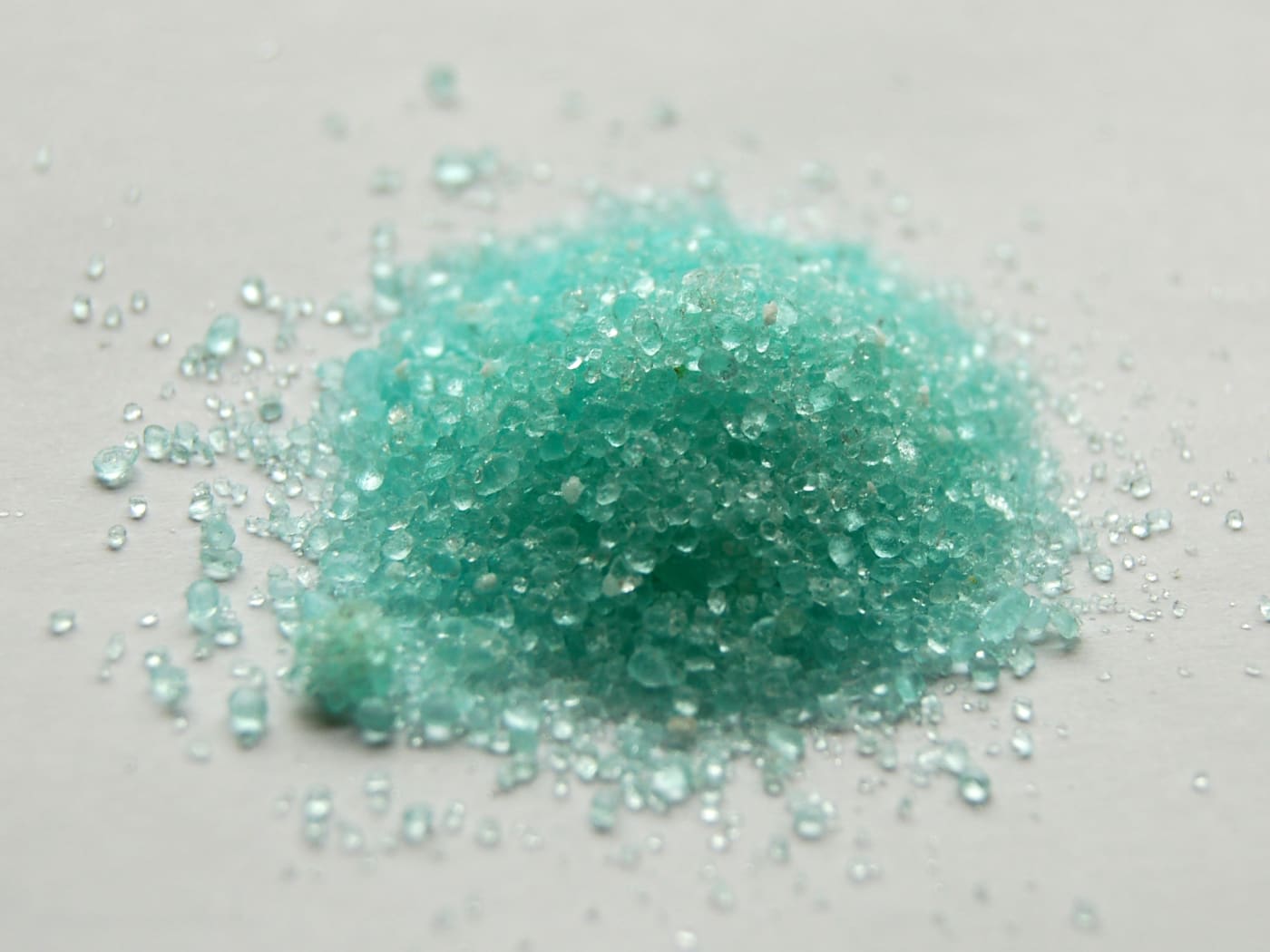
Crystalline structure of Ferrous Sulphate Heptahydrate (FeSO₄·7H₂O), CAS 7782-63-0.
Quick Answer — Ferrous Sulphate vs Ferric Sulphate: Understanding the Chemistry
The primary difference between Ferrous Sulphate (FeSO₄·7H₂O) and Ferric Sulphate (Fe₂(SO₄)₃) lies in the oxidation state of iron: ferrous is divalent (Fe²⁺) while ferric is trivalent (Fe³⁺). Ferric sulphate hydrolyzes instantaneously across a broad pH range (4.0–11.0) without requiring aeration, whereas ferrous sulphate requires dissolved oxygen or alkaline pH (>8.0) to oxidize, but offers superior reducing capacity for chromium reduction and Fenton reactions at lower raw material cost.
A technical comparative review contrasting the valence states, hydrolysis thermodynamics, and practical application boundaries of iron sulfate salts.
Key Facts
- •Ferrous contains Fe(II) (reducing agent); Ferric contains Fe(III) (oxidizing/coagulating agent).
- •Ferric sulphate forms flocs immediately upon dissolution without dissolved oxygen.
- •Ferrous sulphate is significantly more economical per ton of salt and easier to handle in crystalline dry form.
- •Ferrous sulphate is required when chemical reduction (e.g. Cr(VI) to Cr(III)) is part of treatment.
Primary Use Cases
The Fundamental Valence Distinction: Fe²⁺ vs. Fe³⁺
Iron exists primarily in two stable ionic oxidation states: divalent ferrous iron (Fe²⁺) and trivalent ferric iron (Fe³⁺). In industrial water treatment and manufacturing, both forms are widely utilized, but their reaction kinetics, pH dependencies, and functional capabilities differ fundamentally.
Our primary mineral offering, Ferrous Sulphate Heptahydrate 98% Min, delivers divalent iron engineered for applications requiring reducing power, high solubility, and cost-effective coagulation.
Coagulation Kinetics and pH Windows
Trivalent ferric iron (Fe³⁺) possesses a high positive charge density. In water, it hydrolyzes almost instantaneously, deprotonating water molecules to form insoluble poly-nuclear hydroxo-complexes across a broad pH span of 4.0 to 11.0:
Fe³⁺ + 3H₂O → Fe(OH)₃↓ + 3H⁺
In contrast, divalent ferrous iron (Fe²⁺) does not hydrolyze readily below pH 8.0 in the absence of an oxidizer. To form flocs, it must first be oxidized by dissolved oxygen, chlorine, or peroxide into Fe³⁺. In cold, un-aerated, or acidic waters, ferrous sulphate without an oxidant will remain dissolved, whereas ferric sulphate forms dense flocs within seconds.
Reduction Capability: Why Ferric Cannot Replace Ferrous
While ferric sulphate is an excellent direct coagulant, it is chemically incapable of performing reduction reactions. Trivalent iron is already in its oxidized state. If a process requires the reduction of hexavalent chromium (Cr VI → Cr III) in a tannery, the destruction of recalcitrant organics via Fenton's oxidation, or the precipitation of heavy metal oxyanions, ferrous sulphate is mandatory.
Handling, Logistics, and Commercial Comparison
Ferric sulphate is highly deliquescent and corrosive, often supplied as a heavy, acidic liquid solution that requires specialized rubber-lined or FRP tanker transport and bulk storage tanks. Ferrous sulphate heptahydrate, by contrast, is supplied as a dry, free-flowing crystalline salt in convenient 25 kg bags. For factories and treatment stations across East Africa without bulk acid storage facilities, bagged ferrous sulphate offers vastly superior handling safety and lower landed capital costs.
Compare iron salts to chloride-based alternatives: Ferrous Sulphate vs Ferric Chloride for Water Treatment.
Review plant dosing protocols: Ferrous Sulphate in Water Treatment: Chemistry & Dosing.
Article Frequently Asked Questions
Related Categories
Chemicals Mentioned in This Guide

Ferrous Sulfate Heptahydrate 98% Min
Ferrous Sulphate Heptahydrate 98% Min (FeSO₄·7H₂O, CAS 7782-63-0) is an industrial-grade iron(II) salt supplied in 25…
CAS 7782-63-0 · Industrial Grade · Crystal

ABS/LAS 80% for Industrial Use (ABS/LAS)
ABS/LAS (80%) supplied by Kiki's Industrial Chemicals Ltd in 25kg bags across Kenya and East Africa.
Technical Grade · Powder

ATMP (50%)
ATMP (50%) supplied by Kiki's Industrial Chemicals Ltd in 200kg drum. Ideal for Water treatment chemicals.
50% · Standard Packaging

ATMP 50% for Industrial Use (ATMP)
ATMP (50%) supplied by Kiki's Industrial Chemicals Ltd in 200kg drums across Kenya and East Africa.
Technical Grade · Liquid
Related Technical Guides & Insights
View all →Ferrous Sulphate for Wastewater Treatment: Chemistry, Applications and Procurement
How industrial effluent plants in East Africa utilize Ferrous Sulphate for decolorization, Fenton oxidation, sulfide odour abatement, and chromium reduction.
Water TreatmentFerrous Sulphate in Water Treatment: What It Does and When It Makes Sense
A technical operational guide exploring the coagulation and reduction chemistry of ferrous sulphate in potable and industrial process water treatment.
Guides & How-TosHow to Read a Ferrous Sulphate COA Before Buying
A quality control guide on analyzing Certificates of Analysis for Ferrous Sulphate. How to audit assay, insolubles, free acid, heavy metals, and batch traceability.