Ferrous Sulphate for Industrial Effluent: From Chemical Selection to Process Control
A technical guide to implementing ferrous sulphate in industrial wastewater treatment. Covers contaminant target chemistry, pH operating windows, jar testing protocols, dosing systems, and sludge dewatering management.
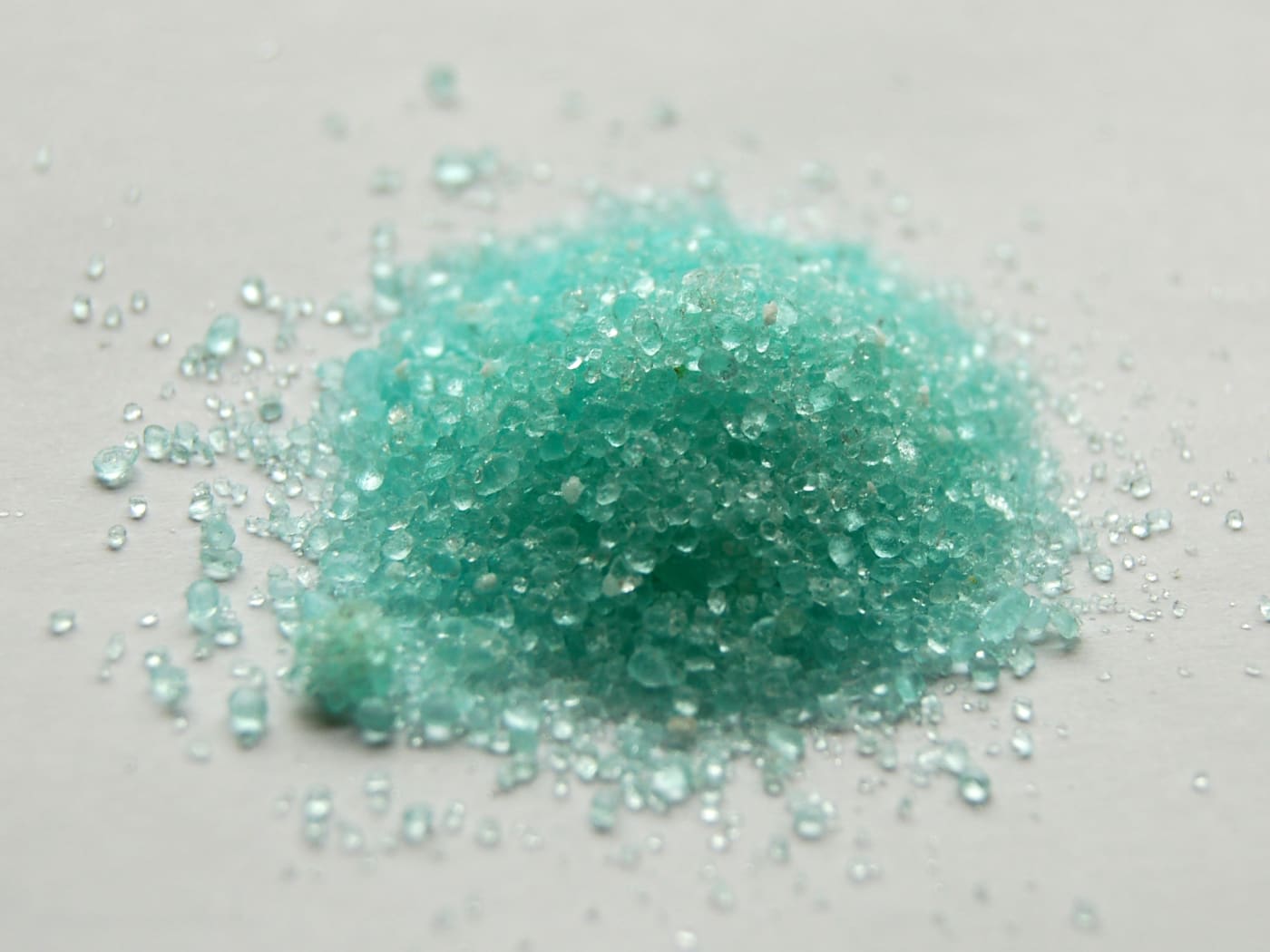
Crystalline structure of Ferrous Sulphate Heptahydrate (FeSO₄·7H₂O), CAS 7782-63-0.
Quick Answer — Ferrous Sulphate for Industrial Effluent: From Chemical Selection to Process Control
Ferrous sulphate heptahydrate (FeSO4·7H2O) serves as both a reducing agent and primary coagulant in industrial effluent treatment. It reduces toxic hexavalent chromium (Cr6+) to trivalent chromium (Cr3+) at acidic pH 2.0-3.0, and precipitates phosphorus and heavy metals as insoluble hydroxides at alkaline pH 8.0-9.0. Accurate dosing requires jar testing to accommodate variable chemical oxygen demand (COD) and alkalinity.
1. Target Contaminants in Industrial Wastewater
Industrial effluent treatment plants (ETPs) across manufacturing hubs in Nairobi, Thika, Athi River, and Mombasa face complex wastewater matrices. Ferrous sulphate heptahydrate is particularly effective against three major contaminant classes:
- Hexavalent Chromium (Cr⁶⁺): Found in electroplating, metal finishing, and leather tanning liquors. Fe²⁺ donates electrons to reduce highly toxic, soluble chromate into non-toxic Cr³⁺.
- Dissolved Orthophosphates: Generated by detergent manufacturing, food processing, and textile preparation, which cause rapid eutrophication if discharged untreated.
- Dissolved Heavy Metals: Lead, cadmium, nickel, and copper, which precipitate alongside ferric hydroxide flocs during coprecipitation.
- Inorganic Sulphides: Hydrogen sulphide (H₂S) gas and dissolved sulphides neutralized via direct precipitation as insoluble ferrous sulphide (FeS).
2. Process Chemistry and pH Reaction Windows
Unlike biological treatment systems, chemical treatment with ferrous sulphate relies on precise redox and precipitation chemistry governed by pH windows:
Step 1: Chemical Reduction (Acidic Window)
When treating hexavalent chromium, the reaction must occur under strongly acidic conditions (pH 2.0 to 3.0). Under these conditions, the reduction of dichromate proceeds rapidly:
Cr₂O₇²⁻ + 6Fe²⁺ + 14H⁺ → 2Cr³⁺ + 6Fe³⁺ + 7H₂O
Attempting chromium reduction at neutral or alkaline pH slows reaction kinetics dramatically and produces incomplete conversion, causing discharge non-compliance.
Step 2: Neutralisation and Flocculation (Alkaline Window)
Following reduction, the effluent pH is elevated to 8.5–9.2 using hydrated lime or sodium hydroxide. In this range, both trivalent chromium and ferric ions precipitate completely:
Cr³⁺ + 3OH⁻ → Cr(OH)₃(s) ↓
Fe³⁺ + 3OH⁻ → Fe(OH)₃(s) ↓
The newly formed ferric hydroxide produces dense sweep flocs that entrap colloidal particles, colour bodies, and trace dissolved heavy metals.
3. Jar Testing Protocols for Process Control
Because chemical oxygen demand (COD), background alkalinity, and temperature fluctuate continuously in operating industrial plants, universal dosing tables do not work. Laboratory jar testing must be conducted to establish:
- Minimum effective ferrous dose (mg/L Fe²⁺ per mg/L target contaminant)
- Optimal coagulant aid pairing (typically 0.5–2.0 mg/L of high-molecular-weight anionic polyacrylamide)
- Settling velocity and sludge bed volume generation
Learn how to select standard Ferrous Sulphate Heptahydrate 98% Min for industrial jar testing protocols.
4. Solution Preparation and Dosing Systems
Dry ferrous sulphate crystals must never be added directly to effluent channels. Prepare a 5% to 10% (w/v) stock solution in a dedicated make-up tank:
- Tank Material: High-density polyethylene (HDPE), polypropylene, or vinyl ester fiberglass. Ferrous sulphate solutions have an acidic pH of 3.0–3.8 and will corrode mild steel.
- Agitation: Mechanical propeller agitation is required for complete crystal dissolution within 15–20 minutes.
- Pumping: Positive displacement diaphragm or peristaltic chemical metering pumps equipped with PVDF or PTFE wet ends.
5. Sludge Generation and Dewatering Considerations
Plant operators must account for the sludge footprint of iron salts. Dosing 100 mg/L of FeSO₄·7H₂O produces approximately 38.5 mg/L of dry Fe(OH)₃ solids, plus the mass of precipitated metals and trapped suspended solids. Conditioning the sludge with anionic polymer before plate-and-frame filter pressing or centrifuging achieves dry cake solids between 25% and 35%.
6. Regulatory Compliance and Environmental Standards
Under Kenya's Environmental Management and Co-ordination (Water Quality) Regulations enforced by NEMA, industrial discharge into public sewers or municipal drains limits total iron to 5.0 mg/L and total chromium to 1.0 mg/L. Proper coagulation and clarification control ensures both target contaminants and residual iron stay well beneath statutory discharge thresholds.
Review primary wastewater coagulation: Ferrous Sulphate for Wastewater & Industrial Effluent.
Understand phosphorus precipitation chemistry: Ferrous Sulphate and Phosphate Removal Chemistry.
Article Frequently Asked Questions
Chemicals Mentioned in This Guide

Ferrous Sulfate Heptahydrate 98% Min
Ferrous Sulphate Heptahydrate 98% Min (FeSO₄·7H₂O, CAS 7782-63-0) is an industrial-grade iron(II) salt supplied in 25…
CAS 7782-63-0 · Industrial Grade · Crystal

ABS/LAS 80% for Industrial Use (ABS/LAS)
ABS/LAS (80%) supplied by Kiki's Industrial Chemicals Ltd in 25kg bags across Kenya and East Africa.
Technical Grade · Powder

ATMP (50%)
ATMP (50%) supplied by Kiki's Industrial Chemicals Ltd in 200kg drum. Ideal for Water treatment chemicals.
50% · Standard Packaging

ATMP 50% for Industrial Use (ATMP)
ATMP (50%) supplied by Kiki's Industrial Chemicals Ltd in 200kg drums across Kenya and East Africa.
Technical Grade · Liquid
Related Technical Guides & Insights
View all →Ferrous Sulphate and Phosphate Removal: Understanding the Treatment Chemistry
A deep dive into the reaction chemistry of phosphate removal using ferrous sulphate. Understand precipitation kinetics, Fe:P stoichiometric molar ratios, simultaneous dosing in aeration basins, and sludge generation.
Water TreatmentFerrous Sulphate vs Ferric Chloride for Water Treatment
A technical comparison of Ferrous Sulphate and Ferric Chloride in municipal and industrial water treatment. Analyze corrosivity, concrete protection, sludge settling, and costs.
Product OverviewsFerrous Sulphate vs Ferric Sulphate: Understanding the Chemistry
A comparative guide exploring iron(II) vs iron(III) chemistry. Understand oxidation states, coagulation mechanisms, floc dynamics, and cost trade-offs.