The Iron Ore Connection: Hematite, Magnetite & Industrial Ferrous Sulphate Pathways
Technical analysis explaining why iron oxide ores (hematite and magnetite) cannot directly yield ferrous sulphate, the thermodynamic reduction to metallic steel, and how steel pickling and ilmenite processing create commercial FeSO₄.
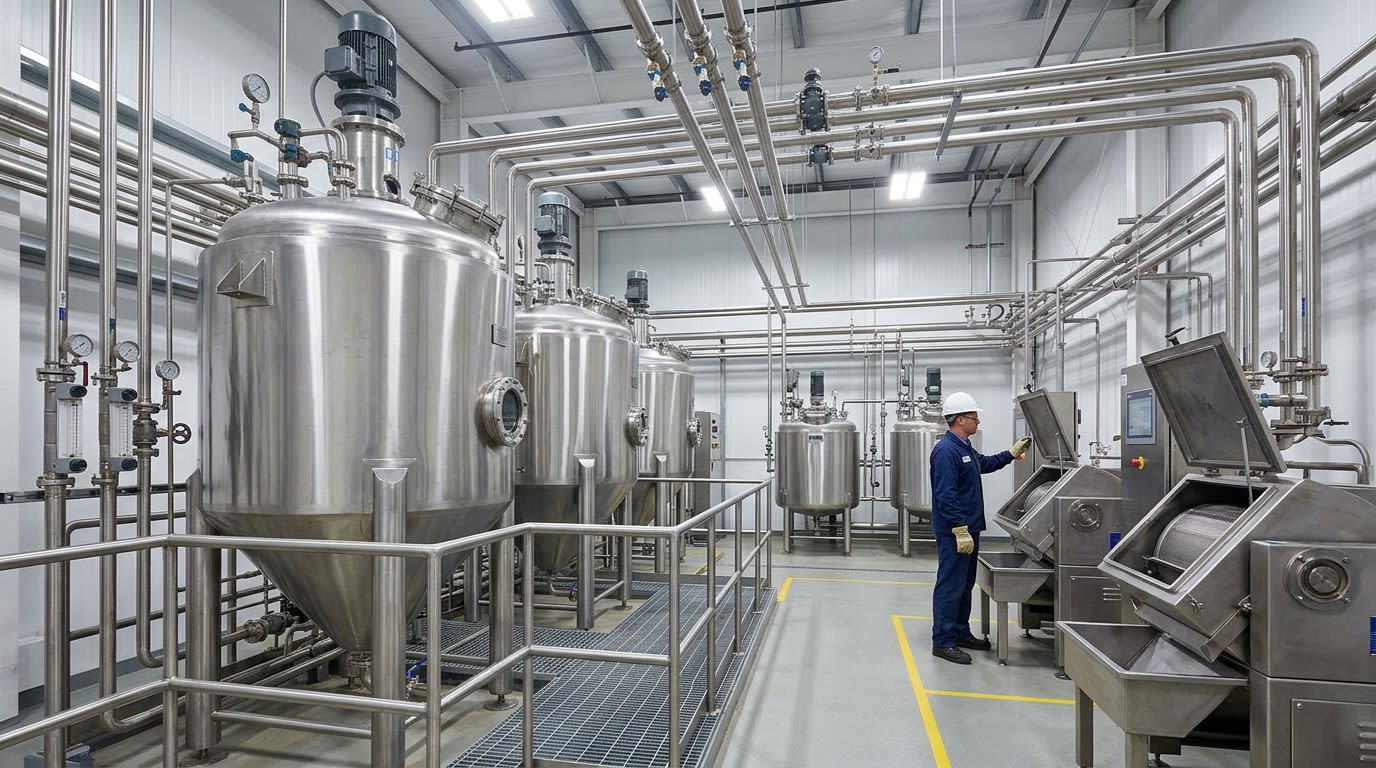
Quick Answer — The Iron Ore Connection: Hematite, Magnetite & Industrial Ferrous Sulphate Pathways
The connection between raw geological iron ores (hematite, Fe₂O₃, and magnetite, Fe₃O₄) and commercial Ferrous Sulphate Heptahydrate (FeSO₄·7H₂O) involves a fundamental chemical paradox: iron ore cannot be directly reacted with sulphuric acid to produce commercial ferrous sulphate. This is because hematite contains iron entirely in the trivalent ferric state (Fe³⁺), meaning direct acid digestion yields ferric sulphate (Fe₂(SO₄)₃), not ferrous sulphate. To bridge the gap between geology and commercial chemistry, iron ore must follow one of two major industrial pathways: (1) The Metallurgical Steel Pathway: Iron ore is smelted in a blast furnace or direct reduction plant with carbon to reduce ferric iron (Fe³⁺) to elemental metallic iron (Fe⁰ pig iron and steel). In downstream steel manufacturing, steel sheets and wire rods undergo acid pickling with sulphuric acid to remove surface mill scale. The reaction Fe⁰ + H₂SO₄ → FeSO₄ + H₂↑ generates concentrated ferrous sulphate liquor, which is cooled and crystallised into pure heptahydrate. (2) The Titanium-Ilmenite Pathway: The titanium-iron oxide ore ilmenite (FeTiO₃), which naturally contains divalent ferrous iron (Fe²⁺), is digested with sulphuric acid during titanium dioxide pigment manufacturing. During hydrolysis, enormous quantities of pure ferrous sulphate heptahydrate ('copperas') are crystallized out as a high-volume co-product.
The iron ore to ferrous sulphate connection describes the multi-step metallurgical and chemical transformation converting primary geological iron oxides into divalent commercial iron sulphate salts.
Key Facts
- •Primary Iron Ores: Hematite (Fe₂O₃, contains Fe³⁺) and Magnetite (Fe₃O₄, contains mixed Fe²⁺/Fe³⁺)
- •The Chemical Paradox: Reacting hematite with H₂SO₄ yields ferric sulphate (Fe₂(SO₄)₃), NOT ferrous sulphate (FeSO₄)
- •Metallurgical Reduction Step: Iron ore must be reduced by coke in a blast furnace: Fe₂O₃ + 3 CO → 2 Fe⁰ + 3 CO₂
- •Steel Pickling Pathway: Metallic steel reacts with sulphuric acid: Fe⁰ + H₂SO₄ → FeSO₄ + H₂↑
- •Ilmenite Ore Alternative: Ilmenite (FeTiO₃) contains native Fe²⁺; digestion for TiO₂ pigment co-produces millions of tonnes of FeSO₄
- •Commercial Purity: Technical-grade 98% Min FeSO₄·7H₂O supplied by KIKI'S represents the refined crystallised product of these industrial streams
The Fundamental Chemical Paradox: Fe(II) vs. Fe(III)
On a planetary scale, iron is the fourth most abundant element in the Earth's crust, constituting over 5% of crustal rocks. The vast majority of geological iron reserves exist as iron oxide minerals: Hematite (Fe₂O₃, blood-red iron oxide) and Magnetite (Fe₃O₄, black magnetic iron oxide), extracted from gigantic Banded Iron Formations (BIFs) in Australia, Brazil, South Africa, and India.
It is natural to assume that commercial Ferrous Sulphate (FeSO₄) is produced simply by dissolving raw iron ore in sulphuric acid. However, this is chemically and thermodynamically impossible in commercial practice due to atomic oxidation states:
- Hematite (Fe₂O₃) contains iron strictly in the trivalent ferric state (Fe³⁺). When hematite dissolves in sulphuric acid, it yields ferric sulphate: Fe₂O₃ + 3 H₂SO₄ → Fe₂(SO₄)₃ + 3 H₂O. Ferric sulphate is a completely different chemical species with different coagulation kinetics, chemical properties, and solubility characteristics.
- Magnetite (Fe₃O₄) is a mixed-valence oxide (FeO·Fe₂O₃) containing two Fe³⁺ ions for every one Fe²⁺ ion. Dissolving magnetite produces a mixed solution: Fe₃O₄ + 4 H₂SO₄ → FeSO₄ + Fe₂(SO₄)₃ + 4 H₂O. Separating the ferrous fraction from the ferric fraction requires intensive chemical reduction.
The Chemical Rule: To produce pure Ferrous Sulphate (Fe²⁺), iron must either be present in the native divalent oxidation state (as in ilmenite, FeTiO₃) or reduced to elemental iron metal (Fe⁰) before acid digestion.
Pathway 1: The Metallurgical Reduction & Steel Pickling Route
The primary metallurgical bridge connecting iron ore to commercial ferrous sulphate runs straight through the global steel industry:
- 1. Blast Furnace Smelting: Mined hematite and magnetite are agglomerated into pellets and charged into a blast furnace alongside metallurgical coke and limestone flux. High-temperature reduction (1,500°C) with carbon monoxide strips oxygen from the ferric oxide: Fe₂O₃ + 3 CO → 2 Fe⁰ + 3 CO₂. This reduces trivalent ferric iron to molten elemental pig iron (Fe⁰).
- 2. Steelmaking & Hot Rolling: The pig iron is refined into steel in a Basic Oxygen Furnace (BOF) or Electric Arc Furnace (EAF) and hot-rolled into coils, beams, and rods. During high-temperature rolling, exposure to ambient air oxidizes the steel surface, forming a brittle, dark layer called mill scale (a mixture of FeO, Fe₃O₄, and Fe₂O₃).
- 3. Sulphuric Acid Pickling: Before steel can be cold-rolled, galvanized, wire-drawn, or coated, this mill scale must be completely removed. Steel processing mills immerse the steel coils in continuous baths of 15%–20% hot sulphuric acid (H₂SO₄ at 60°C–80°C).
- 4. Chemical Dissolution & Hydrogen Evolution: While acid dissolves the scale, the underlying elemental iron metal vigorously reacts with the sulphuric acid: Fe⁰ + H₂SO₄ → FeSO₄ + H₂↑. This reaction generates enormous volumes of dissolved ferrous sulphate while evolving hydrogen gas.
- 5. Crystallization & Co-Product Recovery: The resulting Spent Pickling Liquor (SPL)—rich in FeSO₄ (15%–20%) and residual acid—cannot be discharged into municipal drains. Modern steel complexes pump SPL into vacuum evaporators and cooling crystallizers, chilling the liquor to 5°C–15°C to precipitate high-purity Ferrous Sulphate Heptahydrate (FeSO₄·7H₂O) crystals, which are centrifuged, dried, and bagged.
Pathway 2: The Ilmenite Titanium Dioxide Co-Product Route
The second major industrial pathway relies on a specialized geological mineral: Ilmenite (FeTiO₃, iron titanium oxide), extracted from heavy mineral sands deposits (such as those along the Kenyan coastline in Kwale, and in India, South Africa, and Australia).
Ilmenite naturally contains iron in the divalent ferrous state (Fe²⁺·TiO₂). In the sulphate process for manufacturing titanium dioxide (TiO₂) white pigment:
- Ilmenite concentrate is milled and digested with concentrated sulphuric acid at 150°C–180°C in an exothermic reaction: FeTiO₃ + 2 H₂SO₄ → TiOSO₄ + FeSO₄ + 2 H₂O.
- Scrap iron is added to ensure that any trace ferric iron formed during roasting is completely reduced back to ferrous iron (Fe²⁺).
- The clarified green solution is pumped into massive vacuum cooling crystallizers. Because ferrous sulphate heptahydrate is far less soluble at low temperatures than titanyl sulphate (TiOSO₄), FeSO₄·7H₂O crystallizes out selectively in vast quantities (approximately 3 to 4 tonnes of 'copperas' per tonne of TiO₂ pigment produced).
- Centrifuges separate the clean green heptahydrate crystals, which are subsequently refined, washed, and dried to produce technical-grade commercial chemicals.
The Circular Economy of Industrial Iron Chemicals
Rather than being an environmental burden, modern recovery of ferrous sulphate from steel pickling and titanium pigment production represents one of the most successful circular economy models in global heavy industry. By transforming potentially hazardous industrial acid streams into vital water purification coagulants, agricultural micronutrients, and cement hexavalent chromium reducers, chemical engineering bridges the gap between raw mining and environmental protection.
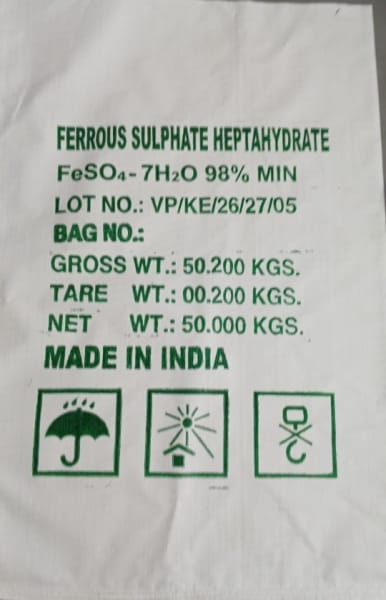
KIKI'S Industrial Chemicals serves as the premier East African supply partner for this essential inorganic salt. We import certified, high-purity Ferrous Sulphate Heptahydrate 98% Min (≥19.7% Fe) manufactured under strict ISO 9001 quality controls by Kaiser Exports (Ahmedabad, Gujarat, India, Lot VP/KE/26/27/05). Stocked in heavy-duty 50 kg woven polypropylene bags with heat-sealed polyethylene inner moisture liners (Net Wt 50.000 kg, Gross Wt 50.200 kg) at our Nairobi central depot, our inventory provides uninterrupted supply to water utilities, food processors, tanneries, and industrial facilities across Kenya and the wider EAC region.
Article Frequently Asked Questions
Related Categories
Related Industries
Related Applications
Chemicals Mentioned in This Guide
Ferrous Sulfate Heptahydrate 98% Min
Ferrous Sulphate Heptahydrate 98% Min (FeSO₄·7H₂O, CAS 7782-63-0) is an industrial-grade iron(II) salt supplied in 50…
CAS 7782-63-0 · Industrial Grade · Crystal

Ferrous sulphate monohydrate Fe: 30%min 25kg bags Technical Grade for Industrial & Commercial Use (Ferrous sulphate monohydrate Fe: 30%min 25kg bags)
Ferrous sulphate monohydrate Fe: 30%min 25kg bags (Technical Grade) supplied by Kiki's Industrial Chemicals Ltd in 25kg…
Technical Grade · Powder

ABS/LAS 80% for Industrial Use (ABS/LAS)
ABS/LAS (80%) supplied by Kiki's Industrial Chemicals Ltd in 25kg bags across Kenya and East Africa.
Technical Grade · Powder

ATMP (50%)
ATMP (50%) supplied by Kiki's Industrial Chemicals Ltd in 200kg drum. Ideal for Water treatment chemicals.
50% · Standard Packaging
Related Technical Guides & Insights
View all →Where Does Ferrous Sulphate Come From? Natural Sources, Industrial Chemistry & Commercial Production
Comprehensive origin guide explaining the geochemical formation of natural iron sulphates, the distinction between minerals and commercial chemicals, and primary industrial manufacturing pathways.
Product OverviewsHow Is Ferrous Sulphate Heptahydrate Manufactured? Industrial Processes & Quality Control
Comprehensive process engineering breakdown of commercial Ferrous Sulphate Heptahydrate production: steel pickling acid recovery, titanium dioxide co-product crystallisation, and QA standards.
Product OverviewsPyrite Oxidation Chemistry: How Iron Disulphide Generates Ferrous Sulphate
Comprehensive biogeochemical guide explaining the multi-stage oxidation kinetics of pyrite (FeS₂), chemical reaction pathways, microbial catalysis, and why natural copperas beds were replaced by industrial synthesis.
Product OverviewsNatural Ferrous Sulphate Minerals: Melanterite, Rozenite & Crystal Geochemistry
Comprehensive mineralogical examination of natural iron sulphate species—melanterite, rozenite, and szomolnokite—their crystal chemistry, hydration equilibria, and why commercial industry relies on manufactured salts.