How Is Ferrous Sulphate Heptahydrate Manufactured? Industrial Processes & Quality Control
Comprehensive process engineering breakdown of commercial Ferrous Sulphate Heptahydrate production: steel pickling acid recovery, titanium dioxide co-product crystallisation, and QA standards.
Quick Answer — How Is Ferrous Sulphate Heptahydrate Manufactured? Industrial Processes & Quality Control
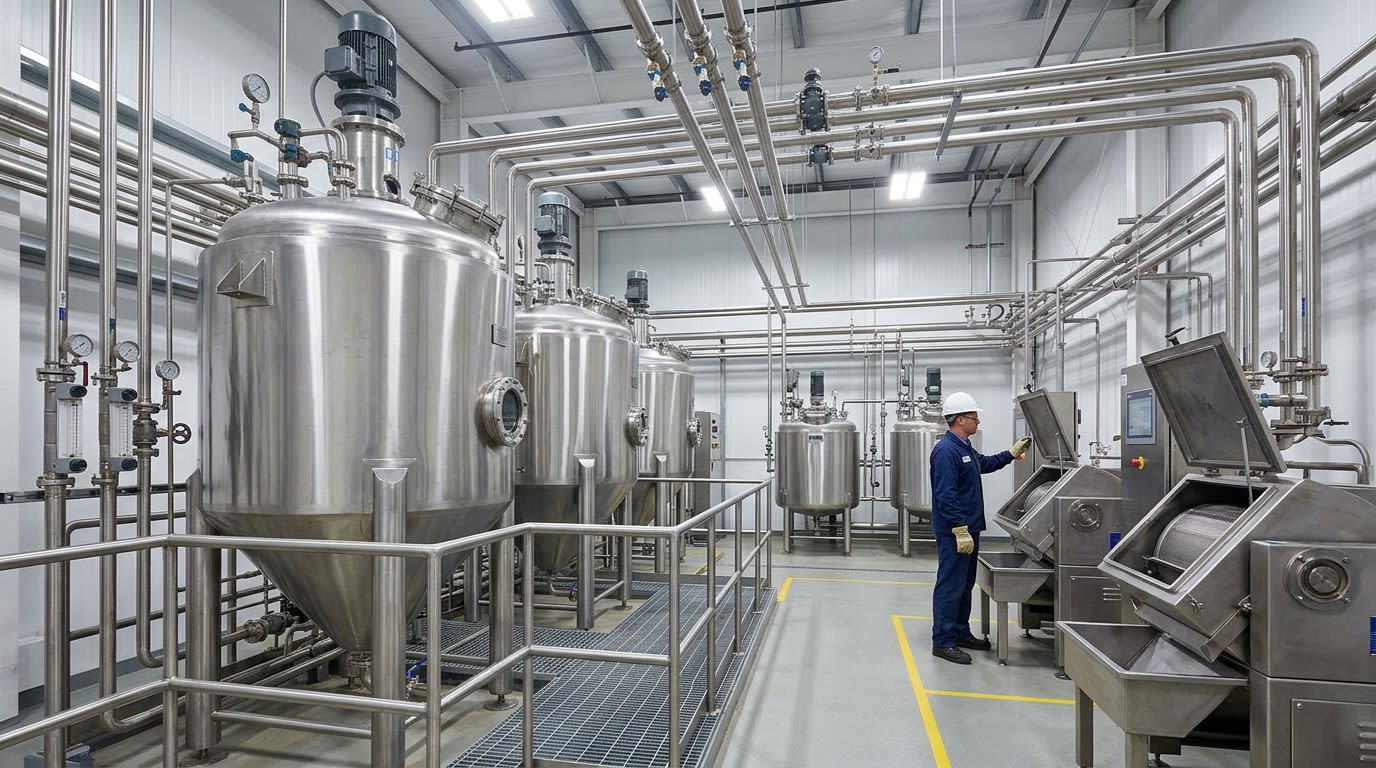
Commercial Ferrous Sulphate Heptahydrate 98% Min is manufactured industrially via two primary chemical pathways: (1) Titanium Dioxide Co-Product Route (Sulphate Process): Ilmenite ore (FeTiO₃) is digested in hot sulphuric acid. The resulting liquor containing titanyl sulphate and ferrous sulphate is cooled in vacuum crystallizers below 15°C, causing FeSO₄·7H₂O to crystallize out due to temperature-dependent solubility. The green crystals (historically called 'copperas') are separated via basket centrifuges, washed, and dried. (2) Steel Pickling Acid Dissolution Route: Scrap iron, steel turnings, or spent pickling acid from steel rolling mills are reacted with dilute sulphuric acid: Fe + H₂SO₄ → FeSO₄ + H₂↑. The acidic iron sulphate liquor is filtered through pressure leaf filters to remove insoluble grit, concentrated in vacuum evaporators at 60°C–70°C, and fed into continuous crystallizers cooled below 35°C. Crystals are centrifuged to separate mother liquor, flash-dried in controlled low-temperature air (< 60°C) to prevent premature dehydration, and packaged into 50 kg heavy-duty woven polypropylene bags with heat-sealed polyethylene moisture liners.
Industrial ferrous sulphate manufacturing is a multi-step chemical purification, concentration, crystallization, and drying sequence designed to produce standardized 98% FeSO₄·7H₂O crystals.
Key Facts
- •Primary Route 1: Vacuum crystallization of titanium dioxide sulphate process liquor
- •Primary Route 2: Reaction of steel scrap/mill scale with sulphuric acid in pickling lines
- •Purification: Multi-stage clarification and filtration to ensure insoluble matter ≤ 0.05%
- •Crystallization Control: Temperature kept between 10°C and 35°C to isolate pure heptahydrate
- •Flash Drying: Low-temperature drying (< 60°C) prevents crystal water loss to monohydrate
- •Commercial Packaging: 50 kg heavy-duty multi-wall PP bags with PE liner (Kaiser Exports, India)
Primary Use Cases
Because Ferrous Sulphate Heptahydrate 98% Min (FeSO₄·7H₂O, CAS 7782-63-0) is an essential process chemical across water treatment, cement manufacturing, agriculture, and pigments, modern industrial plants produce millions of metric tons annually. Commercial production is a sophisticated process engineering discipline combining chemical digestion, solid-liquid separation, fractional cooling crystallization, and precise pneumatic drying.
Industrial Manufacturing Pathways
Pathway A: Titanium Dioxide Co-Product Route (The Sulphate Process)
The largest single global source of industrial ferrous sulphate is the sulphate-route titanium dioxide (TiO₂) pigment industry. Ilmenite sand ore (nominally FeTiO₃) contains both titanium and iron. The ore is ground and digested in hot, concentrated sulphuric acid (H₂SO₄):
FeTiO₃ + 2H₂SO₄ → TiOSO₄ + FeSO₄ + 2H₂O
Scrap iron is added to reduce any ferric iron (Fe³⁺) to ferrous iron (Fe²⁺). The digestion liquor is then clarified and pumped into multi-stage vacuum cooling crystallizers. Because the aqueous solubility of ferrous sulphate drops precipitously from ~48 g/100 mL at 50°C down to ~20 g/100 mL at 10°C, massive yields of sea-green FeSO₄·7H₂O crystals precipitate while titanyl sulphate remains in solution.
Pathway B: Direct Acid Dissolution and Steel Pickling Recovery
In dedicated chemical manufacturing plants and integrated steelworks, metallic iron scrap, lathe turnings, or mill scale are dissolved in industrial sulphuric acid (15%–20% concentration):
Fe + H₂SO₄ → FeSO₄ + H₂↑
The exothermic reaction generates hydrogen gas (which is safely vented or collected for plant energy) and yields a concentrated, dark green acidic ferrous sulphate liquor.
Step-by-Step Chemical Refining and Processing Sequence
- 1. Solid-Liquid Separation: The hot liquor passes through rotary vacuum drum filters or plate-and-frame pressure leaf filters to remove insoluble carbon, silica, and heavy metal dross, ensuring insoluble matter remains ≤ 0.05%.
- 2. Vacuum Evaporative Concentration: The clarified green liquor is concentrated under vacuum at 60°C–70°C to achieve optimal saturation (density 1.35–1.40 g/cm³) without thermal oxidation.
- 3. Fractional Cooling Crystallization: The saturated solution enters continuous scraped-surface or draft-tube baffle (DTB) crystallizers where cooling water drops the liquor temperature below 35°C, growing uniform monoclinic prism crystals of heptahydrate.
- 4. Centrifugal Separation: Crystal slurries enter high-speed basket or decanter centrifuges, where mother liquor is spun off and recycled back to digestion, leaving crystal cakes with under 3% surface moisture.
- 5. Gentle Fluidized Flash Drying: Crystals enter a low-temperature fluidized bed dryer where warm, conditioned air (45°C–55°C) removes surface moisture. Temperatures must never exceed 60°C to prevent thermal dehydration to monohydrate or oxidation to ferric compounds.
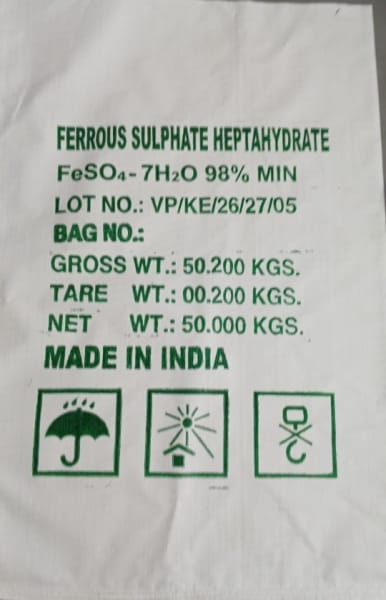
- 6. Automated Packaging: Free-flowing green crystals are packaged into heavy-duty 50 kg woven polypropylene bags with heat-sealed polyethylene inner moisture liners (Net Wt 50.000 kg, Gross Wt 50.200 kg) on automated bagging carousels.
Rigorous Quality Assurance Standards
Each production batch undergoes standardized wet-chemical and spectroscopic laboratory verification:
- Assay Purity: Titrimetric determination with standard potassium dichromate verifies ≥ 98.0% FeSO₄·7H₂O.
- Elemental Iron: Atomic Absorption Spectrophotometry (AAS) confirms ≥ 19.7% elemental Fe.
- Heavy Metals: Inductively Coupled Plasma (ICP-OES) analysis verifies Lead (Pb ≤ 20 ppm), Arsenic (As ≤ 2 ppm), and Cadmium (Cd ≤ 2 ppm).
KIKI'S Industrial Chemicals supplies certified industrial-grade material manufactured under ISO 9001 quality management (Kaiser Exports, Ahmedabad, Gujarat, India, Lot VP/KE/26/27/05, marked NBO) with continuous inventory maintained in our Enterprise Road central depot in Nairobi.
Article Frequently Asked Questions
Related Categories
Related Industries
Related Applications
Chemicals Mentioned in This Guide
Ferrous Sulfate Heptahydrate 98% Min
Ferrous Sulphate Heptahydrate 98% Min (FeSO₄·7H₂O, CAS 7782-63-0) is an industrial-grade iron(II) salt supplied in 50…
CAS 7782-63-0 · Industrial Grade · Crystal

Ferrous sulphate monohydrate Fe: 30%min 25kg bags Technical Grade for Industrial & Commercial Use (Ferrous sulphate monohydrate Fe: 30%min 25kg bags)
Ferrous sulphate monohydrate Fe: 30%min 25kg bags (Technical Grade) supplied by Kiki's Industrial Chemicals Ltd in 25kg…
Technical Grade · Powder

ABS/LAS 80% for Industrial Use (ABS/LAS)
ABS/LAS (80%) supplied by Kiki's Industrial Chemicals Ltd in 25kg bags across Kenya and East Africa.
Technical Grade · Powder

ATMP (50%)
ATMP (50%) supplied by Kiki's Industrial Chemicals Ltd in 200kg drum. Ideal for Water treatment chemicals.
50% · Standard Packaging
Related Technical Guides & Insights
View all →Where Does Ferrous Sulphate Come From? Natural Sources, Industrial Chemistry & Commercial Production
Comprehensive origin guide explaining the geochemical formation of natural iron sulphates, the distinction between minerals and commercial chemicals, and primary industrial manufacturing pathways.
Product OverviewsPyrite Oxidation Chemistry: How Iron Disulphide Generates Ferrous Sulphate
Comprehensive biogeochemical guide explaining the multi-stage oxidation kinetics of pyrite (FeS₂), chemical reaction pathways, microbial catalysis, and why natural copperas beds were replaced by industrial synthesis.
Product OverviewsNatural Ferrous Sulphate Minerals: Melanterite, Rozenite & Crystal Geochemistry
Comprehensive mineralogical examination of natural iron sulphate species—melanterite, rozenite, and szomolnokite—their crystal chemistry, hydration equilibria, and why commercial industry relies on manufactured salts.
Product OverviewsThe Iron Ore Connection: Hematite, Magnetite & Industrial Ferrous Sulphate Pathways
Technical analysis explaining why iron oxide ores (hematite and magnetite) cannot directly yield ferrous sulphate, the thermodynamic reduction to metallic steel, and how steel pickling and ilmenite processing create commercial FeSO₄.