Industrial Ferrous Sulphate: Applications Beyond Water Treatment
Discover the diverse industrial uses of ferrous sulphate heptahydrate beyond water clarification: agricultural iron chlorosis remediation, cement chromium reduction, synthetic pigment manufacturing, and textile dyeing mordants.
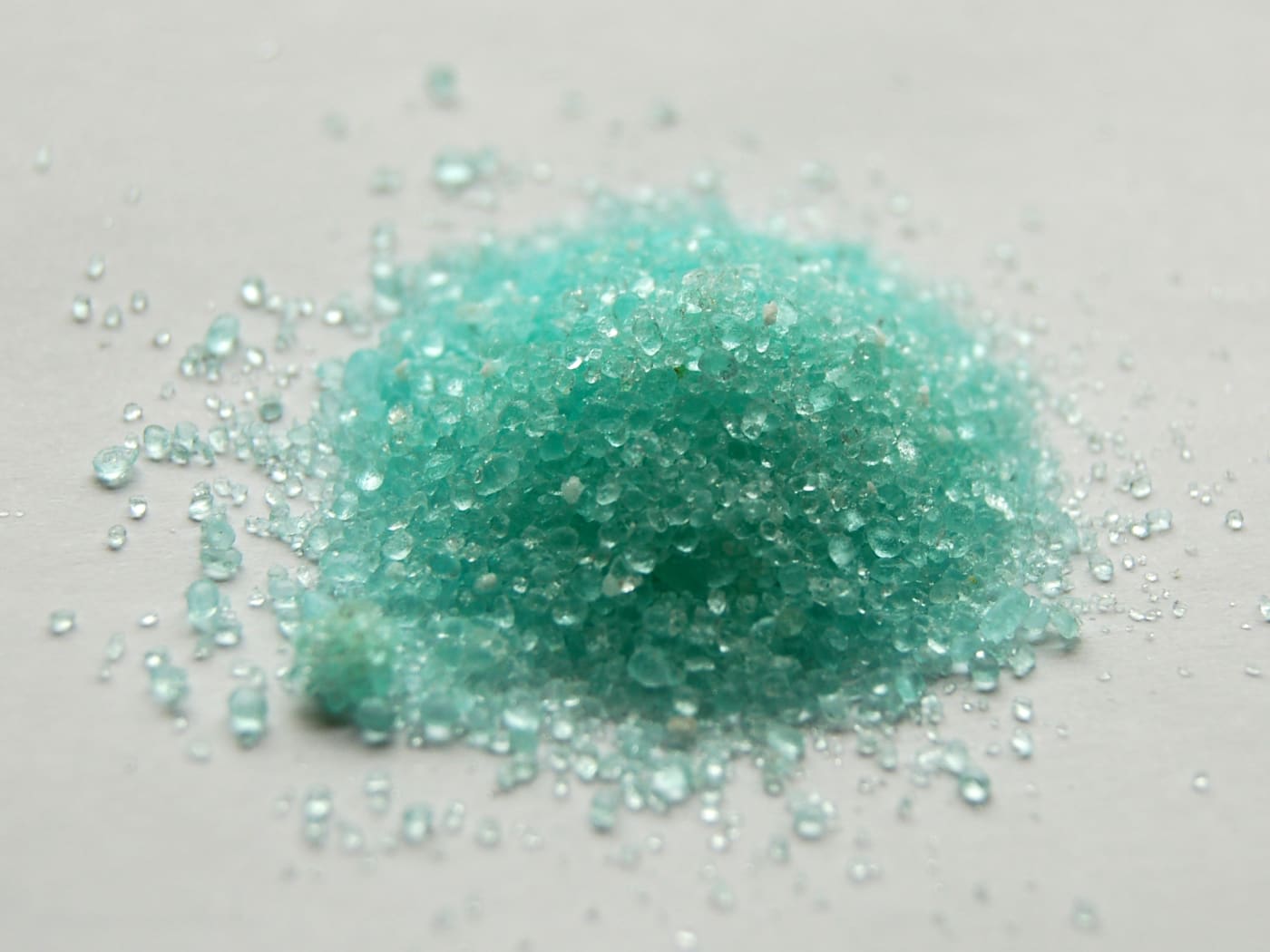
Crystalline structure of Ferrous Sulphate Heptahydrate (FeSO₄·7H₂O), CAS 7782-63-0.
Quick Answer — Industrial Ferrous Sulphate: Applications Beyond Water Treatment
Beyond wastewater and water treatment, ferrous sulphate heptahydrate is widely used across four major industrial sectors: (1) Cement manufacturing, where it reduces toxic hexavalent chromium (Cr6+) to non-allergenic trivalent chromium (Cr3+), (2) Agriculture and horticulture, supplying essential Fe2+ to treat iron chlorosis and suppress moss, (3) Pigment manufacturing, serving as the chemical precursor for synthetic red, black, and yellow iron oxide pigments, and (4) Textile and leather dyeing, acting as a traditional fixing mordant.
1. The Multifaceted Industrial Chemistry of Ferrous Iron
While water and wastewater treatment account for the largest consumption volume of ferrous sulphate heptahydrate (FeSO₄·7H₂O) globally, its unique combination of soluble divalent iron (Fe²⁺), low cost, and strong chemical reducing power makes it an indispensable commodity across multiple unrelated industrial sectors.
2. Cement Manufacturing: Hexavalent Chromium (Cr⁶⁺) Reduction
In modern construction material standards (including European Directive 2003/53/EC and standard EN 196-10), cement manufacturers must control the concentration of water-soluble hexavalent chromium (Cr⁶⁺) to less than 2 parts per million (ppm). Hexavalent chromium is a potent dermal sensitizer causing severe allergic contact dermatitis ('cement eczema') among construction workers.
Ferrous sulphate is dosed into cement clinker grinding mills as an active chemical reducing agent:
Cr₂O₇²⁻ + 6Fe²⁺ + 14H⁺ → 2Cr³⁺ + 6Fe³⁺ + 7H₂O
The Fe²⁺ reduces soluble Cr⁶⁺ to insoluble, biologically inert trivalent chromium (Cr³⁺) hydrates, protecting masonry workers during mortar mixing and application.
3. Agricultural Chlorosis Correction and Fertilizer Blending
In East Africa's agricultural economy—spanning tea plantations in Kericho, commercial flower farms in Naivasha, and horticulture in Mt. Kenya regions—alkaline or calcareous soils often immobilize natural iron. This triggers iron chlorosis, characterized by severe yellowing between leaf veins and impaired photosynthetic vigour.
Ferrous sulphate heptahydrate serves as:
- Direct soil application chemical, temporarily acidifying the micro-root zone to liberate bioavailable iron.
- Micronutrient source in dry fertilizer blending and water-soluble fertigation blends.
- Lawn and turf management chemical, suppressing moss and creating deep green coloration on golf greens without stimulating excessive shoot growth.
Learn more about crop nutrient dynamics in our dedicated guide: Ferrous Sulphate for Agriculture and Fertilizer Blending.
4. Synthetic Pigment and Iron Oxide Manufacturing
High-purity ferrous sulphate heptahydrate serves as the primary chemical precursor for producing synthetic iron oxide pigments used extensively in paints, plastics, concrete pavers, and architectural coatings:
- Iron Oxide Yellow (α-FeOOH / Goethite): Synthesized by alkaline precipitation of ferrous sulphate under controlled air oxidation at 50°C–70°C.
- Iron Oxide Red (α-Fe₂O₃ / Hematite): Produced via high-temperature calcination of iron sulphate salts, generating brilliant red hues with exceptional UV and weather stability.
- Iron Oxide Black (Fe₃O₄ / Magnetite): Precipitated through co-precipitation of ferrous and ferric salts under alkaline conditions.
5. Textile Dyeing and Leather Mordanting
In the traditional textile and leather tanning trade, ferrous sulphate (historically known as 'green vitriol' or 'copperas') acts as a vital inorganic mordant. When applied to cotton, silk, or wool fibres alongside natural plant tannins (such as logwood, oak gall, or acacia extract), ferrous ions cross-link with phenolic hydroxyl groups, producing deep, wash-fast olive green, grey, and midnight black shades.
6. Chemical Synthesis and Environmental Remediation
Additional specialized industrial uses include:
- Fenton's Reagent: Combined with hydrogen peroxide (H₂O₂) to generate highly reactive hydroxyl radicals (·OH) that break down recalcitrant organic pesticides and pharmaceuticals in industrial waste.
- Gold Refining and Metallurgy: Acting as a selective chemical reducing agent to precipitate metallic gold sponge from acidic aqua regia solutions.
- Gas Scrubbing: Removing hydrogen sulphide and mercaptans from biogas streams and industrial vent emissions.
For certified specifications and quotation, view KIKI'S canonical product listing: Ferrous Sulphate Heptahydrate 98% Min (25 kg Bags) supplied across Kenya and East Africa.
Explore agricultural chlorosis applications: Ferrous Sulphate for Agriculture and Fertilizer Blending.
Verify chemical identity and purity: What Does CAS 7782-63-0 Mean? A Buyer's Guide.
Article Frequently Asked Questions
Chemicals Mentioned in This Guide

Ferrous Sulfate Heptahydrate 98% Min
Ferrous Sulphate Heptahydrate 98% Min (FeSO₄·7H₂O, CAS 7782-63-0) is an industrial-grade iron(II) salt supplied in 25…
CAS 7782-63-0 · Industrial Grade · Crystal

ATMP (50%)
ATMP (50%) supplied by Kiki's Industrial Chemicals Ltd in 200kg drum. Ideal for Water treatment chemicals.
50% · Standard Packaging

Activated Carbon Coal / wood base for Industrial Use (Activated Carbon)
Activated Carbon (Coal / wood base) supplied by Kiki's Industrial Chemicals Ltd in 25kg bag across Kenya and East…
Technical Grade · Powder

Activated Carbon Granular / Powder (Water Purification CTC 45-60)
Activated Carbon Granular / Powder (Water Purification CTC 45-60) supplied by Kiki's Industrial Chemicals Ltd in 25kg…
Water Purification CTC 45-60 · Standard Packaging
Related Technical Guides & Insights
View all →How Much Iron Is in 98% Ferrous Sulphate Heptahydrate? The 19.7% Fe Calculation
A step-by-step chemical stoichiometry guide explaining how to calculate the 19.7% elemental iron fraction from 98% FeSO₄·7H₂O and avoid dosing errors.
Product OverviewsThe Quiet Work of Iron: A Story of Ferrous Sulphate in East African Industry
A behind-the-scenes look at the people, processes, and precision behind ferrous sulphate in East African industry. From water engineers and warehouse teams to fertilizer blenders, discover why quality chemical supply is about knowledge and integrity.
Chemical SafetyWhy Ferrous Sulphate Turns Brown: Oxidation, Moisture and Storage
Understand the chemistry of iron(II) to iron(III) oxidation. Learn why ferrous sulphate crystals change from pale green to brown, and how to assess usability.