Clean-in-Place (CIP) Chemical Selection for Food, Beverage & Dairy Processing Plants
Engineering guide to Clean-in-Place (CIP) chemical regimes in Kenya. Caustic wash, acid descaling, and peracetic acid sanitation for food and dairy plants.
Quick Answer — Clean-in-Place (CIP) Chemical Selection for Food, Beverage & Dairy Processing Plants
Clean-in-Place (CIP) chemical cleaning in Kenya's food, dairy, and beverage industries follows a standardized 5-stage cleaning sequence: (1) Warm water pre-rinse to flush gross product residues, (2) Hot Alkaline Wash (1.5% to 2.5% Caustic Soda NaOH with chelating agents at 65°C–80°C) to saponify fats and dissolve baked-on proteins, (3) Intermediate freshwater rinse, (4) Acid Wash (0.8% to 1.5% Phosphoric or Nitric Acid at 50°C–65°C) to dissolve inorganic milkstone, beerstone, and mineral scale, and (5) Terminal Sanitizing Wash using 0.1% to 0.2% Peracetic Acid (PAA) as a certified no-rinse food contact disinfectant.
Clean-in-Place (CIP) chemicals are formulated cleaning agents and sanitizers designed to circulate through closed processing pipework, pasteurizers, and fermentation vessels without dismantling machinery.
Key Facts
- •Caustic Soda dissolves fats and proteins but cannot dissolve inorganic calcium phosphate (milkstone); omitting the acid wash leads to mineral stone accumulation and microbial harboring.
- •Peracetic Acid (PAA) decomposes cleanly into acetic acid (vinegar), water, and oxygen, leaving zero toxic chemical residues on food-contact surfaces.
- •Chlorine-based sanitizers must never be used in hot acid CIP cycles or on SS304/SS316 stainless steel vessels above 40°C due to rapid chloride stress corrosion cracking.
In a commercial dairy processing plant in Eldoret or a juice and beverage bottling line on Nairobi's Baba Dogo Road, product quality and microbiological safety depend entirely on the effectiveness of the Clean-in-Place (CIP) cycle.
Modern food processing facilities cannot dismantle kilometers of sanitary stainless steel piping, plate heat exchangers, homogenizers, and aseptic filling valves after every production batch.
Instead, chemical cleaning solutions must circulate through the closed system at calibrated velocities, temperatures, and concentrations to ensure every square millimeter of food-contact surface achieves complete chemical and microbiological cleanliness.
A failed CIP cycle leads to immediate production spoilage, high total plate counts, shortened retail shelf-life, and catastrophic regulatory recalls.
---
1. The Classic 5-Stage CIP Chemical Cycle
Achieving sanitary food-grade cleanliness requires executing a precise 5-stage cleaning sequence:
- 1. Pre-Rinse (Warm Water, 45°C–55°C): Flushes out gross product residues (free milk fats, sugars, fruit pulp).
- 2. Caustic Wash (1.5%–2.5% NaOH, 70°C–80°C): Saponifies fats and hydrolyzes baked-on proteins into water-soluble salts.
- 3. Mid-Rinse (Fresh Ambient Water): Purges alkaline residues until pH drops below 8.0.
- 4. Acid Wash (1.0% Phosphoric/Nitric Acid, 55°C–65°C): Dissolves milkstone, beerstone, and mineral scale while passivating stainless steel.
- 5. PAA Sanitizer (0.1%–0.2% Peracetic Acid, Ambient Cold): Kills 99.999% of bacteria and spores without requiring a post-rinse.
Stage 1: Warm Water Pre-Rinse (45°C – 55°C)
Flushes out gross product residues (free milk fats, sugars, fruit pulp).
Critical Rule:* Water temperature must not exceed 55°C. Excessive initial heat bakes proteins onto stainless steel heat exchanger plates, creating tough fouling layers that resist chemical cleaning.
Stage 2: Hot Alkaline Caustic Wash (1.5% – 2.5% NaOH at 70°C – 80°C)
Sodium Hydroxide is the workhorse of organic soil removal:
Saponification: Converts insoluble animal fats and plant oils into water-soluble soaps.
Peptization: Hydrolyzes complex proteins and gelatin into soluble amino acid salts.
Chelating Additives: Formulated caustics include EDTA or Sodium Gluconate* to prevent hard water calcium from precipitating during the alkaline wash.
Stage 3: Intermediate Freshwater Rinse
Purges alkaline wash solution from the system until pH drops below 8.0, preventing rapid neutralization of the subsequent acid stage.
Stage 4: Hot Acid Wash (0.8% – 1.5% Phosphoric or Nitric Acid at 55°C – 65°C)
Caustic soda removes organic fats and proteins, but cannot dissolve mineral scale.
Milkstone & Beerstone Removal: Dissolves stubborn calcium phosphate, magnesium oxalates, and water hardness scale from pasteurizer plates and fermentation tanks.
Passivation: Nitric acid helps repassivate stainless steel surfaces, reinforcing the protective chromium oxide layer (Cr₂O₃) against future corrosion.
Stage 5: Terminal Sanitizing Rinse (0.1% – 0.2% Peracetic Acid PAA)
The final microbiological barrier. Peracetic Acid (CH₃COOOH) delivers broad-spectrum biocidal kill against bacteria, bacterial spores, yeasts, and molds in under 60 seconds at ambient temperatures.
The Major Advantage: Decomposes cleanly into acetic acid (vinegar), water, and oxygen. It requires zero post-sanitizing freshwater rinse*, eliminating the risk of re-contaminating sanitized tanks with untreated municipal water.
---
2. CIP Chemical Selection Matrix
Chemical Formulation — Primary Active Agent — Target Soil / Purpose — Operational Temperature — Stainless Steel Safety
Formulated Liquid Caustic — 30%–50% NaOH + Chelants — Milk fats, vegetable oils, baked proteins — $65^circ ext{C} - 80^circ ext{C}$ — Safe for SS304/316; Corrosive to Aluminium
Phosphoric Acid 85% Food Grade — H_3PO_4 (FCC Grade) — Milkstone, beerstone, mineral scale — $50^circ ext{C} - 65^circ ext{C}$ — Excellent; Mild on seals and gaskets
Nitric Acid 68% Food Grade — HNO_3 — Heavy mineral scale + Steel passivation — $50^circ ext{C} - 60^circ ext{C}$ — Excellent on SS316; Vapors attack EPDM seals
Peracetic Acid (PAA 15%) — $CH_3COOOH + H_2O_2$ — Terminal no-rinse cold sanitization — $15^circ ext{C} - 25^circ ext{C}$ (Cold) — Safe at target use concentrations (0.1%–0.2%)
Sodium Hypochlorite 15% — NaOCl — Bleaching, destaining, sanitization — Ambient ONLY ($< 35^circ ext{C}$) — High Risk: Hot chlorine pits stainless steel
---
3. The TACT Framework for CIP Optimization
To achieve complete cleaning while minimizing water and chemical consumption, every CIP cycle balances four interdependent factors:
- [ T ] Temperature: Hot caustic accelerates saponification and protein hydrolysis kinetics.
- [ A ] Action: Flow velocity > 1.5 m/s creates turbulent mechanical scrubbing shear inside pipes.
- [ C ] Chemistry: Accurate active chemical concentration (% w/w) tailored to organic/inorganic soil type.
- [ T ] Time: Sufficient circulation contact time for complete chemical soil dissolution.
If one variable is reduced (for example, lowering caustic temperature to conserve boiler fuel), another variable must increase (such as lengthening circulation time or raising chemical concentration) to maintain equivalent hygiene standards.
---
4. Critical Safety & Process Pitfalls
- Never Use Hydrochloric Acid in Stainless Steel CIP:
- Chloride ions rapidly penetrate stainless steel grain boundaries, creating microscopic stress corrosion cracks and pitting that harbor deadly Listeria and Salmonella colonies. Always use certified food-grade Phosphoric or Nitric acid.
- Beware Vacuum Collapse During Hot-to-Cold Transitions:
- Rinsing a hot 20,000-liter tank (after an 80°C caustic cycle) with cold 15°C water causes instantaneous internal steam condensation and air contraction. If the tank vacuum relief valve is stuck or undersized, the atmospheric pressure will crush the stainless steel vessel inward within seconds.
- Verify Active Peracetic Acid Concentration with Test Strips:
- Never assume old sanitizer stock is potent. Use PAA test strips or titration kits to verify that your active peracetic acid concentration is strictly between 150 ppm and 250 ppm at the discharge return.
---
5. Summary: Quality Assurance in Food Processing
In food, dairy, and beverage manufacturing, hygiene is not a separate maintenance task; it is an integral part of product formulation and brand integrity.
Calibrate your CIP chemical dosing pumps regularly, maintain proper circulation velocities, and source certified food-grade raw materials backed by manufacturer Certificates of Analysis (COA) from reputable industrial distributors.
Article Frequently Asked Questions
Related Industries
Related Applications
Chemicals Mentioned in This Guide

Caustic Soda (Flakes, Pearls) (99% min)
Caustic Soda (Flakes, Pearls) (99% min) supplied by Kiki's Industrial Chemicals Ltd in 25kg bag. Ideal for Textile…
CAS 1310-73-2 · 99% min · Standard Packaging
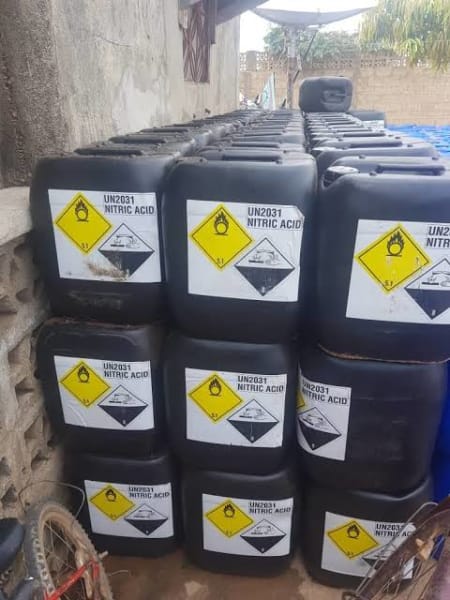
Nitric Acid 68% (Industrial Acid Pickling & Cleaning)
Nitric Acid 68% (Industrial Acid Pickling & Cleaning) supplied by Kiki's Industrial Chemicals Ltd in 35kg / 280kg…
Industrial Acid Pickling & Cleaning · Standard Packaging
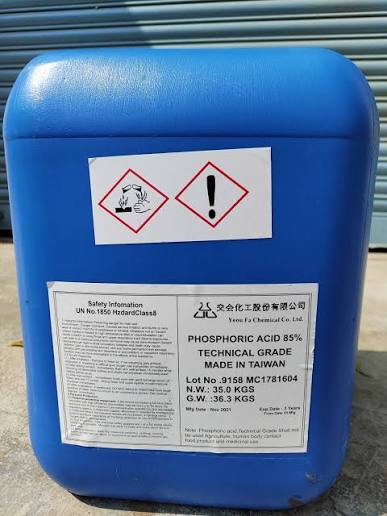
Phosphoric Acid 85% Food / Tech Grade (Rust Converter & Fertilizer Grade)
Phosphoric Acid 85% Food / Tech Grade (Rust Converter & Fertilizer Grade) supplied by Kiki's Industrial Chemicals Ltd…
Rust Converter & Fertilizer Grade · Standard Packaging
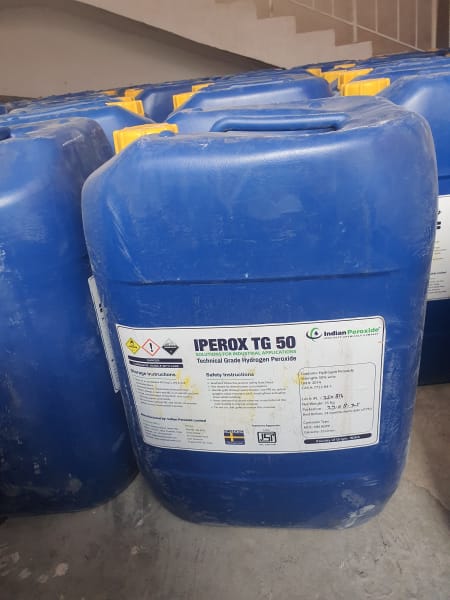
Hydrogen Peroxide 50% Solution (Textile Bleaching Peroxide)
Industrial-grade Hydrogen Peroxide 50% solution for textile bleaching, effluent water treatment, disinfection, and…
CAS 7722-84-1 · Technical Grade · Liquid
Related Technical Guides & Insights
View all →Safe Handling, Storage & Transport of Corrosive Acids and Strong Alkalis in Factory Environments
Engineering guide to storing, handling, and transporting corrosive acids and alkalis in Kenya. Secondary containment, PPE selection, and road transit safety.
Product OverviewsCaustic Soda (Sodium Hydroxide) Flakes vs Pearls vs Liquid: Specification & Sourcing Guide
Compare Caustic Soda 99% flakes, micro-pearls, and 50% liquid lye for soap manufacturing, dairy CIP, and water treatment across Kenya and East Africa.
Chemical SafetyIndustrial Chemical Storage Compatibility, Secondary Containment & Safety Protocols in Kenya
How to organize industrial chemical warehouses in Kenya. Chemical compatibility matrices, segregation distances, bunding, and NEMA safety rules.