Industrial Chemical Storage Compatibility, Secondary Containment & Safety Protocols in Kenya
How to organize industrial chemical warehouses in Kenya. Chemical compatibility matrices, segregation distances, bunding, and NEMA safety rules.
Quick Answer — Industrial Chemical Storage Compatibility, Secondary Containment & Safety Protocols in Kenya
Industrial chemical storage compatibility in Kenya is governed by systematic chemical segregation according to Dangerous Goods hazard classes. The four non-negotiable segregation rules are: (1) Keep strong mineral acids strictly separated from strong alkalis to prevent exothermic boiling, (2) Separate concentrated oxidizing agents (such as 50% Hydrogen Peroxide and Calcium Hypochlorite) from flammable solvents and combustible organic materials by a minimum 3-meter distance or fire barrier, (3) Never store Hypochlorite disinfectants adjacent to Mineral Acids (which generates lethal Chlorine Gas Cl2), and (4) Store toxic and heavy metal compounds in locked, dedicated bunded compartments.
Chemical storage compatibility is the systematic arrangement and physical separation of chemical substances based on their reactivity profiles to prevent unintended chemical reactions, explosions, fires, or toxic gas generation in the event of container leakage.
Key Facts
- •Mixing common Sodium Hypochlorite bleach with Hydrochloric Acid instantly releases deadly green-yellow Chlorine Gas ($Cl_2$), causing immediate acute pulmonary edema.
- •Chemical warehouse ventilation in tropical East Africa requires a minimum of 6 to 12 complete room air changes per hour (ACH) to prevent toxic vapor accumulation.
- •Chemical storage pallets must be stacked no more than two tiers high for liquid IBCs/drums, with 1.5-meter minimum clear aisle widths for emergency forklift evacuation.
A chemical warehouse along Nairobi's Enterprise Road or near the Port of Mombasa can appear impeccably organized on the surface while masking a catastrophic compatibility error.
Pallets of chemicals are stacked neatly on steel racking. The floors are swept. The inventory tally matches the ERP database.
Yet on Bay 3, a pallet of Calcium Hypochlorite 70% (a powerful oxidizer) sits directly above five drums of Hydrochloric Acid 33%.
A forklift tine punctures the upper drum. Liquid drips down onto the drums below. Within forty seconds, an aggressive chemical reaction generates a cloud of dense, greenish-yellow Chlorine Gas (Cl_2) that fills the warehouse, shutting down operations across the entire industrial park.
In chemical storage, layout is not an aesthetic decision; it is a critical process safety system.
---
1. The Chemical Storage Compatibility Matrix
The core rule of chemical warehousing is hazard class segregation: substances that react violently upon contact must be separated by physical distance, dedicated containment bunds, or fire-rated walls.
Chemical Family — Mineral Acids (Class 8) — Strong Alkalis (Class 8) — Oxidizers (Class 5.1) — Flammable Liquids (Class 3) — Toxic Substances (Class 6.1)
Mineral Acids (8) — Compatible — STRICT SEPARATION — STRICT SEPARATION — STRICT SEPARATION — Evaluate SDS
Strong Alkalis (8) — STRICT SEPARATION — Compatible — Evaluate SDS — STRICT SEPARATION — Evaluate SDS
Oxidizers (5.1) — STRICT SEPARATION — Evaluate SDS — Compatible — STRICT SEPARATION — STRICT SEPARATION
Flammable Liquids (3) — STRICT SEPARATION — STRICT SEPARATION — STRICT SEPARATION — Compatible — Evaluate SDS
Toxic Substances (6.1) — Evaluate SDS — Evaluate SDS — STRICT SEPARATION — Evaluate SDS — Compatible
---
2. Four Incompatible Mixtures That Must Never Occur
1. Mineral Acids + Hypochlorite Disinfectants (The Chlorine Gas Disaster)
NaOCl + 2HCl → NaCl + H₂O + Cl₂ ↑
The Hazard:* Rapid generation of lethal chlorine gas (Cl₂). Chlorine is a choking pulmonary agent that destroys lung alveoli and corrodes warehouse structural steel within hours.
2. Strong Acids + Strong Alkalis (The Exothermic Steam Ejection)
H₂SO₄ + 2NaOH → Na₂SO₄ + 2H₂O + Δ H (-114 kJ/mol)
The Hazard:* Intense heat of neutralization causes localized boiling, launching boiling-hot corrosive chemical slurry across the warehouse.
3. Concentrated Oxidizers + Flammable Solvents / Combustibles
H₂O₂ (50%) + Organic Solvents / Wooden Pallets → Instant Spontaneous Combustion
The Hazard:* Oxidizers release massive pure oxygen, turning minor smoldering into an intense, explosive inferno that cannot be smothered with standard dry chemical extinguishers.
4. Acids + Cyanide or Sulfide Salts (The Poison Gas Threat)
NaCN + HCl → NaCl + HCN ↑ (Hydrogen Cyanide Gas)
The Hazard:* Generates fatal Hydrogen Cyanide (HCN) or Hydrogen Sulfide (H₂S) gas, which causes rapid asphyxiation at concentrations below 50 ppm.
---
3. Warehouse Layout & Physical Design Standards
A compliant chemical warehouse in Kenya must incorporate these foundational design elements:
A. Floor Ingress & Impermeable Epoxy Surfacing
Floors must be seamless concrete sealed with heavy-duty chemical-resistant epoxy or polyurethane screed (minimum 3mm thickness). Bare concrete rapidly absorbs spilled chemicals, releasing dangerous vapors for months.
B. Controlled Cross-Ventilation (6 to 12 Air Changes per Hour)
Most hazardous chemical vapors (including chlorine, acid mists, and solvent vapors) are heavier than air:
Floor-level exhaust louvers (150 mm above finished floor level) ensure dense vapors are drawn out continuously.
Roof-level natural ventilation monitors evacuate rising hot air and lighter-than-air gases.
C. Aisle Clearances & Stacking Limits
Main Forklift Aisles: Minimum 2.5 to 3.0 meters clear width to prevent forklift collisions with storage racking.
Stacking Limits: Maximum 2 tiers high for 1000L IBC totes; maximum 3 tiers for 200L drums on certified steel spill pallets. Never stack pallets of caustic soda bags directly against chemical liquid IBCs.
---
4. Spill Response Preparedness & Emergency Kit Matrix
Every chemical storage warehouse must maintain dedicated Spill Response Stations equipped with compatible neutralizing and absorbent media:
Chemical Spill Class — Required Neutralizing / Absorbent Agent — Prohibited Absorbent
Acid Spills (HCl, H2SO4, HNO3) — Sodium Bicarbonate / Soda Ash / Calcium Carbonate — Sawdust / Wood Shavings (Risk of Nitration Fire)
Alkali Spills (Caustic Soda) — Citric Acid / Dilute Phosphoric Acid / Inert Clay — Cellulosic wipes (Heat generation)
Oxidizer Spills (H2O2, Hypochlorite) — Inert Polypropylene Absorbent Pads / Clean Sand — Sawdust / Organic rags (Spontaneous Ignition!)
Solvent / Oil Spills — Hydrophobic Polypropylene Booms / Diatomaceous Earth — Open water flushing into municipal sewer
---
5. Summary: Engineered Prevention is the Only Defense
In chemical warehousing, safety cannot rely on good intentions or hoping that containers never leak.
Safety is achieved through engineered separation, impervious secondary containment, clear hazard communication labels, and continuous workforce training.
Design your chemical layout with precision, inspect your pallets weekly, and partner with certified industrial chemical suppliers who deliver compliant packaging every time.
Article Frequently Asked Questions
Related Industries
Related Applications
Chemicals Mentioned in This Guide

Sodium Hypochlorite ( Liquid Chlorine 10% - 15% ) (Water Bleaching & Disinfection)
Sodium Hypochlorite ( Liquid Chlorine 10% - 15% ) (Water Bleaching & Disinfection) supplied by Kiki's Industrial…
Water Bleaching & Disinfection · Standard Packaging

Hydrochloric Acid ( Muriatic Acid 31% - 35% ) (Tech Grade Pickling & pH Control)
Hydrochloric Acid ( Muriatic Acid 31% - 35% ) (Tech Grade Pickling & pH Control) supplied by Kiki's Industrial…
Tech Grade Pickling & pH Control · Standard Packaging
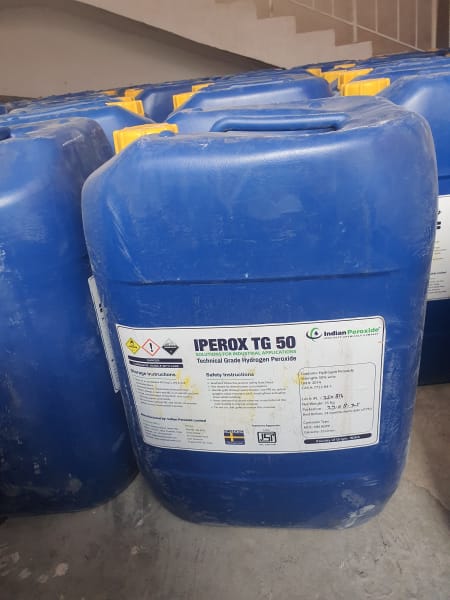
Hydrogen Peroxide 50% Solution (Textile Bleaching Peroxide)
Industrial-grade Hydrogen Peroxide 50% solution for textile bleaching, effluent water treatment, disinfection, and…
CAS 7722-84-1 · Technical Grade · Liquid

Caustic Soda (Flakes, Pearls) (99% min)
Caustic Soda (Flakes, Pearls) (99% min) supplied by Kiki's Industrial Chemicals Ltd in 25kg bag. Ideal for Textile…
CAS 1310-73-2 · 99% min · Standard Packaging
Related Technical Guides & Insights
View all →Coagulants & Flocculants in Industrial Effluent & Wastewater Treatment: PAC, Alum & Polyacrylamide
Engineering guide to PAC, Alum, Ferric Chloride, and Polyacrylamide flocculants for industrial effluent treatment and NEMA discharge compliance in Kenya.
Water TreatmentEssential Chemicals for Industrial Water Treatment in Kenya: Process Stages, Sourcing & Quality Standards
Complete engineering guide to industrial water treatment chemicals in Kenya. Covers coagulants, flocculants, pH adjusters, biocides, and antiscalants.
Solvents & ExtractionCommercial n-Hexane vs Pure Hexane: Boiling Range 65–70°C, Isomer Blends, and Solvent Residue Control
Understand the chemical distinction between pure analytical n-hexane and commercial extraction-grade hexane: distillation parameters, isomer distribution, and non-polar solvency.