Coagulants & Flocculants in Industrial Effluent & Wastewater Treatment: PAC, Alum & Polyacrylamide
Engineering guide to PAC, Alum, Ferric Chloride, and Polyacrylamide flocculants for industrial effluent treatment and NEMA discharge compliance in Kenya.
Quick Answer — Coagulants & Flocculants in Industrial Effluent & Wastewater Treatment: PAC, Alum & Polyacrylamide
Industrial wastewater clarification in Kenya relies on a two-step chemical sequence: (1) Primary Coagulation using positively charged metallic salts (such as Polyaluminium Chloride PAC or Aluminium Sulphate) to neutralize colloidal repulsive charges, followed by (2) Flocculation using high-molecular-weight Polyacrylamide (PAM) polymers to bridge destabilized micro-particles into heavy, rapid-settling sludge flocs.
Coagulants and flocculants are specialized water clarification chemicals that destabilize suspended colloids and bridge them into aggregate masses for rapid sedimentation or dissolved air flotation (DAF).
Key Facts
- •Coagulation requires intense high-shear flash mixing (100–150 RPM for 30–60 seconds), whereas polymer flocculation requires gentle low-shear agitation (20–40 RPM) to prevent shearing delicate polymer bridges.
- •Anionic polyacrylamides are standard for inorganic mineral and heavy metal effluent, whereas Cationic polyacrylamides are essential for high-protein food processing, abattoir, and municipal biological sludge dewatering.
- •Overdosing polymer flocculants causes charge reversal and steric stabilization, resulting in re-turbid, slimy effluent that blinds filter presses.
In an industrial effluent plant in Athi River or an export textile facility in Thika, the wastewater treatment operator carries serious regulatory responsibility.
Every liter of discharge must meet strict NEMA (National Environment Management Authority) water quality standards. If the clarifier carries cloudy overflow into the municipal sewer or river discharge, the factory faces immediate closure notices, punitive statutory fines, and severe operational disruption.
Yet when an effluent plant fails, the root cause is rarely mechanical pump failure.
In nine out of ten cases, the issue is chemical imbalance in the coagulation-flocculation train: overdosing coagulant, using the wrong polymer charge, or agitating the flocculation tank so aggressively that newly formed flocs are smashed to pieces before they reach the clarifier.
Understanding how coagulants and flocculants work together is the foundation of reliable industrial effluent management.
---
1. The Two-Step Clarification Mechanism
Industrial effluent contains suspended solids, emulsified oils, colloidal color pigments, and heavy metal hydroxides that carry negative electrical surface charges. Because like charges repel, these particles stay suspended indefinitely.
Clarification requires two distinct chemical operations:
- Step 1: Primary Coagulation (Charge Neutralization): Turbid Colloids (-) + Polyaluminium Chloride Al3+ ──► Micro-Flocs (Neutral) under violent flash mixing (120 RPM, 30 sec).
- Step 2: Polymer Flocculation (Inter-Particle Bridging): Micro-Flocs + Long-Chain Polyacrylamide (PAM) ──► Massive Heavy Macro-Flocs under gentle slow mixing (30 RPM, 15 min).
---
2. Choosing Your Primary Coagulant
Coagulant Chemical — Active Chemistry — Optimum pH Range — Sludge Characteristics — Best Industry Fit in Kenya
Polyaluminium Chloride (PAC 30%) — $[Al_n(OH)_mCl_{3n-m}]_x$ — 5.0 – 9.0 — Compact, fast-settling, low volume — General manufacturing, textile dyeing, paper mills
Aluminium Sulphate (Alum 17%) — $Al_2(SO_4)_3 \cdot 14H_2O$ — 6.0 – 7.5 — High volume, gelatinous — Municipal potable water, light industrial washings
Ferric Chloride 40% Liquid — FeCl_3 — 4.0 – 11.0 — Heavy, dense, dark reddish-brown — Tannery effluent, abattoirs, sulfide & odor control
Polyferric Sulphate (PFS) — $[Fe_2(OH)_n(SO_4)_{3-n/2}]_m$ — 4.0 – 10.5 — High density, excellent dewatering — Heavy metal plating, mining effluent, oily wastewater
Why PAC Outperforms Traditional Alum in Modern Effluent Plants:
1. Broader pH Working Window: PAC functions reliably from pH 5.0 to 9.0 without requiring heavy pre-neutralization with caustic soda.
2. Reduced Sludge Disposal Costs: PAC generates up to 40% less wet sludge volume than alum, significantly cutting sludge hauling and filter cake disposal fees.
3. Superior Cold & High-Turbidity Performance: Pre-polymerized aluminum ions act immediately upon injection without relying on slow ambient water temperature hydrolysis.
---
3. Polyacrylamide Flocculants: Anionic vs Cationic vs Non-Ionic
Polyacrylamide (PAM) polymers are ultra-high-molecular-weight molecules ($5 to 25 million Daltons$) synthesized with specific ionic charge densities:
A. Anionic Polyacrylamide (APAM)
Charge: Negative.
Mechanism: Binds with positively charged multivalent cations (Al³⁺, Fe³⁺, Ca²⁺) on micro-floc surfaces, forming enormous bridging networks.
Primary Applications:* Mining tailings, stone washing plants, electroplating effluent, coal washing, and primary inorganic clarification clarifiers.
B. Cationic Polyacrylamide (CPAM)
Charge: Positive.
Mechanism: Directly neutralizes negatively charged organic biological polymers, proteins, and cellular debris.
Primary Applications:* Dairy and cheese whey effluent, poultry and slaughterhouse processing, brewery wastewater, and mechanical sludge dewatering (centrifuges, belt filter presses, screw presses).
C. Non-Ionic Polyacrylamide (NPAM)
Charge: Neutral.
Mechanism: Pure hydrogen bonding and physical surface entrapment.
Primary Applications:* Highly acidic mineral leaching streams and complex chemical synthesis washings.
---
4. The Critical Golden Rules of Effluent Chemistry
Rule 1: Respect the Two-Speed Mixing Rule
Coagulation requires intense high shear: Flash mix at 120–150 RPM for 30–60 seconds so coagulant ions contact every particle before hydrolyzing.
Flocculation requires gentle low shear: Agitate at 20–40 RPM for 10–15 minutes. High speed in the flocculation basin mechanically rips polymer chains, destroying flocs and turning treated water cloudy again.
Rule 2: Dissolve PAM Powder Correctly (Avoid "Fish-Eyes")
Polyacrylamide powder must never be dumped directly into standing water. It forms un-dissolvable sticky gel balls ("fish-eyes") that block pump strainers and waste raw materials.
Always sprinkle powder slowly through an eductor funnel into a turbulent water vortex to achieve a 0.1% to 0.3% (w/v) stock solution.
Allow 45 to 60 minutes of gentle aging for polymer chains to uncoil completely before dosing.
Rule 3: Beware the Overdosing Trap
In chemical wastewater treatment, more chemical does not equal cleaner water. Overdosing polymer coats all particles with identical electrical charges, causing them to repel one another again (restabilization). If your clarifier suddenly turns turbid with floating slimy clumps, reduce your polymer dose by 30%.
---
5. Summary: Running a Compliant Effluent Plant
Achieving consistent, crystal-clear effluent that satisfies NEMA discharge guidelines requires balancing coagulant dosage with exact polymer selection.
Equip your on-site lab with a standard 6-paddle jar tester, perform weekly settling tests as production recipes shift, and source certified, consistent-assay raw materials from reputable industrial chemical distributors.
Article Frequently Asked Questions
Related Industries
Chemicals Mentioned in This Guide

Polyaluminium Chloride 28%/30% min for Industrial Use (Polyaluminium Chloride)
Polyaluminium Chloride (28%/30% min) supplied by Kiki's Industrial Chemicals Ltd in 25kg bag across Kenya and East…
Technical Grade · Powder
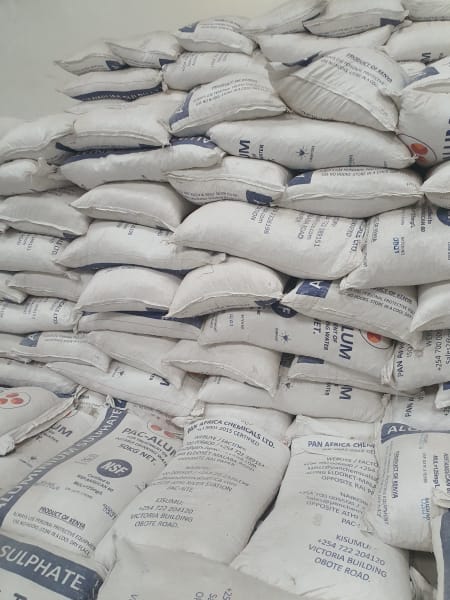
Aluminium Sulphate ( Alum Flakes / Powder / Granular ) (16-17% Al2O3 Water Coagulant)
Aluminium Sulphate ( Alum Flakes / Powder / Granular ) (16-17% Al2O3 Water Coagulant) supplied by Kiki's Industrial…
16-17% Al2O3 Water Coagulant · Standard Packaging

Caustic Soda (Flakes, Pearls) (99% min)
Caustic Soda (Flakes, Pearls) (99% min) supplied by Kiki's Industrial Chemicals Ltd in 25kg bag. Ideal for Textile…
CAS 1310-73-2 · 99% min · Standard Packaging
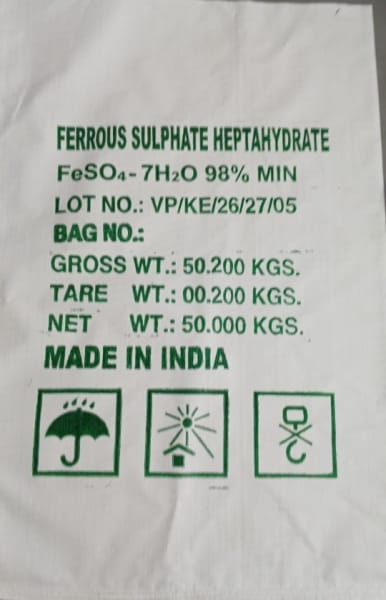
Ferrous Sulfate Heptahydrate 98% Min
Ferrous Sulphate Heptahydrate 98% Min (FeSO₄·7H₂O, CAS 7782-63-0) is an industrial-grade iron(II) salt supplied in 50…
CAS 7782-63-0 · Industrial Grade · Crystal
Related Technical Guides & Insights
View all →Essential Chemicals for Industrial Water Treatment in Kenya: Process Stages, Sourcing & Quality Standards
Complete engineering guide to industrial water treatment chemicals in Kenya. Covers coagulants, flocculants, pH adjusters, biocides, and antiscalants.
Solvents & ExtractionCommercial n-Hexane vs Pure Hexane: Boiling Range 65–70°C, Isomer Blends, and Solvent Residue Control
Understand the chemical distinction between pure analytical n-hexane and commercial extraction-grade hexane: distillation parameters, isomer distribution, and non-polar solvency.
Process EngineeringStein-Hall Corrugator Adhesive Formulation: Corn Starch Slurry, Gelatinisation Temperature, and Green Bond Strength
Master the technical chemistry of Stein-Hall corrugator paste: carrier starch cooking, caustic soda dosing, borax complexation, and raw starch gelatinisation kinetics on high-speed corrugating machines.