Ferrous Sulphate in Iron Oxide Pigment Production: Synthetic Red, Yellow and Black Pigments
Chemical synthesis guide for coatings and construction material manufacturers on using Ferrous Sulphate Heptahydrate as the core iron precursor in synthesizing high-tint iron oxide pigments.
Quick Answer — Ferrous Sulphate in Iron Oxide Pigment Production: Synthetic Red, Yellow and Black Pigments
Ferrous Sulphate Heptahydrate 98% Min is the primary soluble iron precursor used in the industrial synthesis of synthetic iron oxide pigments—specifically synthetic red iron oxide (hematite, α-Fe₂O₃), yellow iron oxide (goethite, α-FeOOH), and black iron oxide (magnetite, Fe₃O₄). In the industrial precipitation and Penniman-Zoph processes, a dilute ferrous sulphate solution is neutralized with alkali (caustic soda or ammonia) and aerated under precisely controlled temperature and pH to nucleate sub-micron 'seed' crystals. In the growth phase, metallic iron scrap is oxidized in the presence of circulating ferrous sulphate solution at 70°C–85°C. Controlling oxidation rate, temperature, and pH determines the final crystal habit, particle size distribution (0.1–0.8 µm), tinting strength, and chromatic shade for architectural paints and concrete paving blocks.
Synthetic iron oxide pigment production is an industrial chemical process converting soluble iron salts into insoluble, chemically inert crystalline metal oxide colorants through controlled precipitation and oxidation.
Key Facts
- •Yellow Pigment (Goethite): α-FeOOH synthesized by aerating ferrous hydroxide seeds at 30°C–40°C
- •Red Pigment (Hematite): α-Fe₂O₃ produced by calcining yellow oxide at 600°C–800°C or direct precipitation
- •Black Pigment (Magnetite): Fe₃O₄ produced by partial oxidation of ferrous hydroxide at 80°C–90°C
- •Required Raw Material Quality: High purity (≥98%), low insolubles (≤0.05%), and heavy metals <20 ppm
- •Kenyan End Markets: Architectural paint factories (Crown, Sadolin, Basco) and concrete cabro pavers
Primary Use Cases
In Kenya's thriving paints, coatings, and construction materials manufacturing industries—centered in Nairobi, Thika, and Mombasa—inorganic pigments provide essential opacity, UV resistance, and durable coloration. Natural mined ochres and iron ores often exhibit inconsistent particle sizes, high abrasive silica contamination, and poor tinting strength. Consequently, industrial paint formulators and precast concrete manufacturers rely on synthetic iron oxide pigments, which are manufactured from pure soluble iron precursors, predominantly Ferrous Sulphate Heptahydrate (FeSO₄·7H₂O, CAS 7782-63-0).
The Precipitation and Penniman-Zoph Process
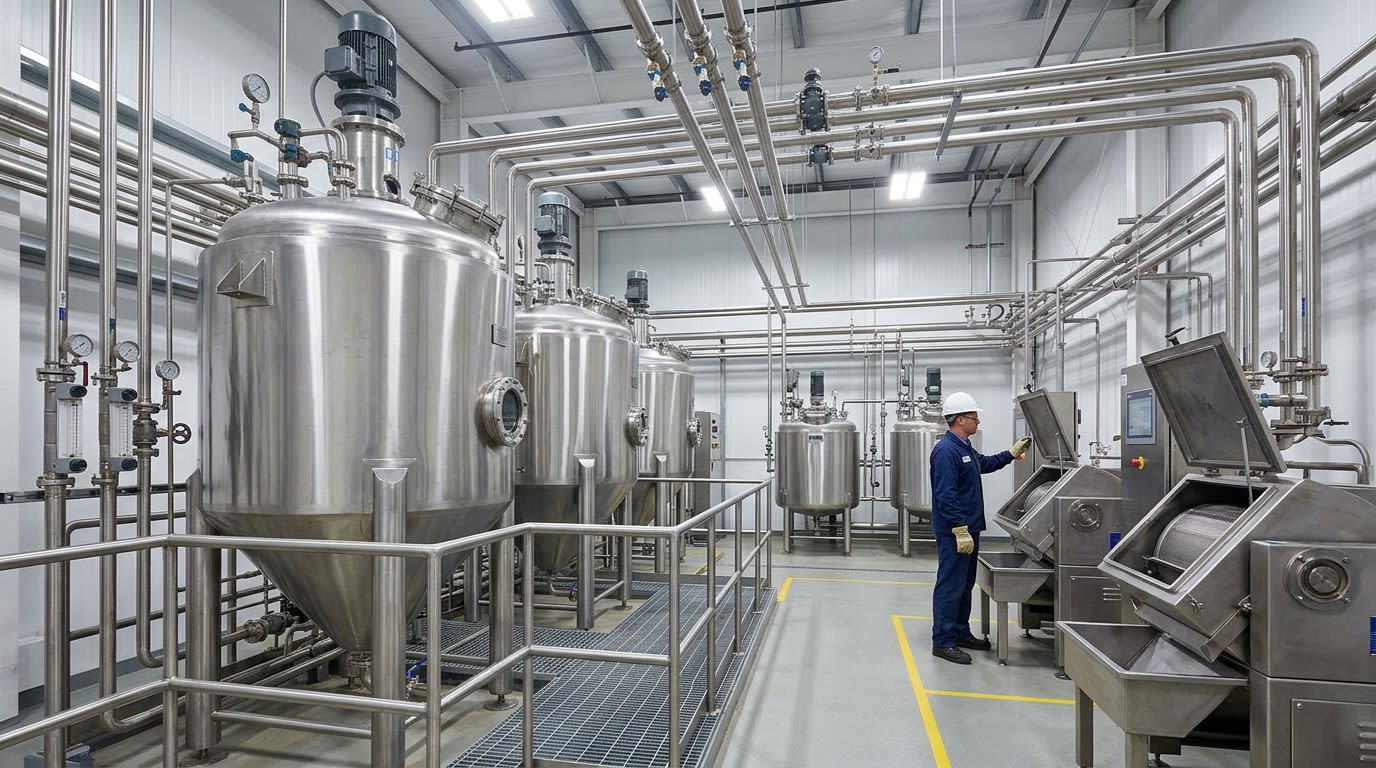
The most widely utilized industrial route for manufacturing high-quality synthetic iron oxides is the wet precipitation / Penniman-Zoph process. The process proceeds in two distinct stages:
Stage 1: Seed Nucleation
A 10% to 15% solution of Ferrous Sulphate Heptahydrate is reacted with an alkali (sodium hydroxide or ammonia) to precipitate amorphous ferrous hydroxide:
FeSO₄ + 2NaOH → Fe(OH)₂↓ + Na₂SO₄
Air is vigorously bubbled through the slurry at controlled temperature (30°C–40°C) and acidic to neutral pH (3.5–5.5). This oxidizes Fe(OH)₂ into microscopic, highly uniform acicular (needle-like) goethite seed crystals (α-FeOOH) with particle diameters under 0.05 µm.
Stage 2: Pigment Growth
The seed slurry is transferred to large growth reactors containing scrap iron submerged in circulating ferrous sulphate solution. Compressed air is sparged into the vessel while maintaining temperatures between 75°C and 85°C. Ferrous iron oxidizes on the seed crystal faces, growing them into optically mature pigment particles (0.1 to 0.6 µm) while the acid generated simultaneously dissolves scrap iron to regenerate FeSO₄ continuously.
Chemistry of Colour Modulation
By manipulating reaction temperature, pH, and post-calcination, three primary pigment families are synthesized:
- Yellow Iron Oxide (Goethite, α-FeOOH): Produced directly by precipitation at 30°C–50°C. Delivers brilliant, lightfast mustard to golden yellow tones.
- Red Iron Oxide (Hematite, α-Fe₂O₃): Produced either by direct hydrothermal precipitation at elevated temperature (>90°C) or by calcining washed yellow iron oxide in rotary kilns at 600°C–800°C: 2α-FeOOH (heat) → α-Fe₂O₃ + H₂O. Hematite provides maximum opacity and deep red-brown mass tone.
- Black Iron Oxide (Magnetite, Fe₃O₄): Synthesized by co-precipitating ferrous and ferric iron at 80°C–90°C under controlled oxygen: Fe²⁺ + 2Fe³⁺ + 8OH⁻ → Fe₃O₄↓ + 4H₂O. Delivers deep jet black coloration with ferromagnetic properties.
Critical Raw Material Quality Parameters
Pigment synthesis requires rigorous feedstock purity:
- Compound Assay: ≥ 98.0% FeSO₄·7H₂O to ensure predictable stoichiometric alkali consumption.
- Insoluble Matter: ≤ 0.05% to prevent abrasive gritty silica from contaminating fine automotive or gloss paint dispersions.
- Heavy Metals: Low lead (Pb < 20 ppm) and arsenic (As < 2 ppm) to comply with modern toy, residential, and consumer paint safety regulations.
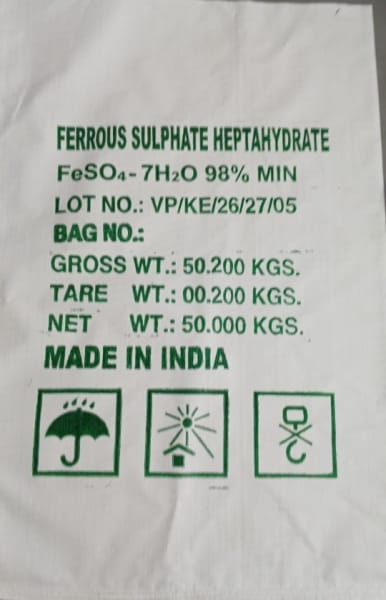
KIKI'S Industrial Chemicals supplies certified Ferrous Sulphate Heptahydrate 98% Min in 50 kg heavy-duty woven polypropylene bags with heat-sealed polyethylene inner moisture liners (Net Wt 50.000 kg, Kaiser Exports India, Lot VP/KE/26/27/05) for coatings and colorant manufacturers in Kenya.
Article Frequently Asked Questions
Related Categories
Related Industries
Related Applications
Chemicals Mentioned in This Guide
Ferrous Sulfate Heptahydrate 98% Min
Ferrous Sulphate Heptahydrate 98% Min (FeSO₄·7H₂O, CAS 7782-63-0) is an industrial-grade iron(II) salt supplied in 50…
CAS 7782-63-0 · Industrial Grade · Crystal

Caustic Soda (Flakes, Pearls) (99% min)
Caustic Soda (Flakes, Pearls) (99% min) supplied by Kiki's Industrial Chemicals Ltd in 25kg bag. Ideal for Textile…
CAS 1310-73-2 · 99% min · Standard Packaging

Ferrous sulphate monohydrate Fe: 30%min 25kg bags Technical Grade for Industrial & Commercial Use (Ferrous sulphate monohydrate Fe: 30%min 25kg bags)
Ferrous sulphate monohydrate Fe: 30%min 25kg bags (Technical Grade) supplied by Kiki's Industrial Chemicals Ltd in 25kg…
Technical Grade · Powder
Related Technical Guides & Insights
View all →Ferrous Sulphate in Chemical Manufacturing: Production of Ferric Sulphate, Iron Chelates and Catalysts
Chemical synthesis guide on utilizing Ferrous Sulphate Heptahydrate as a building block for manufacturing liquid ferric coagulants, chelated iron fertilizers (Fe-EDTA), and Fenton catalysts.
Product OverviewsThe Iron Ore Connection: Hematite, Magnetite & Industrial Ferrous Sulphate Pathways
Technical analysis explaining why iron oxide ores (hematite and magnetite) cannot directly yield ferrous sulphate, the thermodynamic reduction to metallic steel, and how steel pickling and ilmenite processing create commercial FeSO₄.
Product OverviewsHow Is Ferrous Sulphate Heptahydrate Manufactured? Industrial Processes & Quality Control
Comprehensive process engineering breakdown of commercial Ferrous Sulphate Heptahydrate production: steel pickling acid recovery, titanium dioxide co-product crystallisation, and QA standards.
Industrial ApplicationsFerrous Sulphate Uses: 50 Applications and Where They Make Commercial Sense
Comprehensive industrial reference categorizing 50 applications of Ferrous Sulphate Heptahydrate across water treatment, agriculture, cement manufacturing, chemical synthesis, and metallurgy in East Africa.