Ferrous Sulphate in Chemical Manufacturing: Production of Ferric Sulphate, Iron Chelates and Catalysts
Chemical synthesis guide on utilizing Ferrous Sulphate Heptahydrate as a building block for manufacturing liquid ferric coagulants, chelated iron fertilizers (Fe-EDTA), and Fenton catalysts.
Quick Answer — Ferrous Sulphate in Chemical Manufacturing: Production of Ferric Sulphate, Iron Chelates and Catalysts
Ferrous Sulphate Heptahydrate 98% Min serves as the primary chemical building block for manufacturing high-value secondary iron compounds in East Africa: (1) Liquid Ferric Sulphate (Fe₂(SO₄)₃): Produced by dissolving ferrous sulphate in sulphuric acid and oxidizing with hydrogen peroxide or oxygen: 2FeSO₄ + H₂SO₄ + H₂O₂ → Fe₂(SO₄)₃ + 2H₂O; (2) Chlorinated Copperas (FeClSO₄): Produced by oxidizing aqueous ferrous sulphate with chlorine gas in municipal treatment plants: 3FeSO₄ + 1.5Cl₂ → Fe₂(SO₄)₃ + FeCl₃; (3) Agricultural Iron Chelates (Fe-EDTA, Fe-DTPA): Synthesized by reacting ferrous sulphate with chelating aminopolycarboxylic acids and neutralizing with sodium or ammonium hydroxide; and (4) Fenton's Reagent: Homogeneous catalytic oxidation systems combining Fe²⁺ and H₂O₂ to destroy non-biodegradable industrial wastewater COD.
Downstream chemical synthesis of iron salts utilizes technical-grade ferrous sulphate as a reactive bivalent iron precursor for producing coagulants, agricultural micronutrients, and catalysts.
Key Facts
- •Primary Synthesis Route: Peroxide or catalytic oxidation of acidified ferrous sulphate solution
- •Chlorinated Copperas: Generates a 50:50 mixture of ferric sulphate and ferric chloride on-site
- •Chelate Synthesis: Yields stable sodium ferric ethylenediaminetetraacetate (NaFe-EDTA, ~13% Fe)
- •Fenton Reaction: Fe²⁺ + H₂O₂ → Fe³⁺ + •OH + OH⁻ (produces powerful non-selective hydroxyl radicals)
- •Raw Material Quality: Requires 98% min assay with low insolubles to ensure clear, sediment-free liquid products
Primary Use Cases
In the chemical manufacturing and toll formulation sectors of Kenya and East Africa, Ferrous Sulphate Heptahydrate 98% Min is prized as a reactive, low-cost source of soluble bivalent iron. Because it is supplied as a high-purity crystalline solid with predictable stoichiometry, local chemical blenders utilize it to manufacture secondary liquid coagulants, high-performance agricultural chelates, and advanced oxidation catalysts.
1. Manufacturing Liquid Ferric Sulphate Coagulants
While dry ferric sulphate is difficult to handle due to its extreme hygroscopicity, concentrated liquid ferric sulphate (typically 40% to 42% solution, containing 11.5% to 12.5% Fe³⁺) is a premier coagulant for potable water treatment and municipal sewage clarification. Chemical formulators synthesize it via liquid-phase oxidation:
2FeSO₄ + H₂SO₄ + H₂O₂ → Fe₂(SO₄)₃ + 2H₂O
Ferrous sulphate crystals are dissolved in water and stoichiometric sulphuric acid. Industrial hydrogen peroxide (50% H₂O₂) is dosed gradually with cooling to control the exothermic reaction. Complete oxidation is verified when negative tests with potassium ferricyanide confirm zero residual Fe²⁺. The resulting solution is filtered and adjusted to commercial density (1.50–1.55 g/cm³).
2. On-Site Chlorinated Copperas Production
Many municipal water works and industrial effluent plants utilize 'chlorinated copperas'—a highly efficient mixed coagulant prepared by dissolving Ferrous Sulphate Heptahydrate and reacting the solution with chlorine gas:
6FeSO₄·7H₂O + 3Cl₂ → 2Fe₂(SO₄)₃ + 2FeCl₃ + 42H₂O
Every 1.0 kg of ferrous sulphate consumes approximately 0.13 kg of chlorine. The resulting solution contains a 50:50 molar blend of ferric sulphate and ferric chloride, delivering rapid coagulation across an exceptionally broad pH band (pH 4.0 to 11.0) without requiring expensive liquid coagulant freight.
3. Synthesizing Agricultural Iron Chelates (Fe-EDTA)
In greenhouse horticulture and fertigation, unchelated ferrous iron precipitates quickly at pH > 6.5. Fertilizer formulators manufacture synthetic chelates by reacting Ferrous Sulphate Heptahydrate with ethylenediaminetetraacetic acid (EDTA):
FeSO₄ + Na₂H₂EDTA + 2NaOH + ½O₂ → 2NaFeEDTA + Na₂SO₄ + 3H₂O
The resulting chelated iron compound (providing ~13% elemental iron) protects the iron ion in a ring structure, keeping it 100% bioavailable to plant roots in nutrient solutions up to pH 6.5–7.0.
4. Fenton's Reagent for Advanced Effluent Oxidation
In advanced oxidation processes (AOP) for treating recalcitrant industrial effluent—such as pesticide formulation washwaters, pharmaceutical active residues, and textile dye liquors—ferrous sulphate acts as the homogeneous catalyst that activates hydrogen peroxide:
Fe²⁺ + H₂O₂ → Fe³⁺ + •OH + OH⁻
The generated hydroxyl radical (•OH) is one of the most powerful oxidants known (redox potential E° = 2.80 V), rapidly mineralizing complex aromatic ring compounds and non-biodegradable COD into harmless water, carbon dioxide, and inorganic salts.
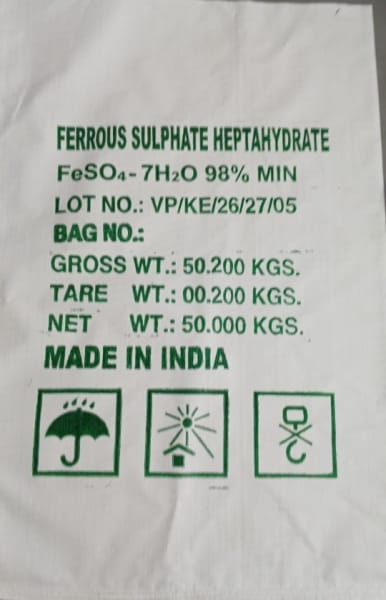
KIKI'S Industrial Chemicals supplies high-purity Ferrous Sulphate Heptahydrate 98% Min in 50 kg heavy-duty woven polypropylene bags with heat-sealed polyethylene inner moisture liners (Net Wt 50.000 kg, Kaiser Exports India, Lot VP/KE/26/27/05, marked NBO) with continuous inventory maintained in Nairobi.
Article Frequently Asked Questions
Related Categories
Related Industries
Related Applications
Chemicals Mentioned in This Guide
Ferrous Sulfate Heptahydrate 98% Min
Ferrous Sulphate Heptahydrate 98% Min (FeSO₄·7H₂O, CAS 7782-63-0) is an industrial-grade iron(II) salt supplied in 50…
CAS 7782-63-0 · Industrial Grade · Crystal
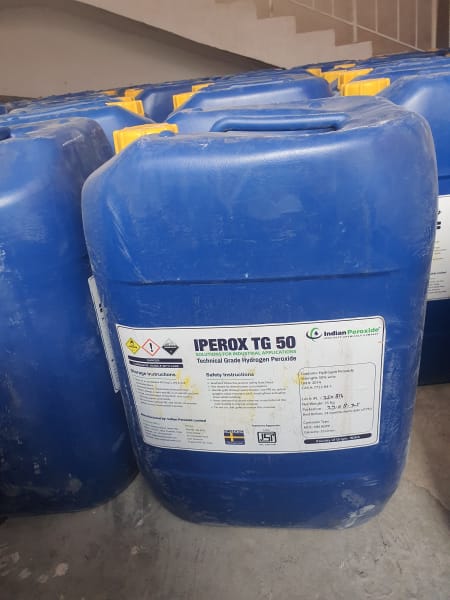
Hydrogen Peroxide 50% Solution (Textile Bleaching Peroxide)
Industrial-grade Hydrogen Peroxide 50% solution for textile bleaching, effluent water treatment, disinfection, and…
CAS 7722-84-1 · Technical Grade · Liquid

Ferrous sulphate monohydrate Fe: 30%min 25kg bags Technical Grade for Industrial & Commercial Use (Ferrous sulphate monohydrate Fe: 30%min 25kg bags)
Ferrous sulphate monohydrate Fe: 30%min 25kg bags (Technical Grade) supplied by Kiki's Industrial Chemicals Ltd in 25kg…
Technical Grade · Powder
Related Technical Guides & Insights
View all →Ferrous Sulphate in Iron Oxide Pigment Production: Synthetic Red, Yellow and Black Pigments
Chemical synthesis guide for coatings and construction material manufacturers on using Ferrous Sulphate Heptahydrate as the core iron precursor in synthesizing high-tint iron oxide pigments.
Product OverviewsThe Iron Ore Connection: Hematite, Magnetite & Industrial Ferrous Sulphate Pathways
Technical analysis explaining why iron oxide ores (hematite and magnetite) cannot directly yield ferrous sulphate, the thermodynamic reduction to metallic steel, and how steel pickling and ilmenite processing create commercial FeSO₄.
Product OverviewsHow Is Ferrous Sulphate Heptahydrate Manufactured? Industrial Processes & Quality Control
Comprehensive process engineering breakdown of commercial Ferrous Sulphate Heptahydrate production: steel pickling acid recovery, titanium dioxide co-product crystallisation, and QA standards.
Industrial ApplicationsFerrous Sulphate Uses: 50 Applications and Where They Make Commercial Sense
Comprehensive industrial reference categorizing 50 applications of Ferrous Sulphate Heptahydrate across water treatment, agriculture, cement manufacturing, chemical synthesis, and metallurgy in East Africa.