Ferrous Sulphate Heptahydrate vs Monohydrate: Which Form Do You Need?
A technical and economic comparison between Ferrous Sulphate Heptahydrate (FeSO₄·7H₂O, 19.7% Fe) and Monohydrate (FeSO₄·H₂O, 30% Fe). Discover which form fits your process and budget.
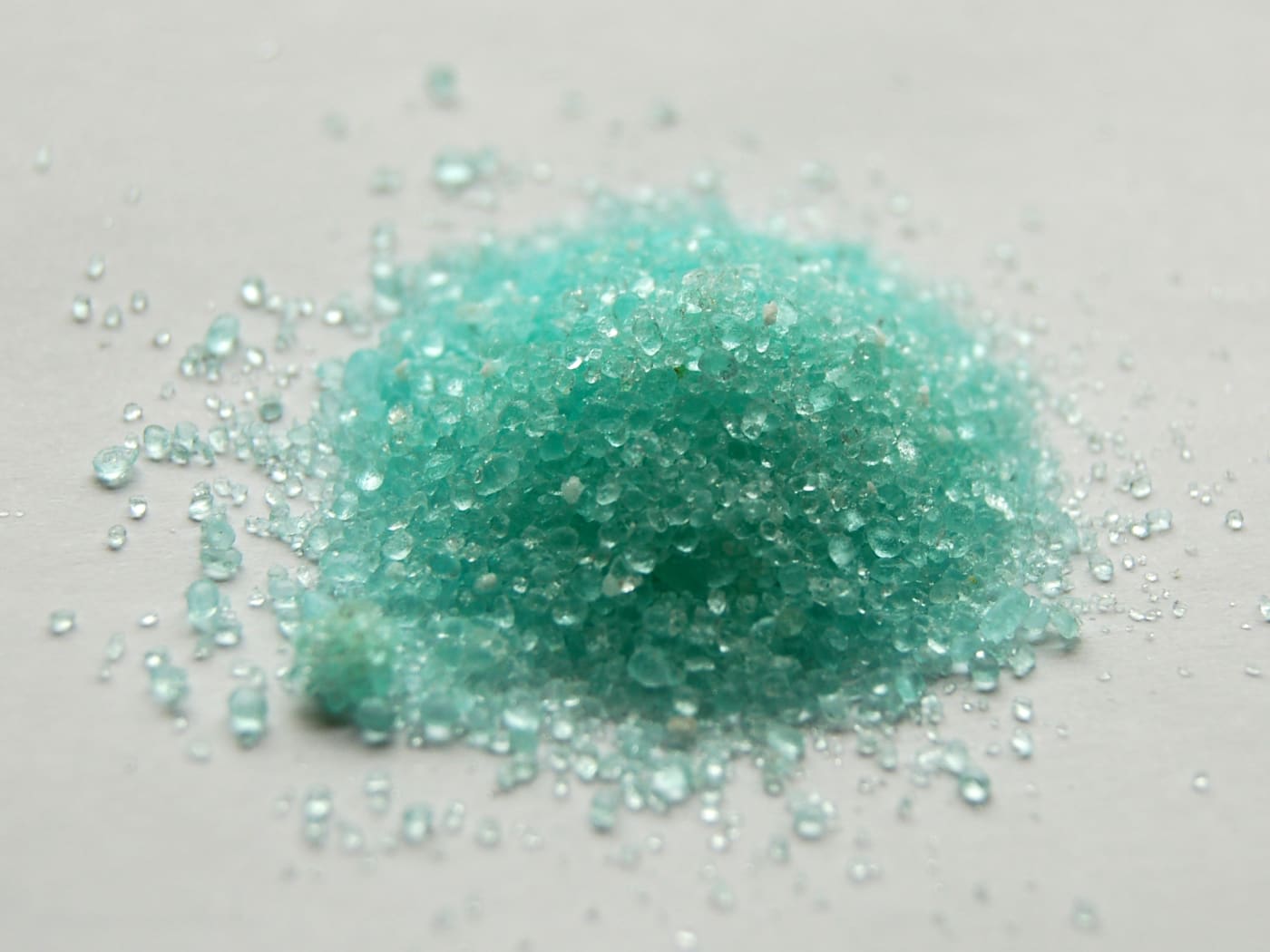
Crystalline structure of Ferrous Sulphate Heptahydrate (FeSO₄·7H₂O), CAS 7782-63-0.
Quick Answer — Ferrous Sulphate Heptahydrate vs Monohydrate: Which Form Do You Need?
The primary difference between Ferrous Sulphate Heptahydrate (FeSO₄·7H₂O) and Monohydrate (FeSO₄·H₂O) is the water of crystallization. Heptahydrate contains seven water molecules (~19.7% elemental Fe) and dissolves rapidly, making it ideal for water treatment solutions. Monohydrate has one water molecule (~30% elemental Fe), higher shelf stability, and lower shipping weight per unit of iron, making it preferred for dry animal feed premixes.
A comparative technical analysis evaluating chemical composition, dissolution thermodynamics, and application economics of iron(II) sulfate hydration states.
Key Facts
- •Heptahydrate: FeSO₄·7H₂O, MW 278.01 g/mol, ~19.7% elemental Fe, pale green crystals.
- •Monohydrate: FeSO₄·H₂O, MW 169.93 g/mol, ~30.0% elemental Fe, off-white/buff powder.
- •Heptahydrate dissolves more rapidly in ambient water treatment preparation tanks.
- •Monohydrate offers freight savings when transporting over long inland routes due to higher iron density.
Primary Use Cases
The Chemistry of Hydration States
Iron(II) sulfate exists in several distinct hydration states depending on crystallization temperature and drying conditions. In commercial chemical procurement, the two dominant forms are the heptahydrate (FeSO₄·7H₂O) and the monohydrate (FeSO₄·H₂O). Choosing between them is not simply a matter of preference; it involves trade-offs between dissolution kinetics, freight weight, storage stability, and equipment compatibility.
Our primary commercial offering, Ferrous Sulphate Heptahydrate 98% Min, delivers pale blue-green crystalline granules with rapid aqueous solubility.
Stoichiometry and Elemental Iron Concentration
The molecular weight of the heptahydrate is 278.01 g/mol, with water accounting for over 45% of total crystal mass. This results in approximately 19.7% elemental iron at 98% purity. In contrast, removing six water molecules through controlled thermal dehydration produces ferrous sulphate monohydrate (FeSO₄·H₂O), which has a molecular weight of only 169.93 g/mol. At typical commercial purity (≥91% FeSO₄·H₂O), monohydrate delivers approximately 30.0% elemental iron.
This difference has direct procurement implications: one metric ton of monohydrate supplies roughly the same amount of elemental iron as 1.52 metric tons of heptahydrate.
Dissolution Kinetics and Process Compatibility
When water treatment operators prepare liquid dosing batches, dissolution rate is a crucial consideration. Heptahydrate crystals dissolve rapidly in ambient water with moderate agitation, producing a clear, pale green Fe²⁺ stock solution without requiring high-shear mixers. Monohydrate powder, while chemically soluble, can dissolve more slowly and occasionally form stubborn paste-like clumps if dumped too quickly into unheated tanks.
Climate and Storage Stability in East Africa
In tropical and coastal warehouses (such as Mombasa, Tanga, or Dar es Salaam), relative humidity frequently exceeds 80%. Heptahydrate is chemically closer to equilibrium with moist air, but can soften or cake if ambient temperatures rise above 38°C. Monohydrate has higher thermal stability, making it popular for animal feed premixes stored in warm agricultural regions.
Freight Economics: Shipping Active Mineral vs. Crystal Water
For long-distance inland freight along the Northern Corridor (from Mombasa through Nairobi to Kampala, Kigali, or Juba), transport costs represent a significant percentage of landed chemical cost. Monohydrate saves approximately 34% on shipping weight per unit of active iron. However, for regional water treatment facilities equipped for crystal dissolution, the lower initial manufacturing cost of heptahydrate often offsets the freight difference.
Calculate active iron content accurately: How Much Iron Is in 98% Ferrous Sulphate Heptahydrate?.
Prevent hydration loss and caking: How to Store Ferrous Sulphate Heptahydrate in Kenya Warehouses.
Article Frequently Asked Questions
Related Categories
Chemicals Mentioned in This Guide

Ferrous Sulfate Heptahydrate 98% Min
Ferrous Sulphate Heptahydrate 98% Min (FeSO₄·7H₂O, CAS 7782-63-0) is an industrial-grade iron(II) salt supplied in 25…
CAS 7782-63-0 · Industrial Grade · Crystal

ABS/LAS 80% for Industrial Use (ABS/LAS)
ABS/LAS (80%) supplied by Kiki's Industrial Chemicals Ltd in 25kg bags across Kenya and East Africa.
Technical Grade · Powder

ATMP (50%)
ATMP (50%) supplied by Kiki's Industrial Chemicals Ltd in 200kg drum. Ideal for Water treatment chemicals.
50% · Standard Packaging

ATMP 50% for Industrial Use (ATMP)
ATMP (50%) supplied by Kiki's Industrial Chemicals Ltd in 200kg drums across Kenya and East Africa.
Technical Grade · Liquid
Related Technical Guides & Insights
View all →Ferrous Sulphate for Industrial Effluent: From Chemical Selection to Process Control
A technical guide to implementing ferrous sulphate in industrial wastewater treatment. Covers contaminant target chemistry, pH operating windows, jar testing protocols, dosing systems, and sludge dewatering management.
Water TreatmentFerrous Sulphate and Phosphate Removal: Understanding the Treatment Chemistry
A deep dive into the reaction chemistry of phosphate removal using ferrous sulphate. Understand precipitation kinetics, Fe:P stoichiometric molar ratios, simultaneous dosing in aeration basins, and sludge generation.
Water TreatmentFerrous Sulphate vs Ferric Chloride for Water Treatment
A technical comparison of Ferrous Sulphate and Ferric Chloride in municipal and industrial water treatment. Analyze corrosivity, concrete protection, sludge settling, and costs.