Foam Formation vs Knockdown: The Surface Chemistry of Defoamer M37 in High-Shear Emulsion Paint Production
Understand surfactant foam stabilization and foam destruction: the bridging-dewetting mechanism, hydrophobic silica synergism, and Defoamer M37 performance in Kenya.

Quick Answer — Foam Formation vs Knockdown: The Surface Chemistry of Defoamer M37 in High-Shear Emulsion Paint Production
Defoamer M37 destroys industrial foam via the bridging-dewetting mechanism: mineral oil droplets containing hydrophobic silica penetrate bubble lamella walls, causing water to dewet from particle surfaces and rupturing bubbles without creating surface craters or fish-eyes.
Defoamers are surface-active chemical formulations designed to destabilize and rupture entrained air bubbles and surface foam in industrial liquid processes.
Key Facts
- •100% active liquid compound containing hydrophobic treated silica.
- •Destroys foam via spontaneous entry, spreading, and bridging-dewetting.
- •Eliminates microfoam without causing surface craters or fish-eyes.
- •Supplied in 45 kg and 180 kg drums across East Africa by KIKI'S.
Primary Use Cases
In the manufacturing of water-based decorative paints, polymer dispersions, and industrial adhesives across Kenya, foam is an ever-present production headache. High-speed disperser impellers operating at tip speeds above 20 m/s entrain massive volumes of air into surfactant-rich slurries. Without effective chemical foam control, paint tanks overflow, milling efficiency plummets, and dried paint films develop catastrophic pinhole and crater defects.
The Physical Chemistry of Industrial Foam
Pure liquids cannot foam; foam requires surfactants (wetting agents, emulsifiers, associative thickeners) that lower surface tension:
- The Marangoni Effect: When an air bubble approaches the liquid surface, liquid drains from the lamella film. Surfactant concentration drops in the thinning film, creating a local surface tension gradient that pulls liquid back in, mechanically stabilizing the bubble wall.
- Macrofoam vs Microfoam: Macrofoam consists of large, buoyant polyhedral bubbles on the surface that are relatively easy to pop. Microfoam consists of spherical micro-bubbles (< 100 microns) permanently entrained within the viscous paint body, which ruin density checks and create dry-film porosity.
How Defoamer M37 Destroys Foam (Bridging-Dewetting Mechanism)
Defoamer M37 is an engineered 100% active liquid compound combining a paraffinic hydrocarbon mineral oil carrier with finely dispersed hydrophobic treated silica and modified polyether surfactants:
- Entering the Lamella: Defoamer droplets have lower surface tension than the surfactant-laden foaming medium. They spontaneously penetrate and enter the air-water interface of the bubble wall.
- Spreading and Thinning: The defoamer droplet spreads rapidly across the bubble lamella, displacing stabilizing surfactant molecules.
- Bridging-Dewetting: The hydrophobic silica particles within the defoamer droplet pierce the two opposing air interfaces of the film wall. Because water dewets from hydrophobic silica surfaces, the liquid film ruptures instantaneously, collapsing the bubble.
Why 100% Active Non-Silicone Chemistries Excel
Standard silicone defoamers (polydimethylsiloxanes) can cause severe surface defects (cratering, fish-eyes, inter-coat adhesion loss) if slightly over-dosed. Defoamer M37 provides powerful foam knockdown and long-lasting de-aeration across acrylic, PVA, and styrene-acrylic paints without disrupting surface tension balance or causing recoatability failures.
KIKI'S Industrial Chemicals supplies Defoamer M37 in factory 45 kg carboys and 180 kg heavy-duty drums, serving top architectural coatings and adhesive blenders in East Africa.
Article Frequently Asked Questions
Related Categories
Related Industries
Chemicals Mentioned in This Guide
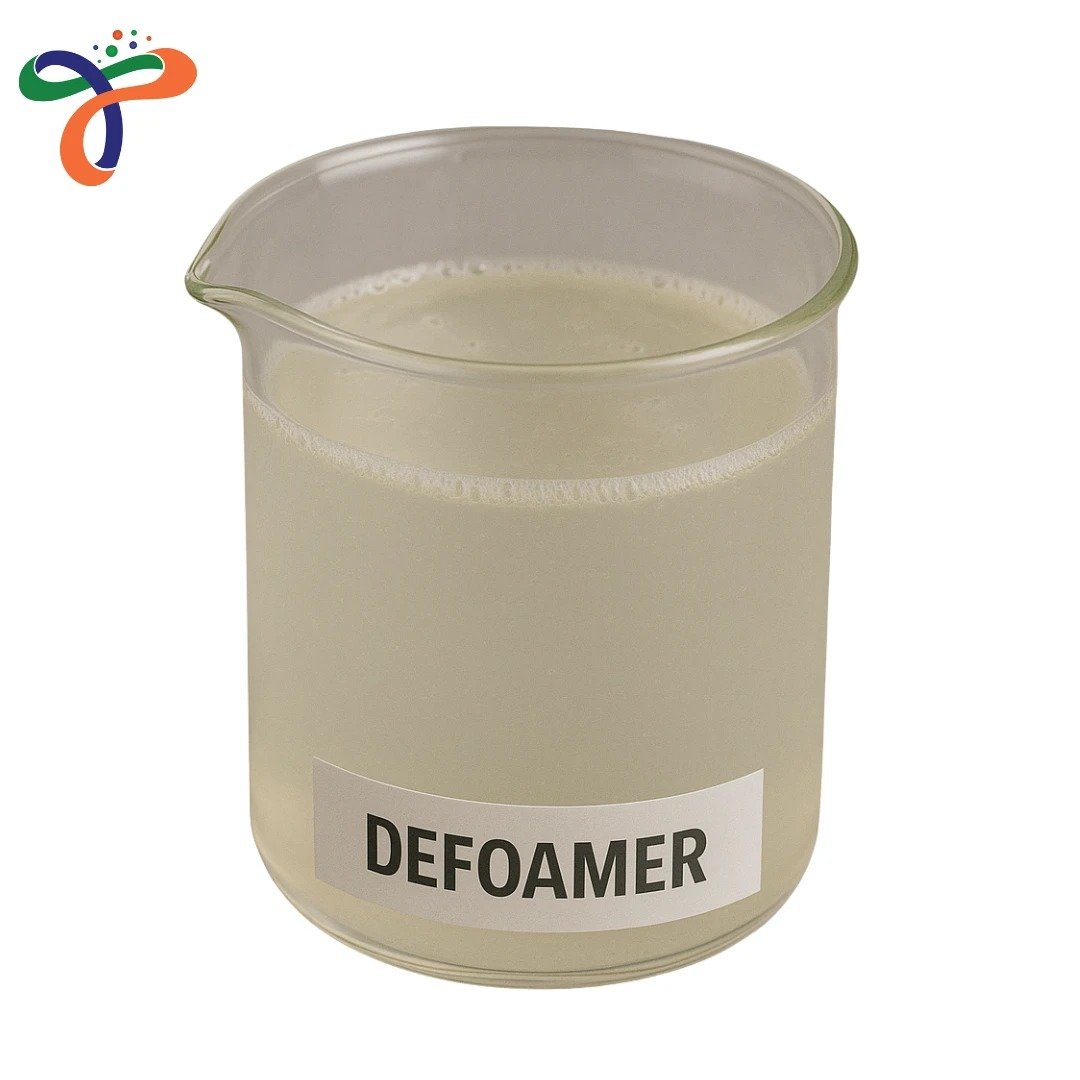
Defoamer M37 (High-Efficiency Industrial Foam-Control Agent)
High-performance Defoamer M37 (100% active foam-control agent) supplied in 45kg and 180kg plastic drums by KIKI'S…
CAS Proprietary Blend (63148-62-9 / 64742-52-5 / Silica) · Industrial Formulation Grade · Liquid

ABS/LAS 80% for Industrial Use (ABS/LAS)
ABS/LAS (80%) supplied by Kiki's Industrial Chemicals Ltd in 25kg bags across Kenya and East Africa.
Technical Grade · Powder

ATMP (50%)
ATMP (50%) supplied by Kiki's Industrial Chemicals Ltd in 200kg drum. Ideal for Water treatment chemicals.
50% · Standard Packaging

ATMP 50% for Industrial Use (ATMP)
ATMP (50%) supplied by Kiki's Industrial Chemicals Ltd in 200kg drums across Kenya and East Africa.
Technical Grade · Liquid
Related Technical Guides & Insights
View all →Solvent Extraction of Soybean, Sunflower, and Canola Oils: Hexane Desolventising and Residue Limits
Step-by-step engineering analysis of continuous counter-current hexane extraction in oilseed processing: flake preparation, miscella distillation, and meal desolventising.
Process EngineeringAeration Basin Foam Control: Non-Silicone Defoamers in Industrial Effluent and Textile Wastewater Treatment
Combat biological and surfactant foaming in industrial wastewater aeration basins: non-silicone defoamers, DO transfer protection, and textile effluent management in Kenya.
Industrial ChemistryFormulating Contact and Polyurethane Adhesives: Ethyl Acetate Solvation Power and Open Time Control
Explore the polymer solvation mechanics of Ethyl Acetate in polychloroprene (neoprene) and polyurethane footwear, upholstery, and woodworking contact adhesives.