Grind Stage vs Letdown Addition: How Split-Dosing Defoamers Prevents Surface Craters, Fish-Eyes, and Entrained Micro-Air
Master the split-addition protocol for industrial defoamers: 50% in pigment grind, 50% in resin letdown, avoiding shear emulsification, and crater prevention in Kenya.

Quick Answer — Grind Stage vs Letdown Addition: How Split-Dosing Defoamers Prevents Surface Craters, Fish-Eyes, and Entrained Micro-Air
The optimal defoamer protocol splits total dosage 50/50: 50% added in the high-shear pigment grind to prevent air entrainment during dispersion, and 50% in the low-shear letdown to ensure active droplets remain intact to prevent foam during canning and roller application without causing craters.
Split-addition defoaming is the staged incorporation of anti-foaming agents across high-shear and low-shear processing phases to optimize bubble destruction without surface defects.
Key Facts
- •50% dosed during pigment high-shear dispersion (Cowles blade 18-22 m/s).
- •50% dosed during gentle letdown with polymer emulsion (3-5 m/s).
- •Prevents over-shearing emulsification and under-shearing crater formation.
- •Verified by factory specific gravity and roller application testing.
Primary Use Cases
In industrial paint batch manufacturing, adding the right defoamer at the wrong stage or in the wrong proportion can ruin an entire production batch. Paint technologists must strike a delicate thermodynamic balance: the defoamer must be sufficiently dispersed to avoid causing surface defects, yet not over-sheared to the point where active droplet size drops below the threshold required to rupture foam.
The Split-Addition Protocol: 50/50 Strategy
The industry standard best practice divides the total recommended defoamer dosage (typically 0.2% to 0.4% w/w) into two strategic stages:
- Stage 1: Grind Addition (50% of total): Added into water, wetting agents, and pigment slurry prior to loading calcium carbonate, talc, and TiO2. High shear from the Cowles blade (tip speed 18-22 m/s) breaks down defoamer droplets to approximately 10-20 microns, suppressing massive air vortexing during pigment wetting.
- Stage 2: Letdown Addition (50% of total): Added during gentle final blending alongside the polymer emulsion (acrylic/PVA binder) and thickeners under low shear (3-5 m/s). This second addition ensures active, larger defoamer droplets remain intact to prevent foaming during filling, canning, and end-user roller application.
Consequences of Improper Defoamer Incorporation
Failing to follow the split-dosing protocol results in predictable coating failures:
- Over-Shearing (Emulsification): Adding 100% of defoamer into the grind stage causes intense shear to emulsify droplets into nano-scale particles (< 2 microns). These droplets are too small to bridge bubble lamellae, destroying long-term anti-foaming efficacy.
- Under-Shearing (Crater / Fish-Eye Formation): Adding 100% of defoamer into the gentle letdown stage leaves large oil droplets (> 100 microns). These droplets migrate to the wet paint surface during drying, creating severe surface depressions with raised rims (craters and fish-eyes).
Quality Control Testing at Factory Level
Kenyan paint QC laboratories can verify defoamer performance using simple standardized checks:
- Specific Gravity Cup Check: Weigh fresh paint in a pycnometer immediately after dispersing; low density indicates high entrained micro-air.
- Roller Foam Test: Apply paint onto sealed cardboard using a coarse foam roller; count bubbles and observe time to complete bubble pop before drying.
KIKI'S technical specialists assist paint manufacturing clients in dialing in exact defoamer dosing profiles to eliminate aeration while avoiding surface defects.
Article Frequently Asked Questions
Related Categories
Related Industries
Related Applications
Chemicals Mentioned in This Guide
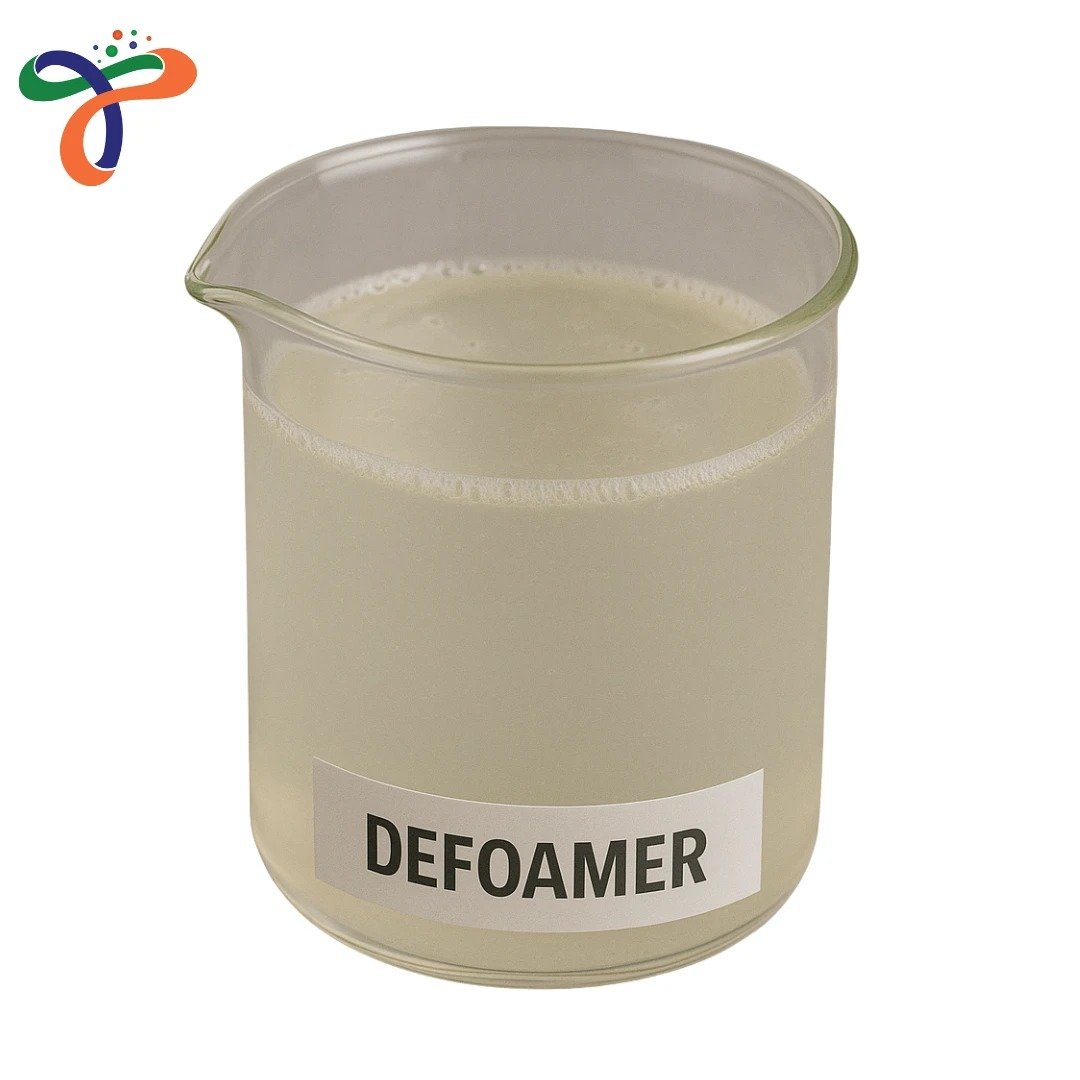
Defoamer M37 (High-Efficiency Industrial Foam-Control Agent)
High-performance Defoamer M37 (100% active foam-control agent) supplied in 45kg and 180kg plastic drums by KIKI'S…
CAS Proprietary Blend (63148-62-9 / 64742-52-5 / Silica) · Industrial Formulation Grade · Liquid

ABS/LAS 80% for Industrial Use (ABS/LAS)
ABS/LAS (80%) supplied by Kiki's Industrial Chemicals Ltd in 25kg bags across Kenya and East Africa.
Technical Grade · Powder

ATMP (50%)
ATMP (50%) supplied by Kiki's Industrial Chemicals Ltd in 200kg drum. Ideal for Water treatment chemicals.
50% · Standard Packaging

ATMP 50% for Industrial Use (ATMP)
ATMP (50%) supplied by Kiki's Industrial Chemicals Ltd in 200kg drums across Kenya and East Africa.
Technical Grade · Liquid
Related Technical Guides & Insights
View all →Foam Formation vs Knockdown: The Surface Chemistry of Defoamer M37 in High-Shear Emulsion Paint Production
Understand surfactant foam stabilization and foam destruction: the bridging-dewetting mechanism, hydrophobic silica synergism, and Defoamer M37 performance in Kenya.
Process EngineeringSolvent Extraction of Soybean, Sunflower, and Canola Oils: Hexane Desolventising and Residue Limits
Step-by-step engineering analysis of continuous counter-current hexane extraction in oilseed processing: flake preparation, miscella distillation, and meal desolventising.
Process EngineeringAeration Basin Foam Control: Non-Silicone Defoamers in Industrial Effluent and Textile Wastewater Treatment
Combat biological and surfactant foaming in industrial wastewater aeration basins: non-silicone defoamers, DO transfer protection, and textile effluent management in Kenya.