Sulphuric Acid in Kenya: Industrial 98%, Battery Electrolyte & Mining Leaching Guide
Source certified Commercial 98% and Battery Grade Sulphuric Acid in Kenya. Technical guide to battery plate formation, mining leaching, dilution physics & safety.
Quick Answer: Sulphuric Acid in Kenya: Industrial 98%, Battery Electrolyte & Mining Leaching Guide
Sulphuric Acid (H2SO4, CAS 7664-93-9) is the foundational mineral acid of Kenyan heavy industry, supplied primarily as Commercial Concentrated Grade (98.0%–98.5%, specific gravity 1.84) and ultra-pure Battery Electrolyte Grade (diluted to 32%–37% SG 1.250–1.280 or 98% concentrate). In lead-acid automotive battery manufacturing along Nairobi's industrial belt, Battery Grade acid enforces strict iron limits (<25 ppm) and chloride ceilings (<5 ppm) to prevent parasitic dendritic self-discharge and separator breakdown. In regional mining and hydrometallurgy, it leaches base metal oxides (copper, zinc, titanium), while in municipal and manufacturing effluent plants, it provides the most cost-effective neutralisation of alkaline waste streams.
Sulphuric Acid is a dense, colourless to faintly amber, highly oily, water-miscible, strongly diprotic mineral acid and powerful dehydrating agent with an extreme exothermic heat of dilution (-95.3 kJ/mol).
Key Facts
- •The Iron Poisoning Rule: Using commercial 98% acid (iron up to 100–200 ppm) in lead-acid batteries causes internal redox cycling (Fe²⁺ ⇌ Fe³⁺), leading to severe parasitic plate sulfation, thermal runaway, and premature battery failure in under 6 months.
- •The Dilution Safety Law: 'Always add acid to water, never water to acid.' Adding water to concentrated 98% acid causes instantaneous local boiling, steam flash-over, and explosive catastrophic corrosive spattering.
- •Material Passivation Nuance: Concentrated 93%–98% H2SO4 forms an insoluble protective iron sulfate passivation layer on mild carbon steel at ambient temperatures; however, diluted acid (<70%) instantly dissolves this barrier, corroding steel aggressively while generating explosive hydrogen gas (H2).
- •Packaging Standard: Delivered in UN-approved 35kg fluorinated HDPE carboys, 250kg heavy-duty L-ring HDPE drums, 1,000L composite IBCs, and specialized rubber/lead-lined ISO road tankers.
Along the bustling industrial corridor of Mombasa Road in Nairobi, the technical director of a lead-acid battery assembly and plate formation facility sits across from his chief quality engineer. On the conference table between them lie three dissected commercial truck batteries returned under warranty from a logistics fleet based in Naivasha.
The battery cases are bloated, the polypropylene pocket separators are brittle and scorched, and the negative lead plates have shed up to forty percent of their active spongy lead paste into the mud-rest wells at the bottom of the casing.
"The fleet manager says these batteries failed after four months of long-haul highway service," the technical director says, frowning. "Severe capacity drop. Complete failure to crank after parking overnight. We blamed their truck alternators for overcharging. But look at this lab report."
He slides a printed Inductively Coupled Plasma (ICP) spectrometry analysis across the table.
"We analyzed the electrolyte tapped from Cell 4," the engineer explains. "The specific gravity was correct—1.280 at 25 degrees Celsius. But look at the trace metal analysis: Iron is reading 165 parts per million. Chlorides are at 18 parts per million."
The technical director stares at the figures. "One hundred and sixty-five ppm? Our engineering threshold for battery formation acid is strictly capped at twenty-five ppm. Where did that iron come from?"
The engineer grimaces. "Our emergency bulk acid delivery three weeks ago. Procurement purchased standard commercial-grade 98% industrial acid from an unverified importer because the price was twelve percent lower. In chemical manufacturing, commercial 98% acid is fine. In a lead-acid electrochemical cell, that iron created a devastating parasitic redox shuttle. The batteries were self-discharging internally every hour they were parked."
He taps the warranty claims sheet.
"That single bulk delivery just cost us two million shillings in warranty claims. From this morning, every tanker of acid entering this facility is quarantined until iron, chloride, and arsenic assays are verified by our laboratory. Here is the engineering science of why sulphuric acid purity is non-negotiable."
---
The "King of Chemicals": Why Purity Dictates Performance
Sulphuric Acid (H₂SO₄, CAS 7664-93-9) is historically referred to as the "King of Chemicals." Modern industrial economies are often measured by their annual sulphuric acid consumption because it is an indispensable reagent across metallurgy, automotive battery manufacturing, chemical synthesis, fertilizer production, and wastewater management.
Concentrated Commercial Sulphuric Acid is supplied at 98.0% - 98.5% purity. It is an extraordinarily dense (1.84 g/cm^3), viscous, colourless, and strongly diprotic mineral acid:
H₂SO₄ + H₂O → H₃O⁺ + HSO₄⁻ (Ka1} ≈ 10^3)
HSO₄⁻ + H₂O ⇌ H₃O⁺ + SO₄²⁻ (Ka2} = 1.2 × 10⁻2})
However, behind the simple formula H₂SO₄ lies a massive performance divide between Commercial Industrial Grade and Battery Electrolyte Grade.
---
Battery Grade vs. Commercial 98%: The Iron Poisoning Mechanism
In an automotive or solar lead-acid storage battery, the electrolyte is an aqueous solution of sulphuric acid diluted to a specific gravity between 1.250 and 1.280 (corresponding to roughly 32% to 37% H₂SO₄ by weight).
The battery operates on the reversible conversion of lead (Pb) and lead dioxide (PbO₂) to lead sulfate (PbSO₄):
Pb + PbO₂ + 2H₂SO₄ \underset{Charge}{\overset{Discharge}{⇌}} 2PbSO₄ + 2H₂O
The Parasitic Iron Shuttle:
When commercial-grade acid containing trace iron (>50 ppm) is introduced into the cell, iron sets up a continuous, irreversible electrochemical self-discharge cycle:
- At the Positive Plate (PbO₂): Ferrous iron (Fe²⁺) is oxidized to ferric iron (Fe³⁺) by the strong oxidizing potential of the lead dioxide matrix:
- Fe²⁺ → Fe³⁺ + e⁻
- Migration Across the Separator: Soluble Fe³⁺ ions freely diffuse through the microporous polyethylene pocket separator into the negative plate compartment.
- At the Negative Plate (Pb): Ferric iron is reduced back to ferrous iron by reacting directly with the active spongy lead:
- 2Fe³⁺ + Pb + SO₄²⁻ → 2Fe²⁺ + PbSO₄ ↓
This cycle continues non-stop, 24 hours a day, even when the battery is completely disconnected from any electrical load. A battery filled with iron-contaminated acid will lose up to 5% of its state of charge every day, sulfating the negative plates, accelerating water loss through parasitic electrolysis, generating explosive hydrogen gas, and destroying customer trust.
For this reason, certified Battery Grade Sulphuric Acid strictly caps iron content below 25 ppm (with premier grades testing below 10-15 ppm), chlorides below 5 ppm, and arsenic below 1 ppm.
At Kiki's Industrial Chemicals, we supply commercial 98% and high-purity battery electrolyte sulphuric acid to manufacturers and energy storage assemblers across East Africa, backing every consignment with comprehensive batch laboratory verification.
---
Industrial Applications: Mining, Hydrometallurgy & Effluent Neutralisation
Beyond energy storage, concentrated sulphuric acid is the mechanical workhorse of East African industrial chemistry:
1. Mining and Hydrometallurgical Leaching
In regional mineral extraction—including copper and cobalt oxide recovery in the broader Rift Valley and Great Lakes region, titanium mineral sands processing along the coast, and gold ore heap leaching—sulphuric acid is the primary leaching lixiviant.
- It dissolves base metal oxides into soluble sulfates:
- CuO + H₂SO₄ → CuSO₄ + H₂O
- In gold cyanidation plants, sulphuric acid is used for pre-acidification and washing of refractory ores, stripping base metals before cyanide leaching to cut cyanide consumption by up to 40%.
2. Industrial Effluent pH Neutralisation
Manufacturing plants across Kenya—including commercial bottle-washing operations, textile dyehouses, beverage plants, and dairy processing facilities—generate thousands of cubic meters of highly alkaline wastewater (pH 10.5-12.5) laden with residual caustic soda (NaOH).
Discharging water above pH 9.0 violates NEMA wastewater discharge standards. Sulphuric acid 98% is the universal choice for pH neutralization:
- Higher Neutralisation Equivalence: Because sulphuric acid is diprotic (yielding two hydronium ions per molecule), 1.0 kg of 98% sulphuric acid neutralizes approximately 0.80 kg of sodium hydroxide, compared to hydrochloric acid (33%) which requires over 2.5 kg of liquid to achieve the same neutralisation.
- Zero Corrosive Fuming: Unlike concentrated hydrochloric acid, which continuously outgases dense, choking hydrogen chloride fumes that corrode structural steel beams and electrical control panels, concentrated sulphuric acid has an extremely low vapor pressure (<0.001 mmHg at 20°C) and produces zero fuming under ambient storage.
---
Technical Specifications: Commercial 98% vs. Battery Grade
| Chemical Parameter | Battery Electrolyte Grade (98% Con.) | Commercial Industrial Grade (98%) | Testing Method |
|---|---|---|---|
| Sulphuric Acid Assay (H₂SO₄, w/w) | 98.0% - 98.5% | 98.0% - 98.5% | Acid-Base Titration |
| Specific Gravity (20°C) | 1.835 - 1.840 g/cm^3 | 1.835 - 1.840 g/cm^3 | Hydrometer / Pycnometer |
| Appearance | Crystal clear, water-white liquid | Clear to faintly turbid/amber | Visual Inspection |
| Iron (Fe) | ≤ 25 mg/kg (Typical <15 ppm) | ≤ 100 - 200 mg/kg | AAS / Spectrophotometry |
| Chloride (Cl⁻) | ≤ 5.0 mg/kg (5 ppm) | ≤ 20 mg/kg | Turbidimetric / Argentometric |
| Nitrates & Nitrites (as NO₃) | ≤ 5.0 mg/kg | ≤ 20 mg/kg | Spectrophotometry |
| Arsenic (As) | ≤ 1.0 mg/kg | ≤ 5.0 mg/kg | Hydride Generation AAS |
| Heavy Metals (as Pb) | ≤ 10.0 mg/kg | ≤ 50.0 mg/kg | Colorimetric Sulfide Method |
| Residue on Ignition (Ash) | ≤ 50 mg/kg (0.005%) | ≤ 200 mg/kg | Gravimetric (800°C) |
| Colour (Hazen / APHA) | ≤ 20 | ≤ 80 | Spectrophotometric |
---
Dilution Thermodynamics: The Non-Negotiable Safety Rule
Diluting concentrated 98% sulphuric acid to working concentrations (such as 32% battery electrolyte or 10% effluent dosing solution) is one of the most hazardous operations in industrial chemistry.
The Physics of Dilution Heat:
The hydration of sulphuric acid is extraordinarily exothermic:
H₂SO₄(l) + nH₂O(l) → H₂SO₄(aq) Δ Hdilution ≈ -95.3 kJ/mol
When 98% acid mixes with water, the cleavage of covalent bonds and the formation of hydronium and sulfate ions releases massive thermal energy.
The Dilution Protocol:
- Cooling Infrastructure: In hot environments (such as Mombasa, Athi River, or Kisumu), diluting 1,000 litres of acid can boil the tank if uncooled. Use water-jacketed mixing tanks or internal cooling coils circulating chilled water.
- Mechanical Agitation: The receiving water must be in vigorous mechanical motion before the first drop of acid enters.
- Controlled Metering: Feed concentrated acid via a slow, metered chemical pump or gravity dip-tube that discharges directly into the high-shear impeller zone beneath the liquid surface.
---
Materials of Construction & Storage Engineering
The corrosive behavior of sulphuric acid changes dramatically based on concentration and temperature:
1. The Carbon Steel Paradox (Concentrated vs. Dilute)
- Concentrated Acid (93% - 98%) at Ambient Temperature (<35°C): Mild carbon steel can be used for bulk storage tanks. The concentrated acid reacts with the iron to form a micro-thin, insoluble barrier of ferrous sulfate (FeSO₄):
- Fe + H₂SO₄(conc) → FeSO₄(protective layer) + H₂ ↑
- This passivation layer halts further corrosion, provided flow velocities remain below 1.0 m/s (to prevent mechanical erosion).
- Diluted Acid (<70%): The iron sulfate layer dissolves instantly. The dilute acid attacks carbon steel with catastrophic speed, thinning tank walls and releasing massive volumes of explosive hydrogen gas:
- Fe + H₂SO₄(dil) → FeSO₄(soluble) + H₂ ↑ (Explosion Hazard)
- Never store or pipe diluted sulphuric acid in bare carbon steel.
2. Recommended Engineered Materials
- Piping & Valves: PTFE-lined steel, PVDF (Kynar), Alloy 20, Hastelloy C-276, and high-silicon cast iron.
- Bulk Storage Tanks: High-density cross-linked polyethylene (XLPE) with high-integrity antioxidant ORP barriers, Derakane 411/470 vinyl ester fiberglass (FRP), or heavy lead-lined steel vessels.
- Secondary Containment: Tanks must sit within an impervious concrete bund coated with acid-resistant epoxy or vinyl ester, engineered to contain at least 110% of the single largest tank's volume. Spill kits containing dry sodium bicarbonate (NaHCO₃$), soda ash, or slaked lime must be immediately accessible.
---
From the precision electrochemistry of automotive lead plates to the rugged hydrometallurgy of regional mineral extraction, sulphuric acid demands uncompromising respect for chemical purity, thermodynamic dilution rules, and corrosion engineering.
Planning a bulk chemical delivery or upgrading your industrial acid storage infrastructure? Speak to the industrial chemicals desk at Kiki's Industrial Chemicals for bulk Sulphuric Acid specifications and pricing.
Article Frequently Asked Questions
Chemicals Mentioned in This Guide
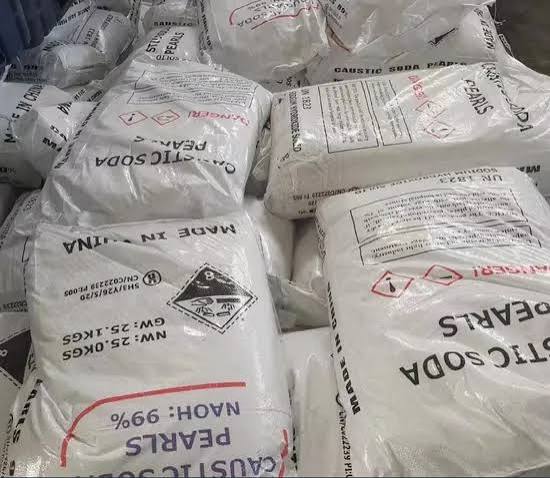
Caustic Soda Flakes /Pearls
Caustic Soda Flakes /Pearls (98.5/99% min) supplied by Kiki's Industrial Chemicals Ltd in 25kg bag. Ideal for Pulp &…
CAS 1310-73-2 · 98.5/99% min · Standard Packaging
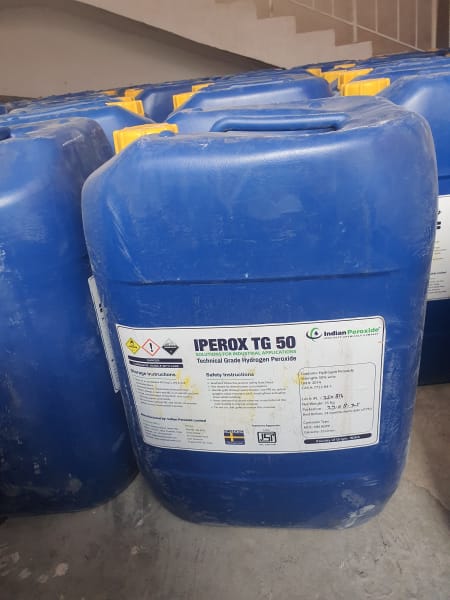
Hydrogen Peroxide 50%
Industrial-grade Hydrogen Peroxide 50% solution for textile bleaching, effluent water treatment, disinfection, and…
CAS 7722-84-1 · Technical Grade · Liquid

Hydrochloric Acid ( Muriatic Acid 31% - 35% )
Hydrochloric Acid ( Muriatic Acid 31% - 35% ) (Tech Grade Pickling & pH Control) supplied by Kiki's Industrial…
Tech Grade Pickling & pH Control · Standard Packaging

Hydrochloric Acid 33%
High-concentration Hydrochloric Acid 33% (HCl) for water treatment, pH control, steel pickling, borehole…
CAS 7647-01-0 · Technical / Industrial Grade (33% Concentration) · Clear Fuming Yellowish Liquid
Related Technical Guides & Insights
View all →Polyaluminium Chloride (PAC 30%) in Kenya: Industrial Clarification, PAC vs. Alum & Water Treatment
Buy high-purity Polyaluminium Chloride (PAC 30% powder) in Kenya. Discover why water works and food factories are replacing Alum for high-turbidity clarification.
Chemical SourcingCaustic Soda in Kenya: The Definitive Industrial Guide to Flakes, Pearls, and Liquid Lye Across Manufacturing
Complete engineering guide to Caustic Soda (Sodium Hydroxide) in Kenya. Compare 99% flakes, micro-pearls, and 50% liquid across soap, pulp, CIP, and effluent.
Regulatory & KEBS StandardsUnderstanding Chemical Safety Data Sheets (SDS) & KEBS Regulatory Compliance in Kenya
How to read GHS 16-section Safety Data Sheets (SDS) and ensure KEBS, NEMA, and DOSHS statutory chemical compliance in Kenyan industrial facilities.