Polyaluminium Chloride (PAC 30%) in Kenya: Industrial Clarification, PAC vs. Alum & Water Treatment
Buy high-purity Polyaluminium Chloride (PAC 30% powder) in Kenya. Discover why water works and food factories are replacing Alum for high-turbidity clarification.
Quick Answer: Polyaluminium Chloride (PAC 30%) in Kenya: Industrial Clarification, PAC vs. Alum & Water Treatment
Polyaluminium Chloride 30% (PAC, [Al2(OH)nCl6-n]m, CAS 1327-41-9) is an advanced pre-hydrolyzed polymeric inorganic coagulant used across Kenya for municipal drinking water clarification, industrial process water purification, and heavy wastewater treatment. Formulated with minimum 30% Al2O3 and high basicity (75%–85%), PAC delivers rapid charge neutralisation and bridging flocculation via stable pre-formed Keggin polycations ([Al13O4(OH)24(H2O)12]⁷⁺). Compared to traditional Aluminium Sulphate (Alum), PAC operates across a broader pH spectrum (5.0–9.0), consumes up to 70% less natural water alkalinity, cuts chemical sludge volume by 35%–45%, and leaves compliant residual aluminium levels (<0.2 mg/L under KEBS KS EAS 12:2019).
Polyaluminium Chloride 30% is a yellow-to-light-yellow spray-dried powder comprising pre-polymerized polynuclear hydroxy-aluminium complexes, readily soluble in water to form concentrated, non-clumping coagulant stock solutions.
Key Facts
- •Pre-Hydrolyzed Performance: Unlike alum, which requires in-situ hydrolysis and consumes 0.5 mg/L alkalinity (as CaCO3) per mg/L alum, PAC carries pre-synthesized polymeric species that do not crash finished water pH.
- •High Turbidity Shock Resistance: Rapidly destabilizes colloidal clay, silts, and organic humic acids during torrential rainy season river turbidity spikes (jumping from 50 to >2,000 NTU) in 1/3 the settling time of alum.
- •Sludge Reduction & Filter Run Efficiency: Generates dense, compact flocs that produce 30% to 50% lower sludge cake volumes, extending dual-media sand filter backwash cycles by up to 40%.
- •Packaging Standard: 25kg multi-wall woven polypropylene bags with high-density polyethylene (HDPE) moisture-barrier inner liners, stored dry below 30°C.
At 2:00 AM in the control room of a municipal raw water intake and clarification station along the upper Tana River in Central Kenya, the telemetry alarm triggers a flashing red warning.
The torrential April "long rains" have broken over the Aberdare mountain catchment. Outside in the dark, the river has transformed into an angry, churning red-brown torrent.
On the digital supervisory monitor, the raw water turbidity sensor reading climbs relentlessly: 65 NTU at midnight, 420 NTU at 1:15 AM, and now an eye-watering 1,750 NTU.
The plant operator and his shift chemist scramble down the gantry to the chemical dosing hall. The automated volumetric feeders are dumping bag after bag of solid Aluminium Sulphate (industrial alum, 17% Al₂SO₄) into the rapid mixing flume.
"The flash mixer is running at maximum dosing," the operator shouts over the roar of the intake pumps. "Fifty milligrams per litre! But look at Clarifier 2. The floc is pinpoint, feather-light, and floating right over the sedimentation weirs into the rapid sand filters."
The chemist dips a handheld digital pH meter into the clarifier inlet channel. The display stabilizes at pH 5.1.
"Stop the alum feeders," the chemist orders. "Alum hydrolysis has stripped every trace of natural bicarbonate alkalinity out of this river water. The pH has crashed into the acidic dead zone where aluminium cannot form insoluble hydroxide flocs. If we push more alum, we will blind all eight sand filters with pin-floc in forty minutes, and our finished water will fail KEBS limits for dissolved aluminium."
He points across the chemical storage warehouse to a neat stack of green-and-white 25kg bags labeled Polyaluminium Chloride (PAC 30% Powder, Drinking Water Grade).
"We calibrate the dissolving tanks for PAC 30%. At high basicity, PAC brings its own pre-formed polymeric aluminium chains. It does not need the river's alkalinity, it does not crash the pH, and its flocs settle like lead shot. Here is the operational chemistry of why modern water treatment relies on PAC."
---
The Coagulation Dilemma: Why Traditional Alum Fails Under Stress
For over a century, Aluminium Sulphate (Al₂(SO₄)₃ · 14H₂O, commonly known as commercial alum) served as the primary inorganic coagulant for drinking water and wastewater clarification in East Africa. It was cheap, readily available, and reasonably effective for benign, clear surface waters.
However, alum has severe thermodynamic and chemical limitations that create immense operational headaches during tropical weather extremes:
1. In-Situ Hydrolysis and the Alkalinity Trap
Alum is a simple, un-hydrolyzed trivalent salt. When introduced into raw water, it must undergo spontaneous in-situ hydrolysis to form insoluble aluminium hydroxide flocs (Al(OH)₃).
This chemical reaction requires water-borne hydroxyl ions, consuming natural bicarbonate alkalinity (HCO₃⁻):
Al₂(SO₄)₃ + 6HCO₃⁻ ⇌ 2Al(OH)₃ ↓ + 3SO₄²⁻ + 6CO₂
Every 1.0 mg/L of commercial alum dosed consumes approximately 0.50 mg/L of water alkalinity (expressed as CaCO₃). In poorly-buffered tropical rivers or soft highland waters, dosing 40-80 mg/L of alum to treat high-turbidity floodwaters causes the pH to plummet from 7.2 down to 5.2-5.5.
At this low pH, aluminium becomes soluble again as hydrated cations (Al³⁺ and Al(OH)²⁺). Flocculation collapses, sand filters are blinded by gelatinous carryover, and finished water contains high levels of dissolved neurotoxic residual aluminium that violates Kenya Bureau of Standards (KEBS) and World Health Organization (WHO) standards. To prevent this, operators must co-dose expensive hydrated lime (Ca(OH)₂) or soda ash, creating secondary scaling and doubling chemical costs.
2. Kinetic Sluggishness in Cold Highland Water
In Kenya's tea-growing highlands—Kericho, Nandi Hills, Limuru, and Mount Kenya—raw stream temperatures drop to 10°C – 14°C in the early morning. Alum hydrolysis is an endothermic process; cold water drastically slows the precipitation kinetics, resulting in frail, fragile flocs that take hours to settle in clarifiers.
---
The PAC Revolution: Pre-Polymerized Keggin Chemistry
Polyaluminium Chloride (PAC, general formula [Al₂(OH)nCl₆-n}]m) is not a simple salt. It is an engineered inorganic polymer produced by reacting aluminium hydroxide with high-purity hydrochloric acid under controlled thermal, pressure, and basicity conditions.
The measure of pre-hydrolysis is defined as Basicity (B):
Basicity (%) = ([OH⁻]) / (3[Al]) × 100
High-grade drinking water PAC powder exhibits a basicity between 75% and 85%. This means that over three-quarters of the aluminium ions have already undergone controlled pre-hydrolysis in the manufacturing reactor.
The Power of the Al13 "Keggin" Polycation
High-basicity PAC 30% is packed with stable polynuclear complexes, primarily the Keggin polycation:
[Al₁₃O₄(OH)₂₄(H₂O)₁₂]^{7+} (often abbreviated as Al₁₃)
This giant supramolecular cluster carries a concentrated +7 positive electrical charge. When introduced into turbulent raw water:
- Instant Charge Neutralization: Negatively charged colloidal clay particles, silt platelets, algae, and organic humic acids (which have an electrical zeta potential between -15 mV and -40 mV) are neutralized in milliseconds, eliminating the repulsive electrostatic barrier.
- Polymer Bridging & Rapid Agglomeration: The extended polymeric chains of PAC bridge across multiple colloidal particles simultaneously, forming massive, dense, heavy micro-flocs that coalesce into macro-flocs within 60-90 seconds.
- Negligible Alkalinity Consumption: Because PAC is already pre-hydrolyzed, it consumes less than 30% of the alkalinity required by alum. Finished water pH drops by only 0.1-0.3 units, completely eliminating the need for lime or soda ash correction in most treatment schemes.
At Kiki's Industrial Chemicals, our water treatment technical team regularly conducts jar tests for industrial effluent plants and raw surface water operators, helping engineers dial in precise PAC dosing protocols that cut total chemical spend by up to 35%.
---
Head-to-Head Comparison: PAC 30% vs. Aluminium Sulphate (Alum)
| Performance Parameter | Polyaluminium Chloride (PAC 30% Powder) | Aluminium Sulphate (Commercial Alum) | Practical Operational Impact |
|---|---|---|---|
| Active Al2O3 Content | 29.5% - 31.0% | 16.0% - 17.5% | PAC delivers nearly double the active alumina per metric tonne shipped. |
| Effective Operating pH Range | 5.0 - 9.0 (Optimal 6.0 - 8.5) | 6.0 - 7.5 (Narrow window) | PAC operates reliably through seasonal pH shifts without chemical correction. |
| Alkalinity Consumption | Very Low (<0.15 mg/L CaCO₃ per ppm) | High (0.50 mg/L CaCO₃ per ppm) | Eliminates hydrated lime / soda ash costs; prevents finished water corrosion. |
| Floc Formation Velocity | 30 - 60 seconds (Dense, compact) | 90 - 180 seconds (Light, feathery) | Accelerates clarifier throughput; handles hydraulic peak flows. |
| Sedimentation Settling Velocity | 1.5 - 2.5 m/hour | 0.8 - 1.2 m/hour | Drastically reduces clarifier carryover into gravity sand filters. |
| Generated Sludge Volume | 30% - 50 lower (High dewaterability) | High volume (Hydrated, gelatinous) | Reduces desludging frequency, sludge drying bed footprint, and hauling costs. |
| Low Temperature Performance | Excellent (5°C – 15°C) | Poor (Requires extended retention) | Essential for cold highland intake streams (Kericho, Aberdares, Mt. Kenya). |
| Turbidity Shock Resilience | Flawless up to 3,000+ NTU | Collapses above 400 - 500 NTU | Immune to catastrophic river flooding and silt runoff events. |
| Residual Aluminium in Water | Typically <0.05 - 0.10 mg/L | Frequently >0.20 mg/L (if unbuffered) | Strict compliance with KEBS KS EAS 12:2019 (<0.20 mg/L ceiling). |
| Corrosiveness to Equipment | Mildly acidic in solution (pH 3.5 - 5.0) | Highly corrosive (pH 2.5 - 3.5) | Extends dosing pump, impeller, and pipe manifold operational lifespans. |
---
Technical Specifications: Drinking Water Grade PAC 30% Powder
Every consignment of drinking-water grade PAC must comply strictly with KEBS KS EAS 12:2019 (Water Quality - Specification for Drinking Water) and international standards for potable water coagulants (EN 883, AWWA B408):
| Specification Parameter | Guaranteed Standard | Typical Batch Result | Analytical Method |
|---|---|---|---|
| Alumina Content (Al₂O₃, w/w) | ≥ 30.0% | 30.4% | EDTA Complexometric Titration |
| Basicity | 75.0% - 85.0% | 81.2% | Acid-Base Back Titration |
| pH (1% aqueous solution) | 3.5 - 5.0 | 4.2 | Digital Glass Electrode |
| Water Insoluble Matter | ≤ 0.50% | 0.18% | Gravimetric Membrane Filtration |
| Arsenic (As) | ≤ 2.0 mg/kg (2 ppm) | <0.5 ppm | Hydride Generation AAS / ICP-OES |
| Lead (Pb) | ≤ 10.0 mg/kg (10 ppm) | <1.5 ppm | Graphite Furnace AAS |
| Cadmium (Cd) | ≤ 1.0 mg/kg (1 ppm) | <0.2 ppm | ICP-OES |
| Mercury (Hg) | ≤ 0.1 mg/kg (0.1 ppm) | <0.02 ppm | Cold Vapour AAS |
| Hexavalent Chromium (Cr^{6+}) | ≤ 5.0 mg/kg (5 ppm) | <0.5 ppm | Colorimetric / Diphenylcarbazide |
| Iron (Fe) | ≤ 0.05% | 0.02% | Orthophenanthroline Spectrophotometry |
| Physical Form | Fine, free-flowing yellow powder | Conforms | Visual Inspection |
---
Industrial Preparation & Dosing Guidelines
To extract maximum coagulation performance from dry PAC 30% powder, treatment plant operators must adhere to standard chemical dilution and dosing protocols:
1. Stock Solution Preparation
- Never add dry PAC powder directly into raw water channels. Solid granules will sink to the flume floor without dissolving, wasting up to 70% of the active chemical.
- Prepare a 5% to 10% w/v stock solution (50 kg to 100 kg of PAC powder per 1,000 litres of clean water) in an agitated mixing tank.
- Use rubber-lined, fiberglass (FRP), or UV-stabilized virgin HDPE tanks.
- Fill the tank with water first, engage the paddle mixer, and slowly pour the PAC powder into the vortex to prevent "fish-eye" clumping. Agitate continuously for 10 to 15 minutes until completely dissolved into a clear, golden-yellow liquid.
- Stock solutions are mildly acidic (pH 3.8-4.5) and remain chemically stable for up to 14 days.
2. Jar Testing and Dose Optimization
Optimal chemical dosing varies depending on raw water turbidity, colloidal suspended solids, and total organic carbon (TOC):
- Clear to Moderately Turbid Surface Water (10 - 150 NTU): 5 - 20 mg/L (5-20 ppm) of dry PAC equivalent.
- High-Turbidity Rainy Season Floods (500 - 2,500 NTU): 25 - 60 mg/L (25-60 ppm).
- Industrial Processing & Textile Wastewater (300 - 1,500 mg/L COD): 50 - 250 mg/L, frequently combined with a high-molecular-weight anionic polyacrylamide flocculant aid (0.5-1.5 ppm) to build giant shear-resistant flocs.
Always perform a 6-paddle jar test (rapid mix at 200 RPM for 1 min, slow flocculation at 40 RPM for 15 min, settling for 15 min) whenever raw water quality shifts to identify the exact inflection point where turbidity drops below 2.0 NTU with minimal chemical feed.
---
Water treatment precision is not measured by the volume of chemicals dumped into an intake flume, but by the clarity of the water clearing the sedimentation weirs and the chemical stability of the water entering the distribution mains. PAC 30% transforms erratic seasonal river water into pure, crystal-clear, compliant drinking water.
Need to optimize raw water clarifiers or reduce industrial wastewater discharge costs? Request a bulk quote for certified PAC 30% powder from Kiki's Industrial Chemicals.
Article Frequently Asked Questions
Chemicals Mentioned in This Guide

Polyaluminium Chloride
Polyaluminium Chloride (28%/30% min) supplied by Kiki's Industrial Chemicals Ltd in 25kg bag across Kenya and East…
Technical Grade · Powder
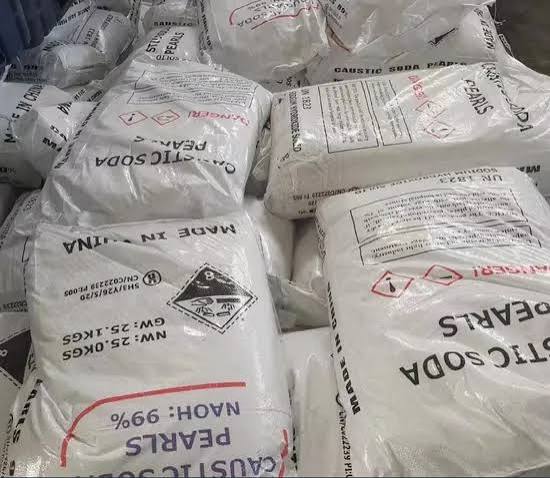
Caustic Soda Flakes /Pearls
Caustic Soda Flakes /Pearls (98.5/99% min) supplied by Kiki's Industrial Chemicals Ltd in 25kg bag. Ideal for Pulp &…
CAS 1310-73-2 · 98.5/99% min · Standard Packaging

1,3-Dibromo-5,5-Dimethylhydantoin (DBDMH)
DBDMH (Tech Grade) supplied by Kiki's Industrial Chemicals Ltd in 25kg drum across Kenya and East Africa.
Technical Grade · Liquid

1-Bromo-3-Chloro-5,5-Dimethylhydantoin (BCDMH)
BCDMH (90% min) supplied by Kiki's Industrial Chemicals Ltd in 25kg drum across Kenya and East Africa.
Technical Grade · Liquid
Related Technical Guides & Insights
View all →Caustic Soda in Kenya: The Definitive Industrial Guide to Flakes, Pearls, and Liquid Lye Across Manufacturing
Complete engineering guide to Caustic Soda (Sodium Hydroxide) in Kenya. Compare 99% flakes, micro-pearls, and 50% liquid across soap, pulp, CIP, and effluent.
Regulatory & KEBS StandardsUnderstanding Chemical Safety Data Sheets (SDS) & KEBS Regulatory Compliance in Kenya
How to read GHS 16-section Safety Data Sheets (SDS) and ensure KEBS, NEMA, and DOSHS statutory chemical compliance in Kenyan industrial facilities.
Guides & How-TosCalcium Carbonate (Limestone Powder): Grade Selection for Animal Feed, Paints & PVC Compounds
How to select Calcium Carbonate mesh grades in Kenya for animal feed (80-120 mesh), paint extender (325-400 mesh), and coated PVC filler (800-1250 mesh).