Modified Starch in Kenya: Corrugated Carton Adhesives, Food Processing & Textile Sizing Guide
Source industrial and food-grade Modified Starch in Kenya. Technical guide to corrugated board adhesives, Stein-Hall starch gelatinization, and food texturizers.
Quick Answer: Modified Starch in Kenya: Corrugated Carton Adhesives, Food Processing & Textile Sizing Guide
Modified Starch (derived from corn, tapioca, or potato, CAS 9005-25-8 / E1400 series) is a chemically, enzymatically, or physically altered carbohydrate polymer engineered for industrial and food manufacturing across Kenya. In paper corrugation packaging plants in Nairobi and Athi River, oxidized and cross-linked starches formulate high-speed Stein-Hall adhesives that bond kraft paper flutes under high-humidity export conditions. In food processing, acetylated distarch adipate (E1422) and hydroxypropyl distarch phosphate (E1442) deliver freeze-thaw stability, high acid and shear resistance, and prevent weeping (syneresis) in sauces, ketchups, and canned dairy.
Modified starch is an engineered macromolecular polysaccharide consisting of amylose and amylopectin chains modified via esterification, etherification, oxidation, or cross-linking to alter gelatinization temperature, paste clarity, retrogradation resistance, and viscosity stability.
Key Facts
- •The Stein-Hall Corrugation Chemistry: Combines a carrier cooked starch (gelatinized with caustic soda at 65°C–70°C to suspend raw starch granules) with un-gelatinized raw secondary starch and borax; inside the corrugator hot plates (160°C–180°C), the raw granules swell instantly, forming an unbreakable green bond in under 0.1 seconds.
- •Retrogradation & Syneresis Prevention: Native corn starch retrogrades (re-crystallizes) quickly, expelling water (syneresis) and turning puddings watery; cross-linked modified starches (E1422/E1442) permanently block amylose re-association.
- •Storage Humidity Defense: Starch powders are extremely hygroscopic; storage above 70% relative humidity in Mombasa or rainy-season Nairobi causes lump agglomeration, microbial fermentation, and drop in adhesive shear strength.
- •Packaging Standard: Delivered in 25kg multi-wall craft paper bags with sealed polyethylene inner liners, stacked on clean wooden pallets in dry, temperature-controlled warehouses.
Inside a massive corrugated paper packaging and carton converter plant located off the Mombasa Road in Athi River, the 2.5-meter-wide continuous corrugator line is running at two hundred meters per minute.
The machine is manufacturing heavy-duty double-wall corrugated cartons engineered for Kenya's multi-million-dollar export horticultural trade: carrying fresh avocados to Europe and cut flowers to the Netherlands.
At the stacking conveyor at the end of the line, the quality control supervisor pulls a freshly cut sheet of corrugated board from the stack.
She grabs the top kraft linerboard and pulls it away from the fluted medium. Instead of the paper tearing with total fiber tear—where the paper itself rips apart before the glue gives way—the liner peels cleanly away from the flutes with a faint popping sound. The glue line shows only dry, dusty, unbonded white powder.
"Look at this flute adhesion," the QC supervisor shouts over the roar of the hot plates to the corrugator operator. "Zero fiber tear! The board is delaminating right along the adhesive line. If these cartons are loaded into a refrigerated sea container at four degrees Celsius and ninety percent humidity, the boxes will collapse under their own weight before the ship even clears Kilindini Harbour in Mombasa."
The corrugator operator inspects the heated pressure roll. "The steam chest is running at 170 degrees Celsius. Speed is normal. But our paste viscosity in the circulation loop dropped from forty-five seconds down to twenty-two seconds this morning."
The QC supervisor walks over to the automated Stein-Hall starch adhesive kitchen on the mezzanine deck. She climbs up and inspects the raw material hopper feeding the secondary mixing tank.
"Here is our failure," she says, pointing to the bags stacked beside the screw auger. "The warehouse ran out of Industrial Modified Corrugation Starch and dumped standard native corn flour into the adhesive mixer. Native corn starch has a gelatinization temperature above 75 degrees! At 200 meters per minute, the paper passes through the hot plates in less than a quarter of a second. Native starch doesn't have the reaction kinetics to gelatinize and form a green bond in that fraction of a second. The paste just dried out into useless dust."
She locks out the starch feed hopper.
"Dump this adhesive batch. Flush the glue pans with warm water. We reload certified, rapid-gelling Modified Corrugation Starch. Here is the polymer science of why engineered starches govern corrugated packaging, food texture, and textile processing."
---
What is Modified Starch? Molecular Re-Engineering
Native starches (derived from maize/corn, tapioca/cassava, or potato) are high-molecular-weight carbohydrate polymers composed of two distinct glucose polysaccharides:
- Amylose: A linear, unbranched chain of α-(1,4)-D-glucose units.
- Amylopectin: A massive, highly branched macromolecule linked by both α-(1,4) and α-(1,6) glycosidic bonds.
In its native state, starch is completely insoluble in cold water. When heated in water above its gelatinization threshold (68°C – 78°C), the semi-crystalline granules absorb water, swell, and burst, releasing amylose chains that form a viscous paste.
The Fatal Flaws of Native Starch in Industrial Manufacturing:
- Rapid Retrogradation (Aging & Syneresis): As native starch paste cools, the linear amylose chains line up and re-crystallize through hydrogen bonding. The paste turns cloudy, stiff, and expels free water—a phenomenon known as syneresis (weeping). In sauces, it creates an unappetizing watery layer; in corrugated box adhesives, it makes the glue line brittle and fragile.
- High Gelatinization Temperature: Native starch requires too much thermal energy and time to swell, making it unusable for high-speed packaging machinery.
- Viscosity Breakdown Under Shear: In continuous industrial pumps and homogenizers, native starch granules are shredded mechanically, causing the fluid viscosity to collapse from thick gel to water-thin soup.
By chemically modifying native starch through oxidation, cross-linking, or etherification/esterification, chemical engineers permanently alter its functional properties:
---
Application 1: Corrugated Board Adhesives (The Stein-Hall System)
In Kenya’s packaging industry—manufacturing export carton boxes for fresh produce, edible oils, tea, and dry consumer goods—the Stein-Hall starch adhesive process is the universal standard.
A high-performance corrugating adhesive is a complex two-phase suspension:
- The Primary (Carrier) Portion (15% - 20% of starch): Pre-cooked and gelatinized in water with Caustic Soda (NaOH) at 60°C – 65°C. The caustic soda uncoils the starch chains, creating a thick, smooth, viscous liquid that acts as a suspension carrier.
- The Secondary (Raw) Portion (80% - 85% of starch): Un-gelatinized, raw starch granules suspended uniformly inside the carrier liquid, accompanied by Borax (Sodium Tetraborate Decahydrate).
Why Modified Starch is Mandatory for Export Packaging:
Under Kenya’s equatorial export logistics, corrugated boxes travel from warm packing houses in Naivasha and Mount Kenya into high-humidity (>90% RH) refrigerated shipping containers at +2°C to +4°C for a 28-day sea voyage to Europe.
Formulating with chemically modified oxidized and cross-linked starches ensures:
- Fast Green Bond Formation: Flawless bonding at line speeds exceeding 200 m/min.
- Water Resistance: Resists softening and moisture delamination under cold-chain condensation.
- Flute Flatness: Prevents board warping and "washboarding" on white-top export linerboards.
At Kiki's Industrial Chemicals, our technical team works alongside packaging corrugators and food manufacturing plants across Kenya to optimize starch paste formulations, calibrate Stein-Hall kitchens, and supply lab-certified modified starches.
---
Application 2: Food Processing & Texture Engineering (E1422 & E1442)
In commercial food processing across Nairobi—from tomato ketchups, salad dressings, and chili sauces to fruit yogurts, canned meats, and pie fillings—native starch cannot survive modern factory processing conditions.
Food processors specify specialized Food-Grade Modified Starches:
1. Acetylated Distarch Adipate (E1422)
- Modification: Esterified with acetic anhydride and cross-linked with adipic acid.
- Properties: Exceptional tolerance to low pH (highly acidic tomato ketchups and sauces down to pH 3.2), high mechanical shear (high-speed colloid mills and homogenizers), and thermal retorting (>120°C). It prevents syneresis, ensuring sauces do not separate into watery and pulpy layers on supermarket shelves over a 12-month ambient shelf life.
2. Hydroxypropyl Distarch Phosphate (E1442)
- Properties: The industry benchmark for dairy desserts, chilled yogurts, and frozen foods. The ether linkages block amylose retrogradation even through multiple freeze-thaw cycles, imparting an ultra-smooth, creamy, glossy texture with clean flavor release.
---
Technical Specifications: Industrial vs. Food-Grade Modified Starch
| Technical Parameter | Corrugation Modified Starch (Oxidized) | Food-Grade Modified Starch (E1422) | Analytical Method |
|---|---|---|---|
| Base Botanical Origin | High-Grade Yellow Maize (Corn) / Tapioca | Food-Grade Dent Corn / Tapioca | Microscopy / Enzymatic Assay |
| Physical Appearance | Fine, free-flowing white to off-white powder | Pure white, odorless powder | Visual Inspection |
| Moisture Content | ≤ 13.0% | ≤ 13.0% | Karl Fischer / 105°C Oven |
| pH Value (10% aqueous) | 6.0 - 8.0 | 5.0 - 7.5 | Digital Glass Electrode |
| Gelatinization Temp. | 60°C – 65°C (Engineered for speed) | 62°C – 68°C | Brabender Amylograph |
| Viscosity (Bauer / Zahn Cup) | 35 - 55 seconds (Stein-Hall) | High peak / Stable hold | Rotational Viscometer (Brookfield) |
| Total Heavy Metals (as Pb) | ≤ 10 mg/kg | ≤ 2 mg/kg (2 ppm) | ICP-OES / AAS |
| Arsenic (As) | ≤ 2.0 mg/kg | ≤ 1.0 mg/kg (1 ppm) | Hydride Generation AAS |
| Sulfur Dioxide (SO₂) | ≤ 100 mg/kg | ≤ 30 mg/kg (Food compliant) | Monier-Williams Method |
| Standard Packaging | 25kg multi-wall paper bags with PE liner | 25kg food-grade craft bags | Factory Sealed |
---
Storage & Humidity Defense Protocols in East Africa
Because starch is a dry, porous carbohydrate powder, its shelf life is governed entirely by atmospheric moisture management:
- The Critical Moisture Ceiling (14%): Starch stored in unventilated warehouses during Nairobi's seasonal rains or in Mombasa's coastal humidity (>75% RH) rapidly absorbs atmospheric moisture. Once moisture exceeds 14%, starch granules begin enzymatic auto-hydrolysis, leading to souring, mold growth (Aspergillus), and an irreversible drop in paste viscosity.
- Pallet Stacking Rules: Store on clean, dry wooden or plastic pallets at least 45 cm$ away from external walls. Do not stack pallets more than two units high to prevent compaction caking. Keep partially used bags tightly sealed with heavy-duty cable ties.
---
From high-speed corrugator lines producing export-grade packaging along Mombasa Road to food processing cleanrooms formulating shelf-stable sauces, modified starches represent the pinnacle of carbohydrate polymer engineering.
Looking to improve corrugator line speeds or stabilize food emulsion viscosity? Request a technical bulk quote for Modified Starch from Kiki's Industrial Chemicals Ltd.
Article Frequently Asked Questions
Chemicals Mentioned in This Guide
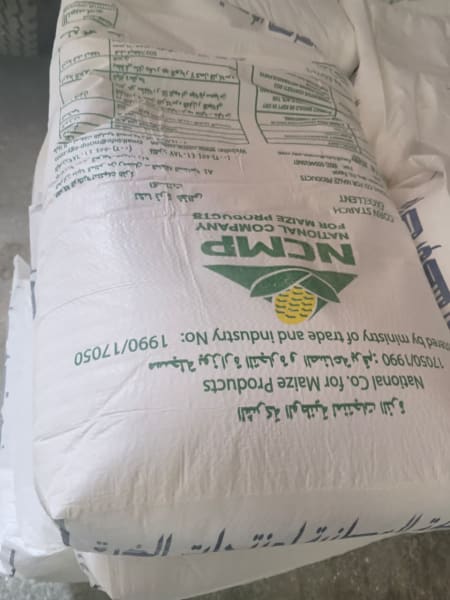
Modified Starch
Modified Starch (Tech Grade) supplied by Kiki's Industrial Chemicals Ltd in 25kg bag across Kenya and East Africa.
Technical Grade · Powder
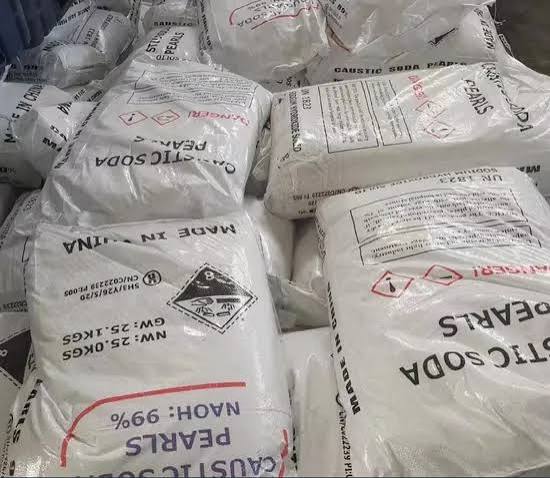
Caustic Soda Flakes /Pearls
Caustic Soda Flakes /Pearls (98.5/99% min) supplied by Kiki's Industrial Chemicals Ltd in 25kg bag. Ideal for Pulp &…
CAS 1310-73-2 · 98.5/99% min · Standard Packaging

Dextrose Monohydrate (Glucose Powder)
High-purity Food & Pharmaceutical grade Dextrose Monohydrate crystalline powder for beverages, food processing, animal…
CAS 5996-10-1 · Food & Pharmaceutical Grade (BP / USP / FCC) · Crystalline White Powder
Related Technical Guides & Insights
View all →Fertilizer Inputs in Kenya: SOP vs. MOP, Soluble Calcium Nitrate & Greenhouse Fertigation Guide
Source soluble Potassium Sulphate (SOP), Calcium Nitrate, and specialty fertilizer inputs in Kenya. Technical guide to greenhouse fertigation and chloride toxicity.
Industrial & Water ChemicalsMono Ethylene Glycol (MEG) in Kenya: Industrial Chiller Coolants, Antifreeze Blending & Polyester Resins
Source high-purity Mono Ethylene Glycol (MEG 99.8%) in Kenya. Engineering guide to industrial chiller coolants, HVAC antifreeze, and polyester resin synthesis.
Solvents & Industrial AlcoholsIndustrial & Extra Neutral Ethanol in Kenya: Sourcing ENA 96%, Denatured Spirit, and Pharma Grade Solvents
Source high-purity Ethanol in Kenya. Compare Extra Neutral Alcohol (ENA 96%), Denatured Spirit, and Pharma Grade for cosmetics, sanitizers, and pharma.