Mining Chemicals in Kenya: Flotation Xanthates (SIPX, SIBX, PAX) & Sulfide Mineral Extraction Guide
Source certified flotation xanthates (SIPX, SIBX, PAX) in Kenya. Technical guide to sulfide mineral extraction, collector selectivity, and gold ore recovery.
Quick Answer: Mining Chemicals in Kenya: Flotation Xanthates (SIPX, SIBX, PAX) & Sulfide Mineral Extraction Guide
Froth flotation mining reagents in Kenya and East Africa power the extraction of gold, copper, zinc, and polymetallic sulfide ores across the Migori gold belt, Kakamega, and the Great Lakes mining corridors. Mining operations utilize synthetic xanthate collectors: Sodium Isopropyl Xanthate (SIPX 90%, CAS 140-93-2) for selective copper/zinc recovery; Sodium Isobutyl Xanthate (SIBX 90%) for enhanced flotation kinetics; and Potassium Amyl Xanthate (PAX 90%, CAS 2720-73-2) as the strongest collector for recovering refractory gold-bearing iron pyrite (FeS2) under alkaline pulp conditions regulated with lime (pH 9.5–11.5).
Flotation xanthates are organosulfur dithiocarbonate salts synthesized by reacting an aliphatic alcohol with carbon disulfide and alkali hydroxide, forming pale-yellow to green-yellow free-flowing pellets or powders that impart hydrophobicity to sulfide mineral crystal surfaces.
Key Facts
- •Selectivity vs. Collecting Power: Collector strength increases with carbon chain length (Ethyl < Isopropyl < Isobutyl < Amyl), while selectivity decreases; SIPX is highly selective against iron pyrite, whereas PAX pulls all sulfide minerals aggressively.
- •The Pulp pH Window: Flotation selectivity requires strict pH modulation using hydrated lime; at pH >10.5, iron pyrite (FeS2) is depressed by hydrophilic ferric hydroxide/calcium coatings, allowing pure chalcopyrite (CuFeS2) to float with SIPX.
- •Hydrolytic Decomposition Hazard: In warm, humid climates, solid xanthate pellets react with atmospheric moisture to decompose into explosive, toxic carbon disulfide (CS2) gas and alcohol: ROCSSNa + H2O → ROH + CS2 + NaOH; drums must be stored cool and dry.
- •Packaging Standard: 120kg airtight steel drums with internal polyethylene liners or 850kg wooden crates containing sealed woven bulk bags, rated UN Class 4.2 / Class 4.3 dangerous goods.
The mid-afternoon heat shimmers over the red volcanic tailings dams of a commercial gold and polymetallic mineral processing plant in the Migori greenstone belt of Western Kenya.
Inside the flotation concentrator building, the air hums with the deep, mechanical drone of a 500-kilowatt ball mill and the rhythmic hiss of compressed air bubbling through four banks of rougher-scavenger flotation cells.
The plant metallurgical superintendent walks along the elevated metal grating of Rougher Bank 1, shining a halogen inspection lamp down into the bubbling slurry.
"Look at the froth bed in Cell 3," he tells the shift metallurgist, pointing to the churning surface. "The froth is completely dead. Instead of a thick, persistent, mineral-laden grey-gold foam spilling over the launders into the concentrate sump, we have thin, watery, brittle bubbles that burst before they even clear the lip. And our hourly tailings assay just came back from the atomic absorption lab: gold recovery has dropped from eighty-six percent to sixty-two percent."
The shift metallurgist holds up a plastic beaker of the rougher feed slurry.
"The grind size is right on target—seventy-five percent passing seventy-four microns," the metallurgist says. "Pulp density is thirty-two percent solids. We didn't change the frother dosage. But this morning, we cracked open a new batch of Sodium Isopropyl Xanthate (SIPX) from that consignment delivered two weeks ago."
The superintendent walks over to the reagent preparation deck and inspects the newly opened 120kg steel drum. As he approaches, a strong, foul, rotten-cabbage and carbon disulfide odor hits his nose.
He shines his torch into the drum. The pale-yellow pellets are clumped into moist, gummy, greenish-white lumps.
"This xanthate is degraded," the superintendent says, stepping back. "Look at the drum seal—the inner polyethylene liner was torn, and humidity seeped in during transit from the coast. Water hydrolysed the xanthate into alcohol and toxic carbon disulfide gas. The active collector assay has probably dropped below sixty percent. We are dosing dead reagent into our conditioning tank. The gold-bearing pyrite has no hydrophobic collector film, so it's washing straight out the tailings discharge pipe into the dam."
He tags the reagent dosing line with a red quarantine lockout.
"Drain the reagent holding tank. Switch our conditioning feed immediately to fresh, certified Potassium Amyl Xanthate (PAX 90%) and verify pulp pH with hydrated lime. Here is the surface chemistry of why flotation collectors and xanthate stability govern mineral extraction."
---
The Physics of Froth Flotation: Hydrophobic Separation
Froth flotation is the definitive physical-chemical separation technology of modern global and African extractive metallurgy. It separates valuable sulfide minerals (such as chalcopyrite, bornite, galena, sphalerite, and gold-bearing pyrite) from valueless gangue rock (quartz, feldspar, calcite, and silicate clays).
In nature, crushed ore particles are naturally hydrophilic (water-wetting); if placed in water, they sink to the bottom.
To float a mineral:
- Collector Adsorption: A specialized chemical collector (such as a xanthate) must selectively coat the target sulfide mineral crystal face, turning it hydrophobic (water-repelling).
- Bubble Attachment: Compressed air injected into the slurry generates billions of microscopic bubbles (0.8-1.5 mm diameter). When a hydrophobic mineral particle collides with a rising air bubble, water films rupture, and the particle attaches securely to the bubble surface.
- Froth Recovery: The mineral-laden bubbles rise to the surface, forming a stable, mineralized froth bed that overflows into collection launders for filtration and smelting.
---
Flotation Xanthates: The Chemical Workhorses
Xanthates are organosulfur dithiocarbonate salts synthesized by reacting an aliphatic alcohol with carbon disulfide (CS₂) and an alkali metal hydroxide (NaOH or KOH):
R-OH + CS₂ + NaOH → R-O-C(=S)-S⁻Na⁺ + H₂O
The molecular architecture of a xanthate consists of two distinct functional zones:
- The Polar Dithiocarbonate Headgroup (-O-CS₂⁻): Carries a strong affinity for transition metal cations (Cu²⁺, Pb²⁺, Fe²⁺, Au⁺) exposed on cleaved sulfide mineral crystal faces. It chemisorbs onto the mineral surface, forming an insoluble metal xanthate monolayer.
- The Non-Polar Aliphatic Hydrocarbon Tail (R- Group): Points outward away from the mineral grain into the water, presenting a hydrophobic, non-polar wax-like barrier that repels water and anchors to rising air bubbles.
---
The Collector Spectrum: SIPX vs. SIBX vs. PAX
In East African mineral processing—from gold operations in Migori and Kakamega to polymetallic mining projects across the Great Lakes region—the choice of xanthate collector dictates the balance between recovery (the percentage of total metal captured) and grade (the purity of the concentrate):
1. Sodium Isopropyl Xanthate (SIPX 90%)
- Formula: (CH₃)₂CH-O-CSSNa (CAS 140-93-2)
- Role: The premier collector for selective copper, lead, and zinc flotation. Its moderate 3-carbon chain provides sufficient hydrophobicity to float chalcopyrite (CuFeS₂) and galena (PbS) while allowing barren iron pyrite (FeS₂) to be successfully depressed with hydrated lime, delivering exceptionally high concentrate grades (>25% Cu).
2. Sodium Isobutyl Xanthate (SIBX 90%)
- Formula: (CH₃)₂CHCH₂-O-CSSNa (CAS 25306-75-6)
- Role: Slightly longer branched hydrocarbon chain delivering higher recovery kinetics. Widely utilized for polymetallic ores and copper-gold porphyries where rapid flotation kinetics are required to handle high circuit throughput.
3. Potassium Amyl Xanthate (PAX 90%)
- Formula: CH₃(CH₂)₄-O-CSSK (CAS 2720-73-2)
- Role: The strongest, most aggressive xanthate collector in global metallurgy. Its long 5-carbon amyl chain generates an impenetrable hydrophobic shield around mineral particles. In gold mining, where sub-microscopic gold is encapsulated inside refractory iron pyrite (FeS₂) and arsenopyrite (FeAsS), PAX is the universal reagent used to pull every grain of sulfide out of the rougher cells, maximizing overall gold recovery.
At Kiki's Industrial Chemicals, our technical team works alongside commercial mine managers and metallurgical plants across Kenya and East Africa, verifying xanthate active assays and supplying certified reagents for optimal flotation recovery.
---
Pulp Chemistry: Depressing Iron Pyrite with Lime
The greatest challenge in sulfide flotation is pyrite contamination. Iron pyrite (FeS₂) is abundant in virtually all gold and copper deposits. If allowed to float, it floods the concentrate launders, dropping copper grades and driving up downstream roasting, cyanidation, or smelting costs.
The Mechanism of Lime Depression:
To depress pyrite while floating valuable copper with SIPX, metallurgists dose Hydrated Lime (Ca(OH)₂) into the grinding circuit to raise pulp pH into the alkaline window (pH 10.5 - 11.5):
- Hydroxide Passivation: At pH >10.5, the surface iron cations on the pyrite crystal lattice react with hydroxyl ions (OH⁻) to form a dense, hydrophilic passivation layer of ferric hydroxide:
- FeS₂ + O₂ + H₂O —[OH⁻]→ Fe(OH)₃(hydrophilic crust) + SO₄²⁻
- Calcium Sulfate Barrier: Calcium ions (Ca²⁺) from the lime precipitate as micro-thin calcium sulfate films over the pyrite surfaces.
- Selective Flotation: The hydrophilic iron hydroxide/calcium film prevents xanthate collector molecules from chemisorbing onto the pyrite. The chalcopyrite and gold, however, remain active and float freely with SIPX into clean, high-grade concentrate.
---
Technical Specifications: High-Purity Mining Xanthates
| Quality Parameter | Sodium Isopropyl Xanthate (SIPX) | Potassium Amyl Xanthate (PAX) | Analytical Method |
|---|---|---|---|
| Active Xanthate Purity | ≥ 90.0% | ≥ 90.0% | Lead Acetate Potentiometric Titration |
| Free Alkali (as NaOH/KOH) | ≤ 0.20% | ≤ 0.20% | Acid-Base Back Titration |
| Moisture & Volatiles | ≤ 4.0% (Typical ≤ 2.5%) | ≤ 4.0% (Typical ≤ 2.5%) | Gravimetric (60°C Vacuum) |
| Physical Form | Free-flowing pale yellow/greenish pellets | Free-flowing yellow/pale green pellets | Visual Inspection |
| Water Solubility (at 20°C) | ≥ 200 g/L (Clear solution) | ≥ 200 g/L (Clear solution) | Visual Dissolution Test |
| Dangerous Goods Class | Class 4.2 / Class 4.3 (UN 3342) | Class 4.2 / Class 4.3 (UN 3342) | UN Transportation Code |
| Flash Point | Decomposes before boiling | Decomposes before boiling | Closed Cup Apparatus |
---
The Hydrolytic Hazard: Safe Handling & Storage Logistics
Solid xanthate pellets are classified under international transport regulations as Spontaneously Combustible / Dangerous When Wet (UN 3342):
1. The Carbon Disulfide Decomposition Reaction
When solid xanthates absorb atmospheric moisture or are exposed to temperatures exceeding 40°C, they undergo irreversible hydrolytic breakdown:
R-O-CSSNa + H₂O → R-OH + CS₂ ↑ + NaOH
The reaction products are catastrophic for plant operations:
- Carbon Disulfide (CS₂): A toxic, heavy gas with an extremely low auto-ignition temperature (90°C—it can ignite upon contact with a hot steam pipe or unshielded light bulb) and a broad explosive limit in air (1.3%-50%).
- Total Loss of Recovery: The collector decomposes into useless free alcohol, causing flotation recovery to collapse.
2. Operational Preparation Protocols
- Stock Solution Life: Prepare xanthates as a 5% to 10% w/v aqueous solution in dedicated mixing tanks equipped with explosion-proof electric drive motors. Liquid xanthate solutions hydrolyze slowly in water; never prepare more than 24 to 36 hours of stock solution at a time.
- Ventilation: Never enter an enclosed shipping container or unventilated warehouse bay containing xanthate drums without first ventilating with explosion-proof fans and checking air quality for carbon disulfide gas.
---
In the mineral processing industry, profit margins are determined inside the flotation cell, where valuable metals must be stripped from billions of tonnes of barren rock. With fresh, high-active xanthate collectors and disciplined pulp pH control, extractive operations achieve the gold, copper, and zinc recoveries that make mining profitable.
Planning your reagent campaign or sourcing certified Sodium Isopropyl Xanthate (SIPX) and Potassium Amyl Xanthate (PAX)? Request a technical bulk quote for mining reagents from Kiki's Industrial Chemicals Ltd.
Article Frequently Asked Questions
Chemicals Mentioned in This Guide
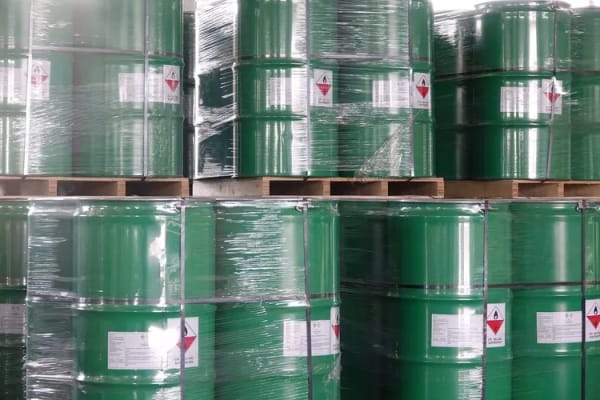
Sodium Isopropyl Xanthate ( SIPX )
Sodium Isopropyl Xanthate ( SIPX ) (90% min Mining Collector) supplied by Kiki's Industrial Chemicals Ltd in 50kg drums…
90% min Mining Collector · Standard Packaging
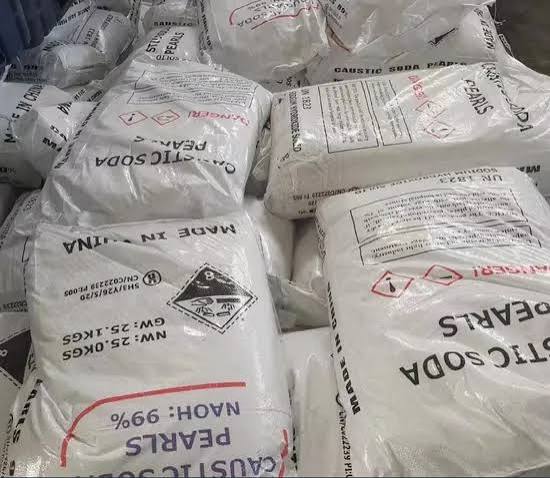
Caustic Soda Flakes /Pearls
Caustic Soda Flakes /Pearls (98.5/99% min) supplied by Kiki's Industrial Chemicals Ltd in 25kg bag. Ideal for Pulp &…
CAS 1310-73-2 · 98.5/99% min · Standard Packaging

1,3-Dibromo-5,5-Dimethylhydantoin (DBDMH)
DBDMH (Tech Grade) supplied by Kiki's Industrial Chemicals Ltd in 25kg drum across Kenya and East Africa.
Technical Grade · Liquid

1-Bromo-3-Chloro-5,5-Dimethylhydantoin (BCDMH)
BCDMH (90% min) supplied by Kiki's Industrial Chemicals Ltd in 25kg drum across Kenya and East Africa.
Technical Grade · Liquid
Related Technical Guides & Insights
View all →Commercial Baking Additives in Kenya: Leavening Chemistry, SAPP, Baking Soda & Food Additives Guide
Source wholesale Baking Soda, SAPP 28, Citric Acid, and food additives in Kenya. Technical guide to leavening rate of reaction (ROR) and bakery chemistry.
Food & Beverage IngredientsModified Starch in Kenya: Corrugated Carton Adhesives, Food Processing & Textile Sizing Guide
Source industrial and food-grade Modified Starch in Kenya. Technical guide to corrugated board adhesives, Stein-Hall starch gelatinization, and food texturizers.
Agricultural & Fertilizer ChemicalsFertilizer Inputs in Kenya: SOP vs. MOP, Soluble Calcium Nitrate & Greenhouse Fertigation Guide
Source soluble Potassium Sulphate (SOP), Calcium Nitrate, and specialty fertilizer inputs in Kenya. Technical guide to greenhouse fertigation and chloride toxicity.