Hydrogen Peroxide 50% in Kenya: Aseptic Packaging, Textile Bleaching & Advanced Wastewater Oxidation
Source Food-Grade Aseptic & Industrial Hydrogen Peroxide 50% in Kenya. Technical guide to carton sterilisation, textile Kier bleaching, and Fenton effluent oxidation.
Quick Answer: Hydrogen Peroxide 50% in Kenya: Aseptic Packaging, Textile Bleaching & Advanced Wastewater Oxidation
Hydrogen Peroxide 50% (H2O2, CAS 7722-84-1) is a high-strength oxidizing agent and broad-spectrum biocide widely utilized across Kenyan industry. In aseptic food and dairy packaging (Tetra Pak and Combibloc lines), specialized Food Aseptic Grade 50% peroxide destroys bacterial endospores (Bacillus cereus, Clostridium) via vaporisation at 130°C–160°C or heated liquid bath immersion, leaving zero toxic mineral residue. In textile processing, it provides eco-friendly chlorine-free bleaching (TCF), while in industrial effluent plants, it powers Fenton advanced oxidation (Fe²⁺/H2O2) to eliminate recalcitrant COD, dyes, and noxious sulfides without chlorinated secondary by-products.
Hydrogen Peroxide 50% is a clear, colourless liquid solution consisting of 49.5% to 50.5% H2O2 by weight in demineralized water, possessing a density of 1.196 g/cm³ at 20°C, an active oxygen content of 23.5%, and stabilized against spontaneous catalytic autodecomposition.
Key Facts
- •Grade Duality Matters: Food Aseptic Grade uses organophosphonate or pyrophosphate stabilizers leaving dry mineral residues <50 mg/kg to prevent nozzle fouling; Industrial/Textile Grade uses heavy stannate/nitrate stabilizers to survive high-pH (10.5–11.5) hot bleaching baths.
- •Aseptic Sporicidal Efficacy: Achieves >5-log reduction of bacterial endospores within 5 to 10 seconds at 70°C–80°C by oxidising cellular membrane lipids, enzymatic proteins, and nucleic acids.
- •Autodecomposition & Pressure Safety: 1 litre of 50% H2O2 autodecomposes into ~190 litres of oxygen gas (2H2O2 → 2H2O + O2 + 98.2 kJ/mol); containers must be equipped with factory-calibrated breathable membrane vented caps.
- •Packaging Standard: Supplied in 30kg UV-stabilized virgin HDPE vented jerrycans, 200L L-ring drums, and 1,000L UN-approved IBC containers.
The 6:00 AM sanitation handoff at a high-volume UHT dairy and juice processing plant outside Eldoret in the North Rift is running twenty minutes behind schedule.
Inside the sterile packaging cleanroom, the plant QA manager stands before Line 3's high-speed aseptic carton-filling tower. Behind the viewing glass, a continuous web of polyethylene-aluminum-paperboard composite material feeds through a vertical immersion tank.
"Look at the hot-air drying mandrels on Line 3," the QA manager says, shining an inspection torch onto the stainless steel drying chamber. "We have a white, chalky mineral crust building up on the vaporisation nozzles. And our swab tests from the 2:00 AM shift incubation run showed three confirmed cartons with Bacillus cereus survival."
The maintenance technician sighs, holding up a cluster of used spray tips. "We replaced the heating elements. The air knives are running at 145 degrees Celsius. The packaging foil should be bone dry and 100% sterile before it reaches the aseptic filling mandrel. Why are the nozzles crusting over?"
The QA manager walks over to the chemical storage bund outside the wash bay and checks the yellow placard on the newly delivered 30kg blue jerrycans.
"Here is our answer," he says, pointing to the manufacturer's technical code. "Procurement ordered standard Industrial-Grade 50% Peroxide because it was five shillings cheaper per kilo. It is stabilized with heavy sodium stannate, silicate, and nitrate salts—chemistries engineered for hot alkaline textile bleaching baths in Thika. In this aseptic packaging tower, those heavy mineral stabilizers do not vaporize. They bake onto our nozzles, drop the effective peroxide mist density, insulate bacterial endospores against the heat, and leave unevaporated mineral salts on the food-contact surface."
He tags the pallet with a red quarantine lockout marker.
"Drain the immersion baths. Flush the line with demineralized water. We switch back immediately to certified Food-Grade Aseptic 50% Peroxide with zero-residue phosphonate stabilizers. Here is the operational science of why stabilizer chemistry makes or breaks aseptic packaging, textile whiteness, and industrial effluent treatment."
---
The Chemistry of 50% Hydrogen Peroxide: Pure Oxidation Power
Hydrogen Peroxide (H₂O₂, CAS 7722-84-1) is one of the most powerful, versatile, and environmentally benign oxidizing agents used in modern manufacturing. With an oxidation-reduction potential (ORP) of +1.77 V in acidic solutions (and +2.80 V when activated into hydroxyl free radicals), it out-oxidizes chlorine gas (+1.36 V), chlorine dioxide (+1.27 V), and potassium permanganate (+1.68 V).
The fundamental chemical virtue of hydrogen peroxide is its reaction byproduct: pure water and oxygen gas:
2H₂O₂ → 2H₂O + O₂ ↑ + 98.2 kJ/mol
Unlike sodium hypochlorite (liquid chlorine bleach) or calcium hypochlorite, hydrogen peroxide contributes zero dissolved solids (TDS), zero corrosive chlorides, and zero carcinogenic absorbable organic halides (AOX) or trihalomethanes (THMs) to downstream wash water or industrial effluent.
However, concentrated 50% w/w hydrogen peroxide (~1.196 g/cm^3 specific gravity, containing roughly 23.5% active oxygen by weight) is not a simple monolithic commodity. The engineering performance of H₂O₂ is governed almost entirely by stabilizer chemistry, surface tension, and decomposition kinetics.
---
Application 1: Aseptic Food & Dairy Packaging Sterilisation
In modern high-speed aseptic filling lines (such as Tetra Pak, SIG Combibloc, and Elopak), commercial shelf-stable milk, dairy creams, plant milks, and fruit juices are packaged into pre-sterilized laminates without terminal autoclaving.
The packaging material must achieve a minimum 5-\log₁₀ reduction of highly resistant bacterial endospores (specifically Bacillus subtilis var. globigii and Bacillus cereus) within 5 to 10 seconds.
The Two Packaging Delivery Mechanisms:
- Liquid Immersion Bath (e.g., Tetra Pak lines): The packaging laminate passes through a heated bath containing 30% to 35% H₂O₂ maintained strictly between 70°C and 80°C. Below 70°C, the sporicidal kill rate drops exponentially; above 85°C, the peroxide decomposes too rapidly, leading to excessive bath consumption and foam generation. Squeegee rollers and sterile heated air knives (130°C – 150°C) then strip and evaporate all residual peroxide before carton forming, ensuring residual peroxide on the food surface remains below the international regulatory limit of 0.5 ppm (0.5 mg/kg).
- Vapor Phase Sterilisation (VHP / Dry Fogging in Aseptic Chambers): Concentrated 50% H₂O₂ is metered onto an evaporator block heated to 140°C – 160°C. The resulting peroxide vapor is injected into pre-formed bottles, spouts, or cartons by sterile hot air, creating a micro-condensate layer that destroys microorganisms instantly before being purged by sterile hot drying air.
The Fatal Flaw: Industrial vs. Aseptic Stabilizers
Hydrogen peroxide is thermodynamically unstable. Unstabilized H₂O₂ would violently self-decompose in the presence of trace ambient dust or rust. Manufacturers add proprietary stabilizers:
- Industrial Grade 50%: Stabilized with colloidal stannic oxide (tin), sodium pyrophosphate, and nitrates. These inorganic compounds prevent decomposition in warm, dirty storage conditions. However, when vaporized at 140°C, these non-volatile solids do not evaporate—they precipitate into crystalline scale that fouls heating elements, plugs spray nozzles, and leaves dry mineral residues (>200 mg/kg) on the packaging foil.
- Food Aseptic Grade 50%: Formulated with ultra-low, high-purity organic phosphonate or pyrophosphoric acid stabilizers leaving an evaporating dry residue of less than 20-50 mg/kg. It vaporizes cleanly, leaves zero toxic residue, and meets FDA 21 CFR §178.1005 and Kenyan food safety standards.
At Kiki's Industrial Chemicals, our technical team works alongside dairy and beverage plant engineers across Kenya to validate H₂O₂ concentrations, optimize bath temperatures, and prevent costly nozzle fouling with certified Food Aseptic Grade peroxide.
---
Application 2: Totally Chlorine-Free (TCF) Textile Bleaching
For spinning mills, woven cotton fabric processors, and knitwear dye houses in Thika, Ruiru, and Eldoret, hydrogen peroxide 50% is the cornerstone of the preparation range (scouring and bleaching).
Why Textile Mills Abandon Sodium Hypochlorite:
- Fiber Integrity and Tensile Strength: Hypochlorite (NaOCl) generates aggressive hypochlorous acid that cleaves the cellulose polymer chains, reducing fabric tensile and burst strength by 15% to 30%. Hydrogen peroxide preferentially oxidizes natural cotton impurities (pectins, waxes, cottonseed hulls, and flavone pigments) without degrading the cellulose backbone.
- Permanent Optical Whiteness: Cotton bleached with hypochlorite undergoes "yellowing reversal" when exposed to heat, ironing, or UV light over time due to chloramine retention. Peroxide bleaching delivers a permanent, high-reflectance optical white that provides a neutral, highly absorbent ground for reactive dye fixation.
- NEMA Effluent Compliance: Bleaching with chlorine generates high concentrations of Absorbable Organic Halides (AOX) and free chlorine, which violate Kenya National Environment Management Authority (NEMA) discharge standards. Hydrogen peroxide effluent breaks down completely into oxygen and water.
The Alkaline Bleach Bath Chemistry:
In cotton bleaching, hydrogen peroxide does not bleach in neutral or acidic media. It requires activation by caustic soda (NaOH) to generate the active bleaching species—the perhydroxyl anion (OOH⁻):
H₂O₂ + OH⁻ ⇌ HO₂⁻ + H₂O
If the bath is too alkaline (pH > 11.5) or contains trace heavy metals (iron, copper from hard boiler water or pipe scale), the perhydroxyl anion undergoes rapid parasitic decomposition into useless gaseous oxygen and aggressive hydroxyl radicals (·OH), causing fabric pinholing. To control this, textile processors dose sodium silicate (3-5 g/L) or synthetic organic polyacrylate stabilizers to buffer the bath at pH 10.5-10.8 at 85°C – 95°C, ensuring a steady, uniform release of perhydroxyl ions over a 45-to-60-minute cycle.
---
Application 3: Advanced Wastewater Oxidation & Odour Control
Industrial effluent plants across Kenya—including tanneries in Athi River, slaughterhouses in Dagoretti, pharmaceutical formulators in Nairobi, and textile wash plants—face stringent COD (Chemical Oxygen Demand) and BOD (Biological Oxygen Demand) discharge ceilings.
When biological treatment (activated sludge) fails to degrade refractory, toxic, or heavily colored contaminants, Fenton's Advanced Oxidation Process (AOP) is the benchmark solution.
The Fenton Mechanism:
In an acidic reactor vessel, Hydrogen Peroxide 50% is dosed in the presence of a ferrous iron catalyst (FeSO₄ · 7H₂O) at an optimal pH of 3.0 to 3.5:
Fe²⁺ + H₂O₂ → Fe³⁺ + ·OH + OH⁻
The generated hydroxyl radical (cdotOH) is an unselective, hyper-reactive oxidant that abstracts hydrogen atoms and breaks aromatic rings:
- Destroys Recalcitrant Azo Dyes: Decolourizes spent dye-bath effluent in under 15 minutes.
- Oxidizes Hydrogen Sulfide (H₂S) and Mercaptans: Instantly eliminates rotten-egg odours in tannery beamhouse liquor and municipal lift stations:
- H₂S + 4H₂O₂ → H₂SO₄ + 4H₂O
- Cyanide Destruction: Oxidizes toxic cyanides from metal finishing or gold processing into non-toxic cyanates (CNO⁻) and subsequently into carbonates and nitrogen gas.
Following Fenton oxidation, the wastewater pH is raised to 8.5-9.0 with hydrated lime or caustic soda, causing the ferric iron (Fe³⁺) to precipitate as dense ferric hydroxide floc (Fe(OH)₃), which sweeps out suspended matter and residual organics during primary clarification.
---
Technical Specifications: Food Aseptic vs. Industrial Grade 50% H2O2
| Chemical Parameter | Food Aseptic Grade (50%) | Industrial / Textile Grade (50%) | Testing Method |
|---|---|---|---|
| Active H2O2 Assay (w/w) | 49.5% - 50.5% | 49.5% - 50.5% | KMnO4 Redox Titration |
| Appearance | Clear, colourless liquid | Clear, colourless liquid | Visual Inspection |
| Density (20°C) | 1.195 - 1.198 g/cm^3 | 1.194 - 1.198 g/cm^3 | Hydrometer / Pycnometer |
| Active Oxygen Content | ≈ 23.5% | ≈ 23.5% | Calculation |
| pH (as supplied, 20°C) | 1.5 - 2.8 | 1.5 - 3.0 | Direct Potentiometry |
| Non-Volatile Residue (NVR) | ≤ 50 mg/kg (0.005%) | ≤ 200 - 350 mg/kg | Gravimetric (105°C Dry) |
| Stabilizer System | Food-grade phosphonate | Stannate / Pyrophosphate / Nitrate | ICP-OES |
| Total Heavy Metals (as Pb) | ≤ 2 ppm | ≤ 10 ppm | Colorimetric / AAS |
| Iron (Fe) | ≤ 0.1 ppm | ≤ 0.5 ppm | Colorimetric |
| Primary Applications | Tetra Pak, Combibloc, UHT Dairy, Beverage Bottling | Textile bleaching, Fenton's AOP, Mining leaching, Pulp bleaching | Process Suitability |
---
Safe Handling, Storage & Material Compatibility
Hydrogen Peroxide 50% is classified as an Oxidizing Liquid (Class 5.1) with secondary Corrosive (Class 8) hazards under UN Number UN 2014. Its handling demands strict adherence to chemical engineering safety standards:
1. The Vented Cap Rule (Non-Negotiable)
Ambient heat causes natural, continuous decomposition of H₂O₂ into oxygen gas. Every drum, jerrycan, and IBC must have an active, breathable hydrophobic PTFE membrane vented cap. Storing peroxide in tightly sealed non-vented containers will cause drum ballooning and explosive rupture. Always inspect vent caps to ensure they are free of dirt or dried chemical encrustation.
2. Materials of Construction
- Compatible Materials: Fully passivated 304L and 316L stainless steel (properly pickled with nitric-hydrofluoric acid to establish a chromium oxide barrier), high-density polyethylene (HDPE), polytetrafluoroethylene (PTFE/Teflon), PVDF, and pure aluminium (min 99.5%).
- Incompatible Materials (Dangerous): Carbon steel, mild steel, cast iron, copper, bronze, brass, manganese, and rubber. Exposure to even microgram quantities of rust or copper will catalyze violent exothermic decomposition, boiling the liquid and throwing hot corrosive mist.
3. Personal Protective Equipment (PPE)
Concentrated 50% peroxide causes instantaneous chemical burns, severe skin whitening (blanching caused by microscopic oxygen bubbles in the epidermis), and permanent cornea damage upon eye contact. Handlers must wear full-face chemical shields, heavy neoprene or butyl rubber gauntlets (avoid standard leather or cotton work gloves, which can spontaneously combust when soaked in 50% peroxide), PVC aprons, and rubber safety boots. Emergency eye-wash stations and deluge showers must be located within 10 meters of all pumping stations.
---
Industrial oxidation does not tolerate ambiguity in chemical purity or stabilizer selection. Whether vaporizing peroxide over high-speed aseptic milk laminates or destroying recalcitrant organics in a multi-stage wastewater reactor, operational success rests on using the exact grade formulated for the job.
Looking to stabilize your aseptic packaging line or upgrade your industrial oxidation process? Request a technical quote for bulk 50% Hydrogen Peroxide from Kiki's Industrial Chemicals Ltd.
Article Frequently Asked Questions
Chemicals Mentioned in This Guide
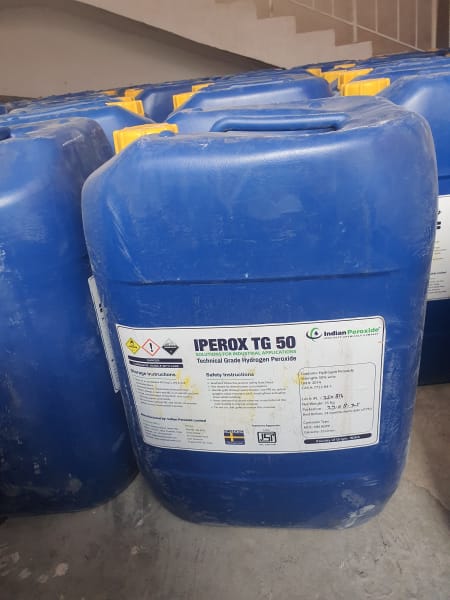
Hydrogen Peroxide 50%
Industrial-grade Hydrogen Peroxide 50% solution for textile bleaching, effluent water treatment, disinfection, and…
CAS 7722-84-1 · Technical Grade · Liquid
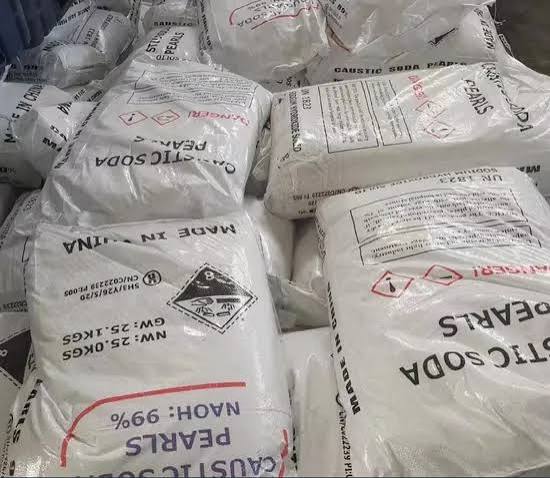
Caustic Soda Flakes /Pearls
Caustic Soda Flakes /Pearls (98.5/99% min) supplied by Kiki's Industrial Chemicals Ltd in 25kg bag. Ideal for Pulp &…
CAS 1310-73-2 · 98.5/99% min · Standard Packaging

1,3-Dibromo-5,5-Dimethylhydantoin (DBDMH)
DBDMH (Tech Grade) supplied by Kiki's Industrial Chemicals Ltd in 25kg drum across Kenya and East Africa.
Technical Grade · Liquid

1-Bromo-3-Chloro-5,5-Dimethylhydantoin (BCDMH)
BCDMH (90% min) supplied by Kiki's Industrial Chemicals Ltd in 25kg drum across Kenya and East Africa.
Technical Grade · Liquid
Related Technical Guides & Insights
View all →Sulphuric Acid in Kenya: Industrial 98%, Battery Electrolyte & Mining Leaching Guide
Source certified Commercial 98% and Battery Grade Sulphuric Acid in Kenya. Technical guide to battery plate formation, mining leaching, dilution physics & safety.
Industrial & Water ChemicalsPolyaluminium Chloride (PAC 30%) in Kenya: Industrial Clarification, PAC vs. Alum & Water Treatment
Buy high-purity Polyaluminium Chloride (PAC 30% powder) in Kenya. Discover why water works and food factories are replacing Alum for high-turbidity clarification.
Chemical SourcingCaustic Soda in Kenya: The Definitive Industrial Guide to Flakes, Pearls, and Liquid Lye Across Manufacturing
Complete engineering guide to Caustic Soda (Sodium Hydroxide) in Kenya. Compare 99% flakes, micro-pearls, and 50% liquid across soap, pulp, CIP, and effluent.