Hexane Occupational Exposure Controls: Understanding 2,5-Hexanedione Toxicity, TLV Thresholds, and Closed-Loop Ventilation
Detailed toxicology of n-hexane: the 2,5-hexanedione metabolite neurotoxicity mechanism, peripheral neuropathy symptoms, ACGIH TLV-TWA 50 ppm limits, and plant air monitoring.

Quick Answer — Hexane Occupational Exposure Controls: Understanding 2,5-Hexanedione Toxicity, TLV Thresholds, and Closed-Loop Ventilation
Normal-hexane is metabolised by the human liver into 2,5-hexanedione, a neurotoxic metabolite that cross-links neurofilaments and causes peripheral neuropathy. Occupational safety requires maintaining airborne concentrations below the ACGIH 50 ppm TLV-TWA threshold through closed-loop engineering and Viton PPE.
Hexane neurotoxicity refers to the progressive nerve damage caused by chronic inhalation or skin absorption of the toxic n-hexane metabolite 2,5-hexanedione.
Key Facts
- •Metabolised into 2,5-hexanedione (2,5-HD), which cross-links axonal filaments.
- •ACGIH 8-hour TLV-TWA threshold strictly established at 50 ppm.
- •Biological Exposure Index (BEI) urine limit: 0.5 mg/L 2,5-HD.
- •Requires Viton or Silver Shield gloves; standard nitrile degrades rapidly.
Primary Use Cases
While hexane is an indispensable industrial solvent, its straight-chain isomer (normal-hexane, n-hexane) presents a specific and well-documented occupational chronic neurotoxicity hazard. Industrial plant managers, safety officers, and extraction operators across Kenya must understand the metabolic pathway of n-hexane and implement rigorous engineering controls to safeguard workforce health.
The Metabolic Mechanism: Why n-Hexane Causes Neuropathy
Unlike its branched isomers (isohexane, 2-methylpentane), straight-chain n-hexane undergoes unique biotransformation in the human liver:
- Cytochrome P450 Oxidation: In the liver, microsomal enzymes oxidise n-hexane into 2-hexanol, then 2,5-hexanediol, and ultimately into the toxic diketone metabolite 2,5-hexanedione (2,5-HD).
- Neurofilament Cross-Linking: 2,5-Hexanedione reacts with epsilon-amino groups of lysine residues on axonal neurofilaments, forming pyrrole adducts. These undergo oxidation and covalent cross-linking, blocking axonal transport mechanisms in long peripheral nerves.
- Clinical Symptoms: Chronic exposure manifests as distal, symmetrical peripheral sensorimotor neuropathy: numbness in the toes and fingers ('glove and stocking' pattern), progressive muscle weakness in the lower limbs, and loss of tendon reflexes.
Occupational Exposure Limits and Biological Monitoring
Regulatory and international industrial hygiene bodies enforce strict thresholds to prevent neurotoxicity:
- ACGIH TLV-TWA: 50 ppm (176 mg/m³) for an 8-hour workday, with a 'Skin' notation signifying potential dermal absorption.
- Biological Exposure Index (BEI): Free 2,5-hexanedione in end-of-shift urine must not exceed 0.5 mg/L. Routine urinary biomonitoring is recommended for solvent extraction and adhesive workers.
Hierarchy of Industrial Exposure Controls
To maintain workplace air well below 50 ppm, extraction plants and adhesive blenders must implement systematic engineering safeguards:
- Closed-Loop Systems: Solvent extractors, pumps, and distillation units must operate under sealed, negative-pressure loops with continuous vent condensation.
- Continuous LEL and Photoionization Detectors (PID): Fixed ambient monitors in decanting bays and extraction pits calibrated to sound audible alarms at 10% LEL.
- Respiratory and Dermal PPE: In confined space entries or filter cleanouts, positive-pressure supplied air respirators (SCBA/airline) and Viton or Silver Shield gloves are mandatory; standard nitrile gloves exhibit rapid hexane permeation within minutes.
KIKI'S provides full GHS documentation and technical safety datasheets with every hexane delivery, assisting industrial customers in establishing OSHA-compliant operating procedures.
Article Frequently Asked Questions
Related Categories
Related Industries
Chemicals Mentioned in This Guide
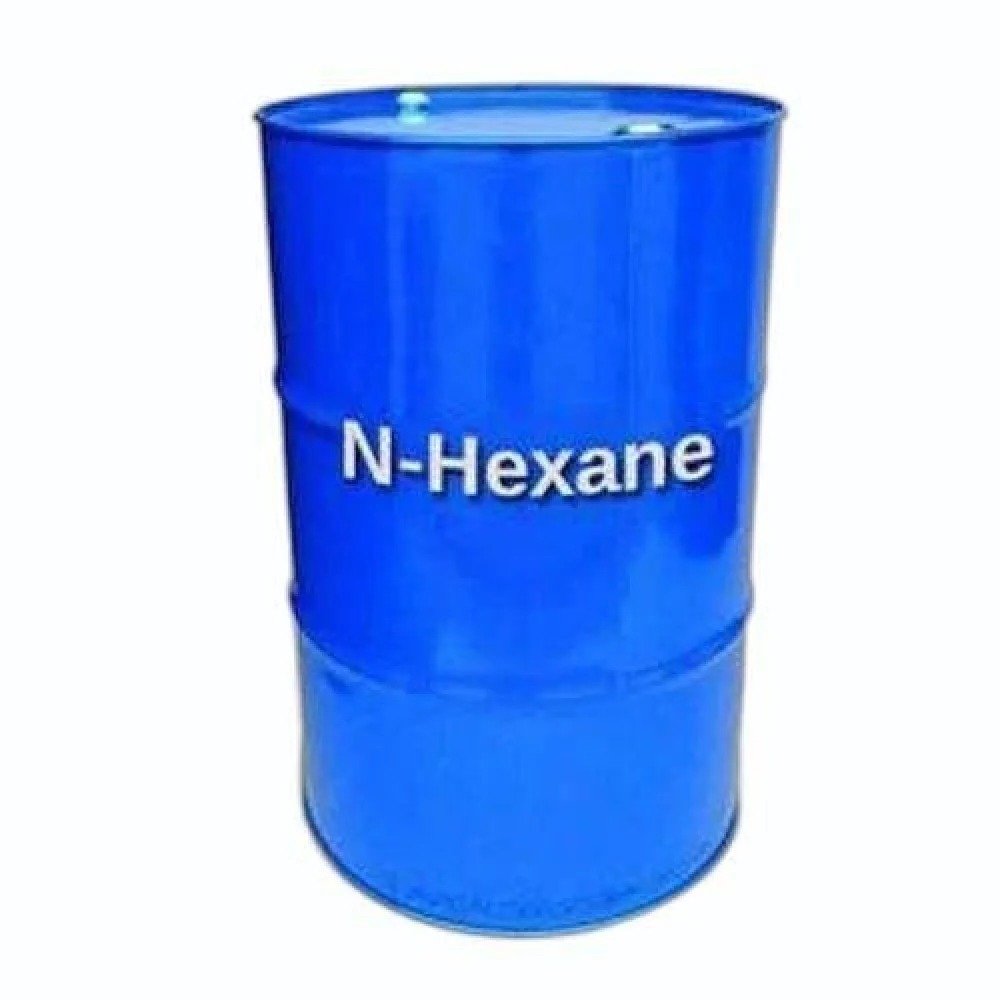
n-Hexane Commercial Grade (Aliphatic Extraction Solvent)
Commercial n-Hexane (CAS 110-54-3, UN 1208) supplied in 154kg and 160kg steel drums by KIKI'S Industrial Chemicals for…
CAS 110-54-3 · Industrial Extraction Grade · Liquid

ABS/LAS 80% for Industrial Use (ABS/LAS)
ABS/LAS (80%) supplied by Kiki's Industrial Chemicals Ltd in 25kg bags across Kenya and East Africa.
Technical Grade · Powder

ATMP (50%)
ATMP (50%) supplied by Kiki's Industrial Chemicals Ltd in 200kg drum. Ideal for Water treatment chemicals.
50% · Standard Packaging

ATMP 50% for Industrial Use (ATMP)
ATMP (50%) supplied by Kiki's Industrial Chemicals Ltd in 200kg drums across Kenya and East Africa.
Technical Grade · Liquid
Related Technical Guides & Insights
View all →Bulk Drum Storage and Static Grounding Protocols for Flammable Solvents in East African Warehouses
Prevent catastrophic vapour ignition: flash point dynamics (-22°C), LEL thresholds, conductive drum earthing clamps, and fire suppression systems for hexane.
RegulatoryPlasticised Nitrocellulose Storage Guidelines: Class 4.1 Flammable Solid Hazard, Water Deluge Firefighting, and Heat Mitigation
Critical fire safety and warehouse regulations for plasticized NC chips: UN 2557 Class 4.1 Flammable Solid rules, self-oxidizing combustion hazards, and water deluge cooling.
Coatings & InksUnderstanding RS Nitrocellulose Viscosity: Falling-Ball Sec Ratings (1/4 Sec vs 1/2 Sec) and Resin Compatibility
Demystify RS Nitrocellulose viscosity grades: ASTM D301 falling-ball seconds (1/4 sec vs 1/2 sec), nitrogen content (11.8–12.2%), and resin co-solubility in Kenya.