Bulk Drum Storage and Static Grounding Protocols for Flammable Solvents in East African Warehouses
Prevent catastrophic vapour ignition: flash point dynamics (-22°C), LEL thresholds, conductive drum earthing clamps, and fire suppression systems for hexane.

Quick Answer — Bulk Drum Storage and Static Grounding Protocols for Flammable Solvents in East African Warehouses
Hexane has an extreme flash point of -22°C and heavy vapours (2.97 times heavier than air) that accumulate in floor pits. Safe warehouse storage requires floor-level explosion-proof extraction, conductive bonding clamps under 10 ohms resistance during decanting, and non-sparking bronze tools.
Flammable solvent storage protocols comprise the electrical grounding, containment engineering, and ventilation systems needed to prevent vapour ignition of Class 3 volatile liquids.
Key Facts
- •Closed-cup flash point: -22°C; flammable range: 1.1% to 7.5%.
- •Vapour density 2.97 (air = 1.0); accumulates in floor trenches and pits.
- •Static bonding clamps (< 10 ohms) mandatory prior to drum bung removal.
- •Non-sparking bronze tools strictly required for drum handling.
Primary Use Cases
Commercial n-Hexane is classified under UN 1208 as a Class 3 Flammable Liquid (Packing Group II). With an extremely low closed-cup flash point of -22°C (-7.6°F) and a flammable vapour range between 1.1% and 7.5% volume in air, hexane is among the most volatile industrial chemicals handled in East Africa. Even at sub-zero temperatures, liquid hexane generates flammable vapour.
Vapour Density and the Pit Accumulation Danger
Hexane vapour has a relative density of 2.97 compared to air (air = 1.0). This means that released vapours do not rise; they pool along floor surfaces, trenches, drainage sumps, and basement pits:
- Flashback Phenomenon: A trail of heavy hexane vapour can travel 50 metres or more along a floor gradient to a remote ignition source (such as an unsealed boiler motor or welding spark) and flash back violently to the storage container.
- Low-Level Exhaust Ventilation: Storage rooms must incorporate forced mechanical extractors positioned at ground level (within 15 cm of the floor) to evacuate pooled hydrocarbon vapours.
Rigorous Static Bonding and Grounding Protocols
Hexane is an electrical non-conductor (conductivity < 1 pS/m). When pumped, filtered, or poured, static charges accumulate rapidly because they cannot dissipate through the liquid:
- Bonding Clamps: Before opening drum bungs or dispensing solvent, heavy-duty copper bonding cables equipped with sharp carbide-tipped teeth must be clamped securely to the bare metal of both the dispensing drum and receiving vessel.
- Earth Rod Connection: The entire assembly must be bonded to a certified structural earth ground rod maintaining less than 10 ohms electrical resistance.
- Anti-Splash Dip Tubes: Always use grounded conductive dispensing dip tubes extending to the bottom of the container. Never free-fall pour flammable solvent through open air.
Warehouse Architecture and Emergency Containment
Kenyan factory safety regulations and international insurance codes mandate specific warehouse safeguards:
- Secondary Containment: Storage yards must feature chemical-resistant concrete bunding holding 110% capacity of the largest drum or 25% of total volume stored.
- Non-Sparking Tools: Only beryllium-copper or bronze hand tools may be used to tighten or open steel drum bungs; steel wrenches produce incendiary friction sparks.
KIKI'S Industrial Chemicals supplies factory-sealed, heavy-gauge steel drums with intact gaskets and advises clients on proper fire suppression installations.
Article Frequently Asked Questions
Related Categories
Related Industries
Chemicals Mentioned in This Guide
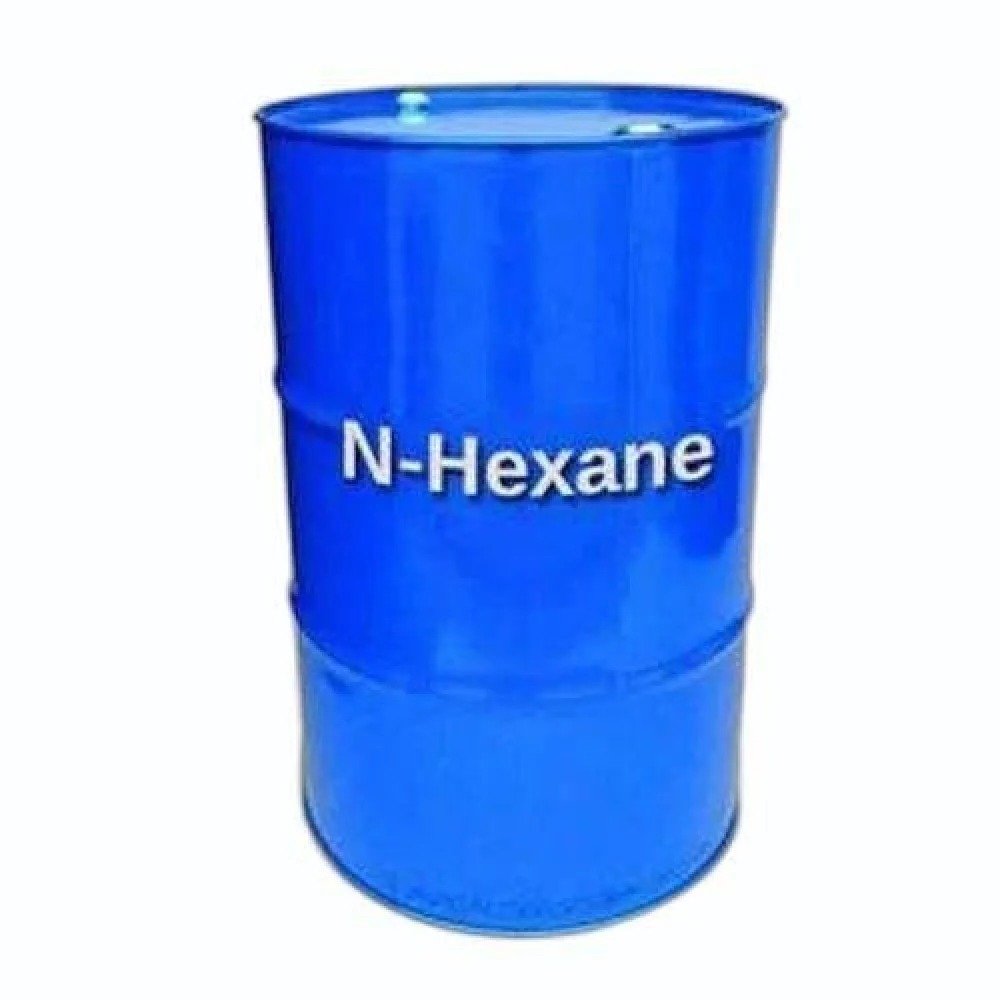
n-Hexane Commercial Grade (Aliphatic Extraction Solvent)
Commercial n-Hexane (CAS 110-54-3, UN 1208) supplied in 154kg and 160kg steel drums by KIKI'S Industrial Chemicals for…
CAS 110-54-3 · Industrial Extraction Grade · Liquid

ABS/LAS 80% for Industrial Use (ABS/LAS)
ABS/LAS (80%) supplied by Kiki's Industrial Chemicals Ltd in 25kg bags across Kenya and East Africa.
Technical Grade · Powder

ATMP (50%)
ATMP (50%) supplied by Kiki's Industrial Chemicals Ltd in 200kg drum. Ideal for Water treatment chemicals.
50% · Standard Packaging

ATMP 50% for Industrial Use (ATMP)
ATMP (50%) supplied by Kiki's Industrial Chemicals Ltd in 200kg drums across Kenya and East Africa.
Technical Grade · Liquid
Related Technical Guides & Insights
View all →Plasticised Nitrocellulose Storage Guidelines: Class 4.1 Flammable Solid Hazard, Water Deluge Firefighting, and Heat Mitigation
Critical fire safety and warehouse regulations for plasticized NC chips: UN 2557 Class 4.1 Flammable Solid rules, self-oxidizing combustion hazards, and water deluge cooling.
Coatings & InksUnderstanding RS Nitrocellulose Viscosity: Falling-Ball Sec Ratings (1/4 Sec vs 1/2 Sec) and Resin Compatibility
Demystify RS Nitrocellulose viscosity grades: ASTM D301 falling-ball seconds (1/4 sec vs 1/2 sec), nitrogen content (11.8–12.2%), and resin co-solubility in Kenya.
Coatings & InksFlexographic and Gravure Inks for Flexible Packaging: Adhesion, Solvent Release, and Nitrocellulose Film Toughness
Examine the technical role of NC Chips RS 1/4 Sec in packaging inks: fast solvent release, pigment dispersion wetting, heat-seal resistance, and film flexibility.