Dextrose Monohydrate in Kenya: The Science of Sweetness, Fermentation, and Pharma Grade Sourcing
Source premium Dextrose Monohydrate in Kenya. Compare food grade vs pharma BP/USP grades for bakery browning, beverage sweetness, and oral rehydration salts.
Quick Answer: Dextrose Monohydrate in Kenya: The Science of Sweetness, Fermentation, and Pharma Grade Sourcing
Dextrose Monohydrate (D-glucose monohydrate, C6H12O6·H2O) in Kenya is a purified crystalline monosaccharide supplied in Food Grade and Pharmaceutical (BP/USP) Grade. In food and beverage manufacturing, it provides 70–75% of the relative sweetness of sucrose, enhances moisture retention in baked goods, promotes rapid Maillard crust browning at lower oven temperatures, and serves as an immediately bioavailable carbon substrate in industrial yeast fermentation.
Dextrose Monohydrate is the crystalline mono-hydrate form of D-glucose obtained through controlled enzymatic hydrolysis of edible corn or cassava starch, widely utilized in food production, clinical oral rehydration salts (ORS), intravenous solutions, and animal nutrition.
Key Facts
- •Dextrose Monohydrate has a Dextrose Equivalent (DE) of 99.5+ and contains one molecule of crystal water (approximately 8.5% to 9.5% crystallization moisture).
- •It dissolves with a pronounced negative heat of solution (-105 J/g), producing an instantaneous refreshing cooling sensation in beverages and sports drinks.
- •Pharma BP/USP grade requires stringent endotoxin testing (< 0.25 EU/ml) and total heavy metal assays (< 5 ppm) for parenteral and intravenous drip manufacturing.
- •Standard packaging is 25kg multi-wall paper bags with sealed polyethylene inner liners to prevent atmospheric moisture absorption and lump formation.
Walk into a biscuit factory along Baba Dogo Road at ten in the morning, and the aroma hits you before you reach the mixing line: caramelized starch, vanilla, and the rich, toasty scent of baking wheat dough.
On the cooling conveyor, two batches of golden malt biscuits are coming out of tunnel ovens side-by-side.
Batch A has an uneven, pale straw hue with brittle edges. Batch B boasts a radiant, uniform golden-amber crust, a delicate snap, and a soft melt-in-the-mouth crumb structure.
The production head turns to his visiting procurement manager: "Both doughs have identical flour, palm oil, and leavening agents. The only change in Batch B is that we replaced 30% of the sucrose with Dextrose Monohydrate. We cut three minutes off the bake time, our oven burners are consuming 12% less gas, and the crust colour is textbook perfection."
This is the quiet magic of Dextrose Monohydrate (C6H12O6 · H2O). Far more than a mere alternative sweetener, it is a multi-functional functional carbohydrate engine across Kenya's food processing, commercial brewing, beverage formulation, and pharmaceutical packaging plants.
---
What is Dextrose Monohydrate? Chemistry & Production
Dextrose Monohydrate is the purified, crystallized mono-hydrate form of D-glucose, the fundamental monosaccharide utilized by all living organisms for cellular energy.
It is manufactured industrially through the enzymatic hydrolysis of refined cereal starches (predominantly non-GMO corn/maize or edible tapioca/cassava):
Starch (C6H10O5)n + nH2O —[α-amylase, glucoamylase]→ n D-Glucose (C6H12O6)
The resulting high-glucose hydrolysate is decolorized with activated carbon, demineralized through ion-exchange resins, concentrated under vacuum, and crystallized at controlled temperatures below 50°C to yield uniform, pure white monoclinic crystals containing exactly one molecule of crystal water bound to each glucose unit.
---
Technical Specifications: Food Grade vs. Pharma Grade
Procurement officers in Nairobi frequently ask why Pharmaceutical Grade Dextrose Monohydrate commands a premium over Food Grade raw material. The difference lies in trace elemental limits, endotoxin controls, and monograph compliance.
| Parameter | Test Standard | Food Grade Specification | Pharma Grade (BP / USP / EP) |
|---|---|---|---|
| Chemical Identity | Molecular Formula | C6H12O6 · H2O | C6H12O6 · H2O |
| Assay (Dry Basis) | HPLC / Titrimetric | 99.0% – 100.5% | 99.5% – 101.0% |
| Dextrose Equivalent (DE) | Fehling Reduction | ≥ 99.5 | ≥ 99.8 |
| Specific Optical Rotation | Polarimetry ([α]D²0}) | +52.5° to +53.5° | +52.6° to +53.2° |
| Moisture Content (Crystal Water) | Karl Fischer / LOD | 8.5% – 9.5% | 8.5% – 9.3% |
| Chloride (Cl⁻) | Turbidimetric | ≤ 100 ppm | ≤ 50 ppm |
| Sulphates (SO4²⁻) | Turbidimetric | ≤ 150 ppm | ≤ 50 ppm |
| Heavy Metals (as Pb) | ICP-OES / AAS | ≤ 5 ppm | ≤ 2 ppm |
| Arsenic (As) | Hydride Generation | ≤ 1 ppm | ≤ 0.5 ppm |
| Total Aerobic Microbial Count | Plate Count | ≤ 1000 CFU/g | ≤ 100 CFU/g |
| Yeast & Moulds | Plate Count | ≤ 100 CFU/g | ≤ 20 CFU/g |
| Bacterial Endotoxins | LAL Reagent | Not Routinely Tested | < 0.25 EU/ml (for injectable grade) |
---
Industrial Applications Across East Africa
Our commercial food manufacturing clients in Nairobi and Thika rely on Kiki's Industrial Chemicals to supply consistent mesh-profile Dextrose Monohydrate that dissolves instantaneously in high-speed dough mixers and beverage blenders without dusting.
1. Commercial Baking & Confectionery
- Maillard Reaction Driver: Dextrose is a reducing sugar containing a reactive carbonyl aldehyde group. It reacts spontaneously with amino acids in wheat gluten at lower activation temperatures than sucrose, producing rich melanoidin pigments for uniform, golden crusts.
- Humectancy & Shelf-Life Extension: Dextrose binds water molecules through hydrogen bonding, lowering water activity (aw) and keeping sandwich breads and sponge cakes moist and tender for days longer in Nairobi's retail supply chains.
- Controlled Sweetness: With only ~72% of the sweetness of sugar, dextrose allows bakers to increase dry dough solids and improve mouthfeel without creating an overwhelmingly cloying sweetness.
2. Beverage Manufacturing & Sports Hydration
- Negative Heat of Solution (Cooling Effect): When crystalline dextrose dissolves in water, it absorbs thermal energy (Δ Hsoln = -105 J/g). In sports beverages, energy powders, and powdered drink sticks, this produces a pleasant, crisp sensory cooling sensation on the palate.
- Rapid Osmotic Absorption: As a simple monosaccharide, D-glucose does not require digestive cleavage by invertase or lactase. It enters the bloodstream via sodium-glucose cotransporter-1 (SGLT-1) in the small intestine, delivering rapid glycogen re-synthesis for athletics and physical labor.
3. Brewing & Industrial Yeast Fermentation
- Unlike sucrose or complex maltodextrins, D-glucose is immediately assimilable by Saccharomyces cerevisiae. In craft breweries and ethanol distilleries in Kisumu and Athi River, dextrose is dosed into fermentation wort to boost alcohol yield without leaving residual unfermentable dextrin sweetness, resulting in clean, dry, crisp beers and ciders.
4. Pharmaceutical Formulations & Oral Rehydration Salts (ORS)
- Under Kenya's Ministry of Health guidelines, Dextrose Monohydrate Pharma BP is the primary active energy component in WHO-standard Oral Rehydration Salts (ORS). The precise stoichiometric balance of glucose and sodium enables rapid water transport across the intestinal brush border during acute dehydration episodes.
- It is also used extensively as a tablet diluent, chewable excipient, and medical syrup carrier.
---
3 Sourcing Traps to Avoid When Buying Dextrose in Kenya
Trap 1: Buying High-Moisture Clumpy Stock
Dextrose is moderately hygroscopic. If stored in humid coastal Mombasa warehouses without humidity control, bags absorb atmospheric water, causing hard caking and microbial risk. Always inspect bags upon delivery: stock must be free-flowing, fine white crystalline powder with no hard agglomerates.
Trap 2: Using Food Grade in Pharmaceutical ORS Mixes
Never compromise patient safety by substituting cheaper food-grade dextrose into ORS sachets or pharmaceutical syrups. Food grade may contain trace heavy metals, starches, or microbial counts that violate British Pharmacopoeia specifications and result in product recall by the Pharmacy and Poisons Board (PPB).
Trap 3: Poor Warehouse Pallet Hygiene
Dextrose is sweet and attracts pests. Bags stored directly on bare concrete or against outer factory walls will absorb rising damp and attract ants or rodents. Demand palletized, stretch-wrapped consignments kept on plastic or treated fumigated wooden skids at least 30 cm away from walls.
---
Sourcing Certified Dextrose in Kenya
When sourcing bulk dextrose, industrial processors must confirm three critical parameters on the supplier's technical sheet:
- Packaging: 25kg multi-layer kraft paper bags with heat-sealed polyethylene inner liner. Full container loads (FCL) or palletized quantities.
- Quality Assurance: Full manufacturer Certificate of Analysis (COA) with each batch, verifying optical purity, assay, sieve mesh profile, and microbiological clearance.
- Logistics: Immediate ex-warehouse dispatch from Nairobi Industrial Area to Thika, Nakuru, Eldoret, Kisumu, and Mombasa.
Back at the Baba Dogo biscuit factory, the production manager holds up a finished pack of golden malt biscuits under the fluorescent inspection lamp. The crust is golden, the texture is crisp, and the lab test shows perfect moisture retention.
"We are keeping the dextrose," he says. "Sign the annual supply agreement."
---
Looking for consistent, high-assay Dextrose Monohydrate (Food or Pharma BP Grade) for your production facility? Contact the technical sales team at Kiki's Industrial Chemicals for sample batches and bulk pricing.
Article Frequently Asked Questions
Chemicals Mentioned in This Guide

Dextrose Monohydrate (Glucose Powder)
High-purity Food & Pharmaceutical grade Dextrose Monohydrate crystalline powder for beverages, food processing, animal…
CAS 5996-10-1 · Food & Pharmaceutical Grade (BP / USP / FCC) · Crystalline White Powder

Citric Acid Monohydrate (FCC Grade)
Food Chemicals Codex (FCC) certified food-grade citric acid monohydrate for soft drink acidulation, food preservation…
CAS 5949-29-1 · Food Grade · Crystal
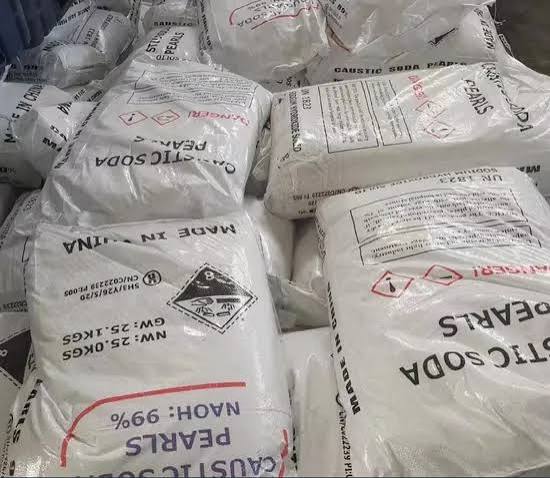
Caustic Soda Flakes /Pearls
Caustic Soda Flakes /Pearls (98.5/99% min) supplied by Kiki's Industrial Chemicals Ltd in 25kg bag. Ideal for Pulp &…
CAS 1310-73-2 · 98.5/99% min · Standard Packaging

Glycerine ( Glycerol )
Glycerine ( Glycerol ) (USP / BP 99.5%) supplied by Kiki's Industrial Chemicals Ltd in 250kg drums. Ideal for Food…
USP / BP 99.5% · Standard Packaging
Related Technical Guides & Insights
View all →Pigment Extenders & Paint Raw Materials: Why Formulators In Athi River Stop Overspending On Titanium Dioxide
Optimize paint formulations and cut raw material costs in Kenya. Master pigment extenders—Calcium Carbonate, Talc, Kaolin, and Barytes—to maximize TiO2 opacity.
Plastics & Rubber AdditivesCalcium Stearate in Kenya: The Science of PVC Lubrication, Masterbatch Processing & Masonry Waterproofing
Buy premium Calcium Stearate in Kenya. Optimize rigid PVC pipe extrusion, masterbatch pigment dispersion, and water-repellent concrete masonry formulations.
Detergent & Cleaning Raw MaterialsIndustrial Detergent Raw Materials in Kenya: Formulating with LABSA 96%, SLES 70% & Alkaline Builders
Source high-active LABSA 96%, SLES 70%, and alkaline builders in Kenya. Chemical guide to surfactant neutralisation, salt curves, and liquid soap formulation.