Calcium Stearate in Kenya: The Science of PVC Lubrication, Masterbatch Processing & Masonry Waterproofing
Buy premium Calcium Stearate in Kenya. Optimize rigid PVC pipe extrusion, masterbatch pigment dispersion, and water-repellent concrete masonry formulations.
Quick Answer: Calcium Stearate in Kenya: The Science of PVC Lubrication, Masterbatch Processing & Masonry Waterproofing
Calcium Stearate (Ca(C18H35O2)2, CAS 1592-23-0) is an insoluble calcium soap of vegetable-derived stearic acid supplied as an ultra-fine, silky white powder. In Kenya's plastics and PVC manufacturing sector, it serves as a non-toxic internal lubricant, acid scavenger (neutralizing residual acidic catalyst chlorides in polyolefins), and co-stabilizer for rigid PVC pipes, conduits, and profiles. Additionally, Calcium Stearate provides hydrophobic water repellency in mortar and masonry admixtures and serves as an anti-caking agent and flow promoter in powder coatings and pharmaceutical tableting.
Calcium Stearate is a metallic stearate produced by reacting food-grade or vegetable stearic acid with calcium oxide or calcium hydroxide, characterized by a low bulk density (200–250 g/L), a melting point of 150°C–160°C, and complete water insolubility.
Key Facts
- •PVC Fusion Balancer: Functions as an internal fusion promoter and external release lubricant, preventing PVC melt sticking to extruder screws and barrel walls while absorbing corrosive HCl during thermal processing.
- •Heavy Metal Replacement: Plays a central role in lead-free Ca/Zn (Calcium-Zinc) stabilizer systems, replacing toxic lead phosphites and stearates in potable water PVC pipes under KEBS standards.
- •Hydrophobic Barrier in Construction: Imparts permanent water repellency to cement mortars, plaster, and architectural precast blocks by reacting with calcium silicates to form a hydrophobic microstructure.
- •Packaging Standard: Supplied in 20kg or 25kg multi-wall paper bags with inner polyethylene moisture barriers, stacked on shrink-wrapped pallets away from heat and open flames.
Inside the noisy extrusion hall of a plastics manufacturing plant in Industrial Area, Nairobi, the 90mm twin-screw extruder on Line 4 is running under heavy strain.
The line is extruding 110mm rigid uPVC drainage pipes for the building construction sector. The digital motor drive display shows the screw motor pulling 185 amperes—uncomfortably close to the 200-amp overload trip limit.
The plant production engineer shines an inspection lamp down onto the gleaming chrome extruder head.
"Look at the calibration sleeve," he says to his shift technician. "The pipe outer surface is rough, dull, and showing sharkskin melt fracture. And look inside the die lip—we have yellow, charred die drool building up every twenty minutes. If we don't clear it, those scorched lumps break off and leave burnt black streaks through the pipe wall."
The shift technician points to the hopper loader. "The PVC resin batch is standard K-67. We increased the external paraffin wax from 0.4 to 0.8 parts per hundred resin, but the melt won't fuse cleanly. The melt temperature at the adapter plate is running at 202 degrees Celsius—way too hot."
The production engineer walks to the raw material compounding room and inspects the open 20kg bag of Calcium Stearate feeding the high-speed turbomixer.
"Here is our root cause," he says, rubbing the white powder between his fingertips. "This powder feels gritty, not silky. Procurement switched suppliers to save forty shillings a bag. Let’s look at the specs: the moisture content is 4%, the free stearic acid is over 3%, and the particle size is coarse—less than 80% passes 200 mesh."
He brushes the powder off his fingers.
"A bad calcium stearate destroys your fusion window. It doesn't melt smoothly at 155 degrees; it burns in the barrel, fails to lubricate the screw roots, and lets the PVC melt overheat and degrade. We dump this hopper, purge the barrel, and reload certified high-purity vegetable-grade Calcium Stearate. Here is the chemical physics of why precision stearates govern polymer extrusion, masterbatch dispersion, and construction waterproofing."
---
What is Calcium Stearate? The Chemistry of Metallic Soaps
Calcium Stearate (Ca(C₁₈H₃₅O₂)₂, CAS 1592-23-0) is the insoluble calcium salt of commercial stearic acid (primarily an engineered blend of octadecanoic acid C₁₈ and hexadecanoic acid C₁₆).
It is synthesized through the reaction of purified, vegetable-derived stearic acid with high-purity hydrated lime or calcium oxide under precise thermal control:
2CH₃(CH₂)₁₆COOH + Ca(OH)₂ → \left[ CH₃(CH₂)₁₆COO \right]₂Ca ↓ + 2H₂O
The resulting compound is an ultra-fine, silky, non-toxic white powder characterized by:
- Extreme Hydrophobicity: It repels liquid water completely, floating on the surface of water without wetting out.
- Moderate Melting Point: Melts between 150°C and 160°C, transforming under extruder shear into a clear, lubricating liquid film.
- Low Bulk Density: Fluffy powder with a bulk density of only 200-250 g/L, allowing it to disperse seamlessly across billions of polymer resin granules during dry blending.
---
Application 1: Rigid PVC Extrusion & The Lead-Free Ca/Zn Revolution
In rigid Polyvinyl Chloride (uPVC) processing—which accounts for the vast majority of electrical conduits, rainwater gutters, sewer pipes, and window profiles manufactured in Kenya—PVC cannot be processed without lubricants and thermal stabilizers. Unstabilized PVC degrades catastrophically at 160°C, releasing choking hydrochloric acid (HCl) gas that turns the polymer into black, brittle char.
The Internal vs. External Lubrication Dynamic
Calcium Stearate occupies a unique position in polymer rheology: it is primarily an internal lubricant and fusion promoter, balanced against purely external lubricants like paraffin wax or oxidized polyethylene wax (OPE wax).
When dosed at the optimal concentration of 0.8 to 1.5 phr (parts per hundred resin):
- Accelerates Controlled Gelation: Promotes mechanical shear transfer between PVC grains, bringing the melt to a homogeneous fusion state in the middle barrel zones without overheating.
- HCl Acid Scavenging: When PVC begins to dehydrochlorinate under intense shear, Calcium Stearate neutralizes the liberated HCl, forming benign calcium chloride (CaCl₂) and free stearic acid:
- Ca(C₁₇H₃₅COO)₂ + 2HCl → CaCl₂ + 2C₁₇H₃₅COOH
- This stops the catalytic zipper-degradation of the PVC chain in its tracks.
Replacing Toxic Lead Stabilizers Under KEBS Standards
Historically, Kenyan PVC pipe compounders relied on cheap lead-based stabilizers (tribasic lead sulfate and lead stearate). However, lead is a cumulative neurotoxin that leaches into municipal drinking water. Under modern Kenya Bureau of Standards guidelines (KS ISO 1452 for potable water pipes) and global environmental mandates, pipe extruders are aggressively transitioning to Calcium-Zinc (Ca/Zn) one-pack stabilizers.
In Ca/Zn systems, Calcium Stearate works in synergy with Zinc Stearate: zinc provides rapid initial colour hold, while calcium regenerates the zinc complex and arrests long-term thermal degradation, providing completely non-toxic, food-grade pipe stabilization.
At Kiki's Industrial Chemicals, our polymer additive specialists supply certified vegetable-derived Calcium Stearate to extrusion and compounding plants, ensuring consistent melt viscosity and compliance with lead-free standards.
---
Application 2: Color Masterbatch & Polyolefin Compounding
For plastic compounding plants in Nairobi manufacturing masterbatches for injection molding, blown film, and woven polypropylene (PP) bags, Calcium Stearate is the industry-standard pigment dispersant and processing aid.
1. Eliminating Pigment Agglomeration
In high-pigment masterbatches (containing up to 70% Titanium Dioxide TiO₂ or 40% carbon black/organic pigments), pigment particles clump into dense agglomerates under electrostatic forces.
When dry-blended at 1.0%-3.0%, Calcium Stearate melts during extrusion, wetting out the pigment surfaces and reducing interfacial tension. The high mechanical shear of the twin-screw extruder breaks agglomerates into sub-micron particles, locking them in a uniform dispersion. This eliminates pinholes in blown shopping bags, prevents color streaks in injection-molded basins, and stops premature filter screen blinding.
2. Acid Scavenger in Polyethylene (PE) and Polypropylene (PP)
In virgin polyolefin production, polymer resins synthesized via Ziegler-Natta catalysts contain residual traces of titanium and aluminium chloride catalysts. In the presence of ambient moisture, these residues generate acidic HCl that corrodes molding machinery. Calcium Stearate is added at 500-1,500 ppm as a dedicated acid scavenger, neutralizing the catalyst residues and preventing discoloration and mould corrosion.
---
Application 3: Hydrophobic Waterproofing in Construction & Masonry
Beyond the plastics sector, Calcium Stearate is a high-performance chemical additive in Kenya’s booming construction and architectural building materials industry.
The Capillary Water Repellent Mechanism
Cement mortars, exterior wall plasters, concrete roof tiles, and paving blocks are porous networks. Rainwater and groundwater are drawn into the masonry via capillary suction, leading to structural dampness, mold growth, and the white chalky leaching of salts known as efflorescence.
When Calcium Stearate is dry-blended into cement formulations at 0.2% to 1.0% by weight of cement:
- Forms Hydrophobic Micro-Liners: The non-polar aliphatic hydrocarbon chains line the walls of the capillary micro-pores, turning the contact angle of water droplets above 90° (hydrophobic). Water cannot penetrate under capillary pressure.
- Preserves Breathability: Unlike surface acrylic sealers that form an impermeable plastic skin that blisters and peels, Calcium Stearate allows the masonry to remain vapor-permeable ("breathable"), letting internal moisture escape while blocking external liquid rain.
- Stops Efflorescence: By preventing water ingress and egress, free calcium hydroxide (Ca(OH)₂) from hydrating cement cannot migrate to the brick surface to react with atmospheric CO₂, keeping architectural concrete surfaces pristine and stain-free.
---
Technical Specifications: High-Purity Calcium Stearate Powder
| Quality Parameter | Guaranteed Specification | Typical Lab Value | Testing Standard |
|---|---|---|---|
| Calcium Content (Ca, w/w) | 6.5% - 7.5% | 6.85% | EDTA Complexometric Titration |
| Free Fatty Acid (as Stearic) | ≤ 1.0% | 0.45% | Alcohol Extraction Titration |
| Melting Point Range | 150.0°C – 160.0°C | 154.5°C | Capillary Melting Apparatus |
| Moisture Content (Volatiles) | ≤ 2.0% (Dry grade ≤ 1.0%) | 0.65% | Gravimetric (105°C Oven) |
| Particle Fineness (Sieve Test) | ≥ 99.0% passing 325 mesh (44 µm) | 99.6% | Wet Sieve Analysis |
| Bulk Density | 200 - 250 g/L | 220 g/L | Tapped Volumeter |
| Total Heavy Metals (as Pb) | ≤ 10 mg/kg (10 ppm) | <2 ppm | ICP-OES / AAS |
| Arsenic (As) | ≤ 2.0 mg/kg (2 ppm) | <0.5 ppm | Hydride Generation AAS |
| Visual Appearance | Fine, silky, fluffy white powder | Conforms | Visual Inspection |
| Source Origin | 100% Vegetable / Palm-derived | Conforms | GC Fatty Acid Methyl Ester |
---
Operational Dosing & Storage Guidelines
To prevent production defects, factory managers should enforce the following storage and handling protocols:
1. High-Speed Dry Blending Sequence
In PVC dry-blending (turbomixers):
- Charge PVC resin first, along with liquid plasticizers and heavy stabilizers.
- Add Calcium Stearate and external waxes at 80°C – 90°C. Dosing too early can coat cold resin particles prematurely, preventing proper plasticizer absorption.
- Discharge the blend into the cooling mixer at 115°C – 120°C and cool down to 40°C before transferring to extrusion silos to prevent post-blend agglomeration.
2. Combustible Dust Safety
Like all organic powders with high specific surface areas, Calcium Stearate dust suspended in air presents a potential dust explosion hazard if exposed to static electrical discharge or open flames (Minimum Ignition Energy MIE ≈ 10-30 mJ).
- Ensure all pneumatic powder conveying lines, silos, and hoppers are electrically grounded with copper earth bonding straps.
- Store bagged stock on clean wooden pallets in a cool, dry, well-ventilated warehouse away from direct sunlight and radiant heat pipes.
---
Precision in metallic soaps is measured in tenths of a percent and microns of particle size. In polymer processing, a consistent, ultra-fine Calcium Stearate is the quiet guardian that guarantees high extruder output, low reject rates, and superior surface finish.
Looking to optimize your PVC extrusion line or improve masterbatch pigment dispersion? Speak to the polymer additives desk at Kiki's Industrial Chemicals for technical data sheets and bulk pricing.
Article Frequently Asked Questions
Chemicals Mentioned in This Guide

Calcium Stearate
Calcium Stearate (99% min) supplied by Kiki's Industrial Chemicals Ltd in 25kg bag across Kenya and East Africa.
Technical Grade · Powder
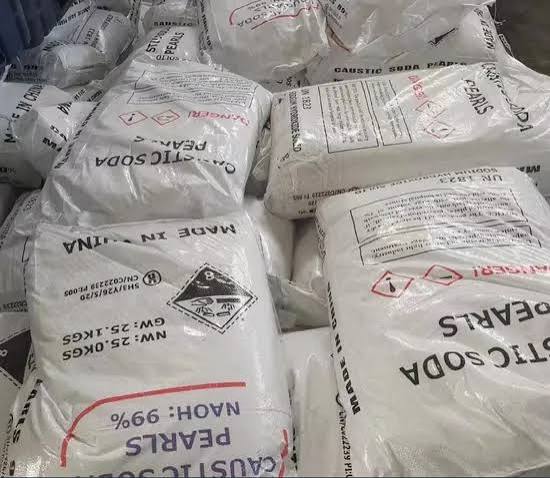
Caustic Soda Flakes /Pearls
Caustic Soda Flakes /Pearls (98.5/99% min) supplied by Kiki's Industrial Chemicals Ltd in 25kg bag. Ideal for Pulp &…
CAS 1310-73-2 · 98.5/99% min · Standard Packaging
Calcium Carbonate
High-purity industrial Calcium Carbonate (CaCO3) powder for plastics, paints, rubber, paper, building materials, and…
CAS 471-34-1 · Industrial Grade · Powder
Related Technical Guides & Insights
View all →Industrial Detergent Raw Materials in Kenya: Formulating with LABSA 96%, SLES 70% & Alkaline Builders
Source high-active LABSA 96%, SLES 70%, and alkaline builders in Kenya. Chemical guide to surfactant neutralisation, salt curves, and liquid soap formulation.
Industrial & Water ChemicalsHydrogen Peroxide 50% in Kenya: Aseptic Packaging, Textile Bleaching & Advanced Wastewater Oxidation
Source Food-Grade Aseptic & Industrial Hydrogen Peroxide 50% in Kenya. Technical guide to carton sterilisation, textile Kier bleaching, and Fenton effluent oxidation.
Industrial & Water ChemicalsSulphuric Acid in Kenya: Industrial 98%, Battery Electrolyte & Mining Leaching Guide
Source certified Commercial 98% and Battery Grade Sulphuric Acid in Kenya. Technical guide to battery plate formation, mining leaching, dilution physics & safety.