What Rock Contains Ferrous Sulphate? Geological Occurrence, Ore Associations & Minerals
Geological explainer detailing which rocks and mineral formations host iron sulphate minerals, the distinction between iron ores, pyritic rocks, and secondary weathering efflorescences.

Quick Answer — What Rock Contains Ferrous Sulphate? Geological Occurrence, Ore Associations & Minerals
Strictly speaking, no primary rock is made of ferrous sulphate. In geology, primary rocks are composed of silicate, carbonate, or oxide minerals. Ferrous sulphate exists exclusively as a secondary efflorescent mineral—predominantly Melanterite (FeSO₄·7H₂O)—found in specific rock types that contain weatherable iron disulphide minerals (pyrite, marcasite, FeS₂). The rocks most commonly associated with ferrous sulphate formation include: (1) Pyritic black shales and mudstones; (2) Weathered sulphide ore bodies and gossans capping metallic veins; (3) Sulphur-rich coal seams; and (4) Altered volcanic rocks surrounding hydrothermal vents and fumaroles. When rainwater and atmospheric oxygen penetrate these pyritic rocks, pyrite oxidizes to produce ferrous sulphate, which precipitates as delicate green crystal blooms on rock surfaces, fracture planes, and mine tunnel walls upon evaporation.
Rock-hosted ferrous sulphate occurs as secondary weathering efflorescence minerals formed through the in-situ oxidation of iron sulphide minerals embedded in host rock matrices.
Key Facts
- •Primary vs Secondary: Ferrous sulphate is NEVER a primary rock-forming mineral; it is always a secondary weathering product
- •Host Rocks: Pyritic black shales, hydrothermal quartz-sulphide veins, gossans, and coal seams
- •Key Mineral Phase: Melanterite (FeSO₄·7H₂O), forming pale green fibrous crusts in rock cavities
- •Occurrence Setting: Sheltered overhangs, rock fractures, and underground mine adits protected from direct rain
- •Distinction from Iron Ore: Commercial iron ores (hematite, magnetite) are iron oxides, not iron sulphates
Primary Use Cases
People discovering the term 'ferrous sulphate' or encountering natural green crystal efflorescences on rocks frequently ask: 'What rock contains ferrous sulphate?' In mineralogy and petrology, the answer requires a careful distinction between primary rock-forming minerals and secondary alteration products.
Primary Rocks Do Not Contain Ferrous Sulphate
In igneous, sedimentary, and metamorphic geology, primary rocks—such as granite, basalt, sandstone, or limestone—do not contain ferrous sulphate as a primary mineral constituent. Under high temperatures and pressures deep in the Earth's mantle or crust, iron combines with silica to form pyroxenes and olivines, with oxygen to form magnetite (Fe₃O₄) and hematite (Fe₂O₃), or with sulphur to form pyrite (FeS₂) and pyrrhotite (Fe₁₋ₓS). Simple hydrated iron sulphates like FeSO₄·7H₂O cannot survive high geological temperatures or pressures.
The Host Rocks of Secondary Iron Sulphates
Instead, ferrous sulphate occurs as a secondary mineral (principally Melanterite, FeSO₄·7H₂O) formed when specific iron- and sulphur-bearing host rocks are exposed to surface air and groundwater in the weathering zone (the vadose zone). The major rock environments include:
1. Pyritic Black Shales and Mudstones
Sedimentary black shales deposited in anoxic marine basins contain abundant microscopic framboidal pyrite crystals. When road cuttings, quarries, or natural cliffs expose these shales to rain and air, internal pyrite oxidizes rapidly, causing pale green and white melanterite and rozenite crystals to bloom along bedding planes and rock fractures.
2. Polymetallic Sulphide Gossans and Vein Caps
In hydrothermal mining deposits (such as copper, gold, or zinc vein deposits), the near-surface weathered zone is termed a gossan. Massive pyrite and chalcopyrite in quartz veins oxidize to produce acidic iron sulphate solutions. In sheltered caverns, crevices, and overhangs shielded from heavy rain, melanterite crystallizes as delicate green crusts and stalactites.
3. Coal Seams and Bituminous Strata
Coal deposits frequently contain high concentrations of nodular and dispersed pyrite ('coal brasses'). In underground coal workings, relative humidity and airflow trigger intense oxidation, encrusting coal faces and timber props with thick crystalline melanterite efflorescences.
4. Geothermal Alteration Zones and Fumaroles
In volcanically active regions like the Kenyan Great Rift Valley (around Olkaria, Eburru, and Mount Longonot), hot acidic gases containing hydrogen sulphide (H₂S) vent through iron-rich volcanic rocks. The resulting acid-sulphate alteration decomposes volcanic minerals, producing ephemeral crusts of iron, aluminum, and sulphur salts.
Iron Ore vs Commercial Ferrous Sulphate
Commercial iron ores quarried in massive mining operations—such as hematite (Fe₂O₃, 70% Fe) and magnetite (Fe₃O₄, 72% Fe)—are iron oxides, not iron sulphates. While iron ores are smelted into steel, commercial Ferrous Sulphate Heptahydrate 98% Min is an engineered industrial chemical crystallized under strict quality control, supplied in uniform 50 kg bags by KIKI'S Industrial Chemicals across Kenya.
Article Frequently Asked Questions
Related Categories
Related Industries
Related Applications
Chemicals Mentioned in This Guide
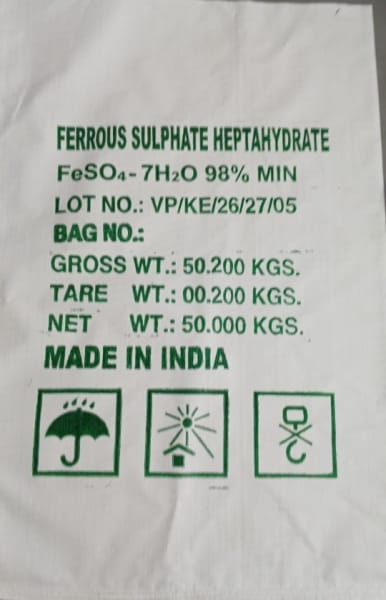
Ferrous Sulfate Heptahydrate 98% Min
Ferrous Sulphate Heptahydrate 98% Min (FeSO₄·7H₂O, CAS 7782-63-0) is an industrial-grade iron(II) salt supplied in 50…
CAS 7782-63-0 · Industrial Grade · Crystal

Ferrous sulphate monohydrate Fe: 30%min 25kg bags Technical Grade for Industrial & Commercial Use (Ferrous sulphate monohydrate Fe: 30%min 25kg bags)
Ferrous sulphate monohydrate Fe: 30%min 25kg bags (Technical Grade) supplied by Kiki's Industrial Chemicals Ltd in 25kg…
Technical Grade · Powder

ABS/LAS 80% for Industrial Use (ABS/LAS)
ABS/LAS (80%) supplied by Kiki's Industrial Chemicals Ltd in 25kg bags across Kenya and East Africa.
Technical Grade · Powder

ATMP (50%)
ATMP (50%) supplied by Kiki's Industrial Chemicals Ltd in 200kg drum. Ideal for Water treatment chemicals.
50% · Standard Packaging
Related Technical Guides & Insights
View all →Ferrous Sulphate Uses: 50 Applications and Where They Make Commercial Sense
Comprehensive industrial reference categorizing 50 applications of Ferrous Sulphate Heptahydrate across water treatment, agriculture, cement manufacturing, chemical synthesis, and metallurgy in East Africa.
Guides & How-TosFerrous Sulphate Heptahydrate 98%: What Buyers in Kenya Need to Know Before Ordering
A comprehensive procurement guide for industrial chemical buyers in Kenya. Understand the difference between 98% compound purity and elemental iron, packaging standards, COA parameters, and regional sourcing options.