Sourcing Industrial Solvents Across Kenya and East Africa: A Buyer's Checklist
A comprehensive supply chain and procurement manual for industrial solvents in Kenya and the EAC region: port logistics, quality verification, transport compliance, and regional distribution.

Quick Answer — Sourcing Industrial Solvents Across Kenya and East Africa: A Buyer's Checklist
Procuring industrial solvents across Kenya and East Africa requires strict verification of chemical purity, legitimate import documentation, and transit safety protocols. Reliable solvent sourcing depends on five critical checkpoints: demanding manufacturer batch-specific Certificates of Analysis (CoA) with verified gas chromatography assays, verifying UN-certified packaging (such as UN 1090 for acetone), ensuring compliance with Kenya Bureau of Standards (KEBS) and NEMA transport licenses, evaluating distributor stock depth to prevent production stoppages, and establishing clear cross-border transit logistics along the Northern and Central transport corridors.
Acetone (propan-2-one, CAS 67-64-1, UN 1090) is an industrial ketone solvent supplied across Kenya by KIKI'S Industrial Chemicals Ltd in 20L HDPE jerrycans and 160kg steel drums.
Key Facts
- •Quality Verification: Insist on lot-specific CoAs certifying gas chromatography purity (99.5% min) and low moisture (under 0.20%) to avoid recycled solvents.
- •Regulatory Compliance: Verify transporter and warehouse compliance with NEMA hazardous waste permits and KEBS standardization requirements.
- •Regional Cross-Border Logistics: Plan transit timelines and COMESA/EAC documentation for shipments to Uganda, Tanzania, Rwanda, Burundi, South Sudan, and Ethiopia.
- •Supplier Continuity: Partner with stocking distributors in Nairobi to insulate manufacturing operations from international shipping and port delays.
Primary Use Cases
The manufacturing and industrial processing sectors across East Africa (encompassing Kenya, Uganda, Tanzania, Rwanda, Burundi, South Sudan, Ethiopia, Somalia, and Djibouti) are experiencing rapid growth in packaging, composite fabrication, paint production, and agricultural processing. Central to these operations is a steady, predictable supply of high-purity industrial solvents.
However, solvent procurement across the region carries distinct operational risks. Fluctuating global petrochemical prices, shipping bottlenecks at the Port of Mombasa, volatile currency exchange, and the influx of low-grade recycled solvents require procurement managers to execute a structured due diligence process before signing supply contracts.
The Risk of Recycled and Sub-Standard Solvents
In East African informal chemical markets, budget solvent vendors occasionally offer reclaimed or re-distilled solvents under the guise of virgin chemical. In the case of acetone, reclaimed product recovered from paint washing stations often carries trace plasticizers, water, dissolved acrylic oligomers, and chlorinated residues.
When introduced into a composite laminating plant or precision coating facility, these trace contaminants ruin resin gelation, cause catastrophic delamination of GRP tanks, or induce severe blushing in clear lacquers. Establishing strict quality verification protects your brand and factory warranty.
The 5-Point Chemical Procurement Checklist
Every commercial procurement department should enforce the following five validation criteria:
- 1. Batch-Specific Certificate of Analysis (CoA): Never accept a generic or undated specification sheet. Insist on a lot-specific CoA demonstrating gas chromatography assay (minimum 99.5% for acetone), Karl Fischer water content (maximum 0.20%), density, and non-volatile residue.
- 2. Factory-Sealed UN-Approved Packaging: Ensure containers carry valid UN packaging marks (e.g. UN 1090 for acetone Class 3). Drums must show un-tampered seals, and 20-litre HDPE jerrycans must feature tamper-evident breakaway rings and induction seals.
- 3. Regulatory Transit Permits: In Kenya, solvent movement is subject to the Environmental Management and Co-ordination Act (EMCA) and National Transport and Safety Authority (NTSA) hazardous materials rules. Verify that your logistics partner holds valid hazardous transport licenses.
- 4. Inventory Depth and Buffer Stock: International sea freight from major petrochemical production centres (such as Taiwan, India, Europe, or the Gulf) requires 45 to 60 days transit. Choose a supplier with sufficient Nairobi buffer inventory to absorb Red Sea maritime diversions and customs delays.
- 5. Regional Export Capabilities: For cross-border manufacturers in Kampala, Kigali, Arusha, or Juba, ensure your Nairobi distributor can handle EAC single-customs territory documentation, COMESA certificates of origin, and road transit declarations.
Regional Corridor Logistics: Kenya to East Africa
Nairobi serves as the primary distribution nexus for industrial chemicals moving across East and Central Africa:
The Northern Corridor facilitates seamless road freight from Mombasa and Nairobi along the A104 highway through Nakuru and Eldoret to Malaba and Busia, supplying Ugandan manufacturing hubs in Kampala and Jinja, as well as transit routes to Kigali (Rwanda) and Goma (DRC).
The Central and Southern routes connect Nairobi to Namanga, facilitating cross-border transit to Arusha, Moshi, and Dar es Salaam in Tanzania, while northern spurs supply Juba in South Sudan and border points into Ethiopia.
Your Trusted Chemical Partner: KIKI'S Industrial Chemicals Ltd is a premier chemical distributor based in Nairobi, Kenya. We import directly from verified global petrochemical producers, guaranteeing 100% virgin solvent quality backed by full technical documentation, ready for dispatch across Kenya and the wider East African region.
Article Frequently Asked Questions
Related Categories
Chemicals Mentioned in This Guide
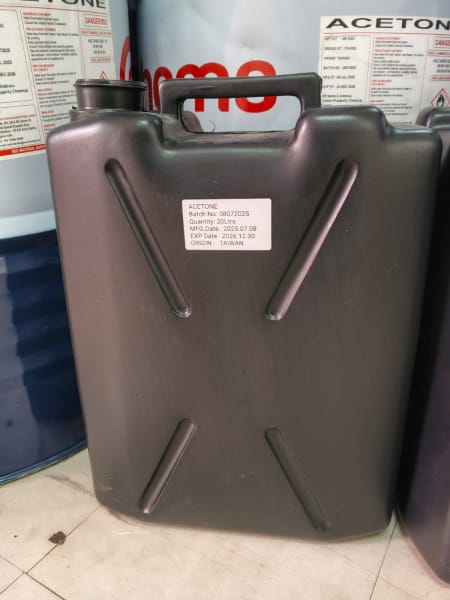
Acetone 20 Litres for Industrial and Commercial Use in Kenya
Industrial-grade Acetone in a convenient 20-litre heavy-duty HDPE jerrycan (99.5% min assay, CAS 67-64-1, UN 1090).…
CAS 67-64-1 · Industrial Solvent Grade (Virgin High-Purity) · Clear colourless volatile liquid
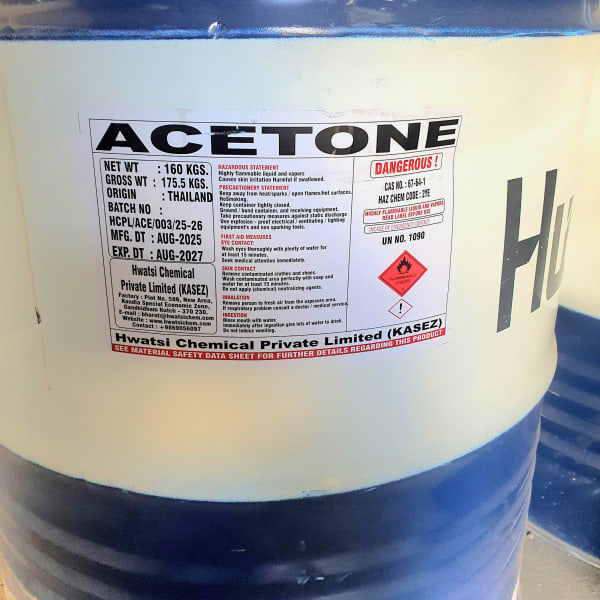
Acetone Industrial Solvent (Bulk 160kg Drums & Multi-Pack Supply)
High-purity virgin Acetone solvent (99.5% min assay, CAS 67-64-1, UN 1090) supplied in 160kg steel drums, 1,000L IBCs,…
CAS 67-64-1 · Industrial Solvent Grade (Virgin High-Purity) · Clear Colorless Volatile Liquid

ABS/LAS 80% for Industrial Use (ABS/LAS)
ABS/LAS (80%) supplied by Kiki's Industrial Chemicals Ltd in 25kg bags across Kenya and East Africa.
Technical Grade · Powder

ATMP (50%)
ATMP (50%) supplied by Kiki's Industrial Chemicals Ltd in 200kg drum. Ideal for Water treatment chemicals.
50% · Standard Packaging
Related Technical Guides & Insights
View all →What Is Acetone? Properties, Uses and Industrial Applications in Kenya
A comprehensive technical guide to acetone (propan-2-one, CAS 67-64-1): molecular structure, physical properties, solvency parameters, industrial applications, and procurement considerations for Kenyan manufacturers.
Buying GuideWhere to Buy Acetone in Nairobi, Kenya: A Practical Buyer's Guide
A practical procurement guide for sourcing industrial acetone in Nairobi, Kenya. Learn what specifications to verify, how to avoid contaminated recycled solvents, and how to evaluate suppliers.
Buying GuideAcetone 20 Litres: Who Needs This Pack Size and How to Order It in Kenya
Discover why the 20-litre acetone jerrycan is the preferred packaging for workshops, composite laminators, and maintenance teams in Kenya. Compare volume versus mass and learn how to order.
Industrial ApplicationsUsing Acetone for Fibreglass and Polyester Resin Tool Cleanup
Learn how to use industrial acetone safely and effectively for cleaning uncured polyester, vinyl ester, and gelcoat resins from fibreglass laminating tools, rollers, and spray equipment.