Using Acetone for Fibreglass and Polyester Resin Tool Cleanup
Learn how to use industrial acetone safely and effectively for cleaning uncured polyester, vinyl ester, and gelcoat resins from fibreglass laminating tools, rollers, and spray equipment.

Quick Answer — Using Acetone for Fibreglass and Polyester Resin Tool Cleanup
Industrial acetone is the globally recognized solvent standard for washing uncured unsaturated polyester, vinyl ester, and epoxy resins from laminating rollers, bristle brushes, and mixing buckets in fibreglass manufacturing. Its high solvency rapidly cuts through viscous resin oligomers before catalytic cross-linking hardens the polymer. Importantly, acetone will only dissolve liquid or gelled uncured resin; it cannot dissolve fully cured, cross-linked thermoset plastic.
Acetone (propan-2-one, CAS 67-64-1, UN 1090) is an industrial ketone solvent supplied across Kenya by KIKI'S Industrial Chemicals Ltd in 20L HDPE jerrycans and 160kg steel drums.
Key Facts
- •Critical Timing: Tool washing must occur immediately after laminating while resin is in the liquid or green gel state; hardened thermoset resin cannot be dissolved.
- •Tool Preservation: Rapidly flushes aluminum finned rollers, disc rollers, and natural bristle brushes without leaving residue that compromises subsequent composite bonds.
- •Dual-Bath Protocol: Utilizing a primary wash tank for bulk resin removal followed by a clean secondary rinse doubles solvent working life and improves cleaning quality.
- •Safety Mandates: Acetone is a Class 3 flammable solvent (-18°C flash point). Never clean near open flames, never wash skin with acetone, and always wear butyl rubber gloves.
Primary Use Cases
In Kenya's composite fabrication sector (producing marine boats on Lake Victoria and the Indian Ocean, commercial GRP water tanks across the Rift Valley, and automotive canopies in Nairobi), resin tool maintenance is a critical continuous task. Every minute a laminator delays washing an aluminum consolidating roller after catalysing polyester resin with MEKP brings the tool closer to permanent ruin.
The Chemistry of Resin Cleanup: Why Acetone Works
Unsaturated polyester resins and gelcoats consist of polymer chains dissolved in styrene monomer. When an organic peroxide catalyst (such as methyl ethyl ketone peroxide, MEKP) is added, free-radical polymerization initiates, cross-linking linear chains into a rigid three-dimensional thermoset polymer network.
Before cross-linking reaches the hardened gel state, acetone's small, highly polar ketone molecules penetrate and disrupt the weak intermolecular forces between monomer units and resin oligomers. Acetone rapidly solvates and disperses the resin into a fluid liquid solution, allowing tools to be flushed clean.
Crucial Technical Limitation: Acetone does NOT dissolve fully cured, hardened polyester or epoxy resin. Once the resin cross-links into a solid thermoset matrix, soaking in acetone will only cause slight swelling and softening of the surface without dissolving the plastic. Tool cleaning must take place while resin remains uncured.
Recommended Step-by-Step Dual-Bath Cleaning Procedure
To maximize cleaning efficiency, reduce solvent consumption, and minimize flammable vapour release, composite facilities should implement a structured dual-bath system:
- Step 1: Mechanical Pre-Wipe: Immediately upon finishing lamination, scrape excess uncured resin off aluminum finned rollers and metal squeegees using a flexible putty knife or cardboard scraper back into the resin bucket.
- Step 2: Primary Solvent Immersion: Immerse tools in a covered 'dirty' wash tank containing used acetone. Agitate the rollers vigorously for 20 to 30 seconds to break down the bulk resin layer. Keep the container covered whenever tools are not actively being manipulated.
- Step 3: Secondary Clean Rinse: Transfer tools to a second, covered wash bath containing clean, fresh acetone. Swirl for 10 seconds to remove the thin residual film of diluted resin.
- Step 4: Vapor-Controlled Drying: Spin rollers inside an enclosed splatter shield or dry tools in a dedicated rack under local exhaust ventilation. Tools dry in 2 to 3 minutes due to acetone's rapid evaporation rate (RER ~5.6).
- Step 5: Settled Sludge Regeneration: At the end of the shift, allow the primary wash bath to rest overnight. The suspended polyester resin precipitates to the bottom as a white, rubbery sludge. Decant the relatively clear top solvent into a container for reuse in the initial wash stage, and discard the sludge according to environmental regulations.
Workshop Safety and Personal Protection Protocols
Handling volatile flammable solvents in a busy composite workshop requires strict adherence to safety controls:
- Severe Fire and Explosion Hazards: With a closed-cup flash point of -18°C, acetone vapours ignite instantly from grinding sparks, welding arcs, radiant heaters, or unrated electric switches. Maintain a minimum 10-metre exclusion zone for all ignition sources around wash stations.
- Never Clean Hands with Acetone: A dangerous workshop habit is washing resin-stained hands in the acetone bucket. Acetone aggressively strips skin lipids, causes chemical burns, and facilitates the systemic absorption of toxic catalyst peroxides and styrene through the skin barrier. Provide waterless citrus-based resin hand cleaners and barrier creams.
- Glove Material Selection: Always wear heavy-duty butyl rubber gloves. Standard disposable nitrile gloves swell, tear, and experience chemical breakthrough in under 10 minutes when exposed to pure acetone.
- Proper Waste Storage: Rags and paper towels soaked in acetone and polyester resin pose a severe spontaneous combustion hazard if catalyst residues are present. Collect contaminated wipes in self-closing, water-filled metal disposal cans.
Article Frequently Asked Questions
Related Categories
Chemicals Mentioned in This Guide
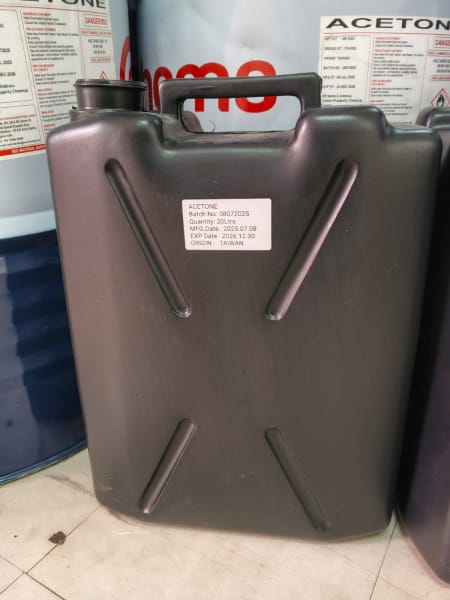
Acetone 20 Litres for Industrial and Commercial Use in Kenya
Industrial-grade Acetone in a convenient 20-litre heavy-duty HDPE jerrycan (99.5% min assay, CAS 67-64-1, UN 1090).…
CAS 67-64-1 · Industrial Solvent Grade (Virgin High-Purity) · Clear colourless volatile liquid
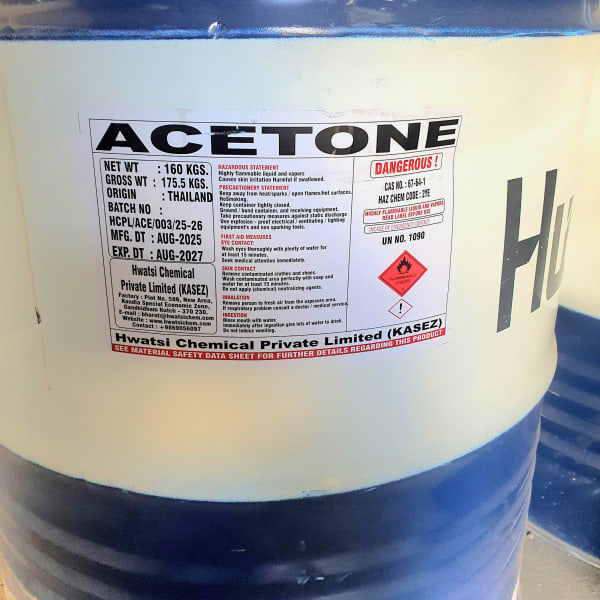
Acetone Industrial Solvent (Bulk 160kg Drums & Multi-Pack Supply)
High-purity virgin Acetone solvent (99.5% min assay, CAS 67-64-1, UN 1090) supplied in 160kg steel drums, 1,000L IBCs,…
CAS 67-64-1 · Industrial Solvent Grade (Virgin High-Purity) · Clear Colorless Volatile Liquid

ABS/LAS 80% for Industrial Use (ABS/LAS)
ABS/LAS (80%) supplied by Kiki's Industrial Chemicals Ltd in 25kg bags across Kenya and East Africa.
Technical Grade · Powder

ATMP (50%)
ATMP (50%) supplied by Kiki's Industrial Chemicals Ltd in 200kg drum. Ideal for Water treatment chemicals.
50% · Standard Packaging
Related Technical Guides & Insights
View all →What Is Acetone? Properties, Uses and Industrial Applications in Kenya
A comprehensive technical guide to acetone (propan-2-one, CAS 67-64-1): molecular structure, physical properties, solvency parameters, industrial applications, and procurement considerations for Kenyan manufacturers.
Buying GuideWhere to Buy Acetone in Nairobi, Kenya: A Practical Buyer's Guide
A practical procurement guide for sourcing industrial acetone in Nairobi, Kenya. Learn what specifications to verify, how to avoid contaminated recycled solvents, and how to evaluate suppliers.
Buying GuideAcetone 20 Litres: Who Needs This Pack Size and How to Order It in Kenya
Discover why the 20-litre acetone jerrycan is the preferred packaging for workshops, composite laminators, and maintenance teams in Kenya. Compare volume versus mass and learn how to order.
Industrial ApplicationsCan Acetone Be Used for Industrial Degreasing? Benefits, Limitations and Compatibility
An engineering evaluation of acetone as an industrial degreasing solvent: solvency power on machining oils, flash-off speed, residue-free drying, plastic attack vulnerabilities, and safety controls.