Food-Grade BHA in Kenya: The Science of Halting Rancidity in Edible Oils, Fats & Packaged Snacks
Source certified Food-Grade BHA (E320) in Kenya. Prevent rancidity, peroxide spikes, and lipid oxidation in edible oils, frying fats, and commercial bakery.
Quick Answer: Food-Grade BHA in Kenya: The Science of Halting Rancidity in Edible Oils, Fats & Packaged Snacks
Food-Grade BHA (Butylated Hydroxyanisole, E320, CAS 25013-16-5) is a synthetic phenolic antioxidant used in Kenya to inhibit oxidative rancidity in edible vegetable oils, animal fats, and deep-fried snacks. By acting as a free-radical scavenger, BHA donates a hydrogen atom to lipid peroxy radicals, terminating the auto-oxidation chain reaction. Under Kenya Bureau of Standards (KEBS KS EAS 769:2019) and Codex Alimentarius guidelines, maximum permitted dosage is strictly capped at 200 mg/kg (200 ppm) on a total fat basis, often formulated in a 1:1 synergistic ratio with BHT and citric acid.
Food-Grade BHA is a mixture of two isomeric organic compounds (2-tert-butyl-4-methoxyphenol and 3-tert-butyl-4-methoxyphenol) supplied as white or pale-yellow waxy flakes or crystalline powder, highly soluble in fats, oils, and ethanol, and stable at high commercial frying temperatures.
Key Facts
- •High Thermal Stability (Carry-Through): Unlike natural tocopherols (Vitamin E) that degrade above 160°C, BHA withstands continuous industrial frying at 180°C–190°C, protecting baked and fried snacks long after packaging.
- •The Synergistic Triad: Blending BHA with BHT (Butylated Hydroxytoluene) and Citric Acid reduces required active concentrations while providing dual-phase radical scavenging and trace transition metal chelation (Fe2+, Cu2+).
- •Irreversible Timing Rule: Antioxidants cannot reverse rancidity; BHA must be dosed into fresh, refined oil with a Peroxide Value (PV) below 1.0 meq O2/kg.
- •Packaging Standard: 25kg food-grade fiber drums or poly-lined cartons stored below 25°C away from direct sunlight to prevent sublimation and yellowing.
The hot afternoon sun beats down on the corrugated iron roof of a commercial snack processing factory off the Thika Superhighway in Ruiru. Inside the quality control laboratory, the air smells intensely of fried corn masa and cooling palm olein.
The plant QA manager holds up a dark amber glass bottle containing a sample from Batch 402, delivered back from a retail distributor in Kisumu forty-eight hours ago.
"Listen to this email," he says, reading from his tablet to the plant superintendent. "'Customers in Migori and Kakamega are reporting that the crisps taste like stale wet cardboard only three weeks after packaging.' Three weeks! Our stamped shelf life is six months."
The plant superintendent rubs his forehead. "We checked the sealing jaws on the packaging line. No leaks. Nitrogen flush was at 98% purity. How did the oil turn?"
The QA manager slides a freshly calibrated digital titrator across the bench. "Our palm olein left the bulk storage tanks with a Peroxide Value of 1.2. In Kisumu’s 32-degree humidity, without an active phenolic antioxidant inhibitor, that uninhibited fat entered exponential auto-oxidation before the pallets even cleared the distribution depot."
He sets down a clean 25kg white drum labeled Food-Grade BHA (Butylated Hydroxyanisole, E320).
"We stop gambling on unassisted vegetable oil. Tomorrow morning, we dose BHA at 100 parts per million with BHT and citric acid. Here is the chemistry of why our crisps will stay fresh until Christmas."
---
The Auto-Oxidation Cascade: Why Edible Fats Turn Stale
Edible oils and frying fats are composed of triglycerides containing saturated, monounsaturated, and polyunsaturated fatty acids (PUFAs). Unsaturation means vulnerable methylene carbons flanked by double bonds (-CH=CH-CH2-CH=CH-).
When oil is exposed to ambient heat, atmospheric oxygen, light, and catalytic trace metals (Fe²⁺ or Cu²⁺ from storage tanks), it undergoes a devastating three-stage radical chain reaction known as lipid auto-oxidation:
`
- Initiation:
- RH (Lipid) +[Energy/Metal Catalyst]---> R• (Alkyl Radical) + H•
- Propagation:
- R• + O2 ------------------------------> ROO• (Peroxy Radical)
ROO• + RH ----------------------------> ROOH (Hydroperoxide) + R•
- Breakdown:
- ROOH (Odourless) ---------------------> Hexanal, Pentanal, Nonenal
(Volatile Rancid Off-Flavours) ```
The hydroperoxides (ROOH) measured by the Peroxide Value (PV) test are odorless and tasteless in themselves. But as they accumulate, they undergo homolytic cleavage into volatile aldehydes, ketones, and short-chain carboxylic acids. The most notorious—hexanal—gives consumers that unmistakable, rancid "wet cardboard" and paint-like off-taste at concentrations as low as 5 parts per billion.
Once propagation begins, the reaction is autocatalytic: every radical formed creates another radical in an exponential cascade.
---
Chemical Mechanism: How BHA Halts the Fire
Food-Grade BHA (CAS 25013-16-5) belongs to the class of hindered phenolic primary antioxidants. Its molecular structure features a benzene ring with a hydroxyl group (-OH) sterically protected by a bulky tert-butyl group.
When a highly reactive lipid peroxy radical (ROO•) attacks, the BHA molecule intercepts it faster than the radical can attack another lipid molecule:
ROO• + BHA-OH → ROOH + BHA-O•
ROO• + BHA-O• → Non-Radical Stable End-Products
Why doesn't the resulting BHA phenoxy radical (BHA-O•) attack adjacent fat molecules?
Because the unpaired electron is delocalized across the aromatic π-electron system of the benzene ring and sterically shielded by the tert-butyl group. The BHA radical is thermodynamically stable and unreactive toward lipids. It terminates the chain, effectively blowing out the biochemical fuse before the fire spreads across the oil tank.
At Kiki's Industrial Chemicals, our food and beverage team regularly assists edible oil refiners and snack processors across Nairobi and Ruiru in calculating precise antioxidant ppm inclusions to prevent peroxide value spikes before retail dispatch.
---
The Synergistic Triad: BHA + BHT + Citric Acid
In modern food formulation across Kenya, experienced food scientists rarely use BHA in isolation. They deploy what industrial chemists call the Antioxidant Triad:
| Ingredient | Primary Functional Role | Solubility & Physical Behaviour | Optimum Ratio |
|---|---|---|---|
| BHA (E320) | High carry-through primary free-radical scavenger | Highly fat-soluble, waxy flakes, vaporizes with steam above 200°C | 40% – 50% of antioxidant blend |
| BHT (E321) | Sterically hindered phenolic radical scavenger | Crystalline, synergistic with BHA in animal fats & heavy triglycerides | 40% – 50% of antioxidant blend |
| Citric Acid (E330) | Metal chelating secondary synergist | Hydrophilic, sequesters pro-oxidant Fe²⁺ and Cu²⁺ ions | 10% – 20% of antioxidant blend |
Why the Synergy Works:
- Regenerative Radical Coupling: BHA and BHT have slightly different oxidation-reduction potentials and spatial configurations. When BHA donates its hydrogen atom, BHT can assist in quenching secondary intermediates, extending the active life of both molecules.
- Deactivating the Spark (Metal Chelation): Industrial processing equipment, stainless steel storage tanks, and raw vegetable fats inevitably contain trace levels of transition metals (0.1 to 1.0 ppm of iron or copper). These metals act as ferocious electron transfer catalysts, decomposing stable hydroperoxides into explosive alkoxy radicals:
- Fe²⁺ + ROOH → Fe³⁺ + RO• + OH⁻
- Adding 20 to 50 ppm of Food-Grade Citric Acid forms a tight, coordinate covalent multidentate chelate ring around the metal ions, completely deactivating their catalytic ability.
---
Industrial Applications Across East Africa
1. Commercial Potato Crisps, Plantain Chips & Extruded Snacks
- The "Carry-Through" Advantage: Natural tocopherols (Vitamin E) are celebrated on clean labels, but they have poor carry-through stability—they decompose or steam-distill out during continuous deep frying at 180°C. BHA dissolves intimately into the lipid phase and survives the fryer, coating the fried snack and ensuring that the thin oil film absorbed on the surface resists oxidation throughout the retail distribution chain.
2. Edible Oil Refineries & Palm Olein Packaging
- Refined, Bleached, and Deodorized (RBD) Palm Olein and pure sunflower oil shipped in 20-litre jerrycans to upcountry retail shops in Garissa, Lodwar, or Kisumu face elevated ambient temperatures (30°C–40°C). Adding 100–150 ppm of food-grade BHA ensures the oil remains within KEBS Peroxide Value limits (< 10 meq/kg) throughout its 12-month shelf life.
3. Industrial Bakery Shortenings & Margarines
- Commercial biscuit and bread shortenings contain emulsified water droplets. BHA protects the bulk lipid phase from hydrolytic and oxidative degradation, preventing baked biscuits from developing a soapy or oxidized flavor on retail shelves.
---
Technical Specifications: Food Grade BHA (FCC / USP / Codex)
| Technical Parameter | Test Standard | Commercial Specification |
|---|---|---|
| Chemical Name | IUPAC | 2-tert-butyl-4-methoxyphenol / 3-tert-butyl-4-methoxyphenol |
| CAS Number | Chemical Abstracts | 25013-16-5 |
| INS / E-Number | Codex Alimentarius | E320 / INS 320 |
| Assay (Purity) | Gas Chromatography (GC) | ≥ 98.5% total BHA isomers |
| 3-BHA Isomer Content | GC Assay | ≥ 85.0% (primary active antioxidant isomer) |
| Physical Appearance | Visual Inspection | White to slightly pale-yellow waxy flakes or crystalline powder |
| Melting Range | Capillary Melting Point | 48.0°C to 55.0°C |
| Odour | Sensory Evaluation | Characteristic faint, pleasant aromatic odour |
| Solubility in Water | Gravimetric | Insoluble (< 0.1 g/L at 20°C) |
| Solubility in Fats & Oils | Gravimetric | Completely miscible at 50°C (> 300 g/kg) |
| Solubility in Ethanol (96%) | Visual | Freely soluble (1 g in 4 mL) | | Heavy Metals (as Pb) | ICP-OES | ≤ 2 mg/kg (2 ppm max) | | Arsenic (as As) | Hydride AAS | ≤ 1 mg/kg (1 ppm max) | | Sulphated Ash | Muffle Furnace (600°C) | ≤ 0.05% |
---
3 Costly Operational Mistakes Food Processors Make in Kenya
1. Dosing BHA Into Oil That Has Already Begun to Oxidize
Antioxidants are preservatives, not revivers. If your incoming crude or refined oil has a Peroxide Value exceeding 2.5 meq/kg or an Anisidine Value above 6.0, the free-radical cascade is already self-sustaining. Dosing BHA at this stage will consume the antioxidant within hours, leaving the oil unprotected. BHA must be dosed immediately after deodorization when the oil is fresh and PV is below 0.5 meq/kg.
2. Dumping Dry BHA Flakes Directly into Cold Storage Tanks
BHA flakes melt at 48°C–55°C and dissolve slowly in cold oil (below 25°C). Pouring dry flakes through a top manhole into a 50,000-litre unheated tank causes the waxy flakes to sink to the bottom cone un-dissolved.
Correct SOP: Prepare a concentrated 10% stock solution by dissolving the required BHA in clean oil heated to 60°C with vigorous mechanical agitation, then meter the concentrated solution into the main oil flow via an inline static mixer or recirculating pump.
3. Exceeding KEBS & EAC Statutory Limits
Under KEBS KS EAS 769:2019 (Food Additives General Standard), the maximum permitted limit for BHA in edible fats and oils is 200 mg/kg (200 ppm) on a total fat basis. If formulated in combination with BHT or Propyl Gallate, the total combined phenolic antioxidant content must not exceed 200 ppm, with neither individual compound exceeding 200 ppm. Overdosing risks regulatory seizure, product recalls, and bitter chemical flavor taints in delicate snack foods.
---
Technical Sourcing Standards for Bulk Antioxidants
When procuring commercial antioxidants in East Africa, food manufacturing procurement teams should demand:
- Packaging: 25kg net weight UN-rated fiber drums with double food-grade polyethylene moisture liners, protecting the waxy flakes from ambient heat and sublimation.
- Documentation: Batch-specific Certificate of Analysis (COA) detailing isomer distribution, GC purity assay, heavy metal analysis, and compliance with the Food Chemicals Codex (FCC) and British Pharmacopoeia (BP).
- Storage Environment: Temperature-controlled dry storage below 25°C with zero direct sunlight exposure to prevent crystal clumping.
Back on the snack line in Ruiru, the fryers are humming at 182°C. A 100 ppm master-solution of BHA-BHT-citric acid has been blended into the daily palm olein feed. In the QA laboratory, the 48-hour accelerated Rancimat stability test shows the induction time has jumped from 6.2 hours to an extraordinary 18.5 hours.
The crisps on the conveyor come out crisp, golden, and completely clean on the palate.
---
Need immediate ex-stock supply of Food-Grade BHA (E320), BHT, or Food-Grade Citric Acid for your food processing facility? Request a technical bulk quote from Kiki's Industrial Chemicals.
Article Frequently Asked Questions
Chemicals Mentioned in This Guide

Citric Acid Monohydrate (FCC Grade)
Food Chemicals Codex (FCC) certified food-grade citric acid monohydrate for soft drink acidulation, food preservation…
CAS 5949-29-1 · Food Grade · Crystal
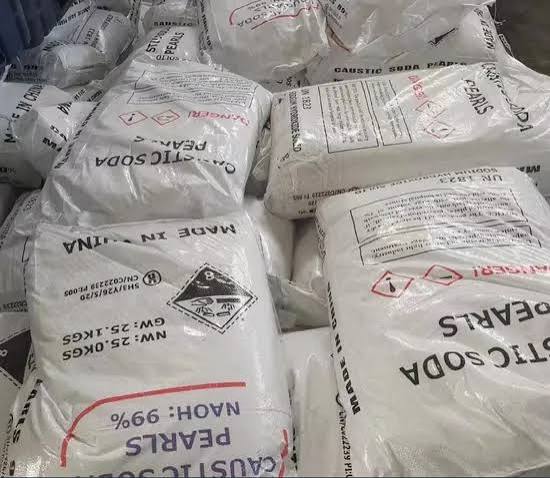
Caustic Soda Flakes /Pearls
Caustic Soda Flakes /Pearls (98.5/99% min) supplied by Kiki's Industrial Chemicals Ltd in 25kg bag. Ideal for Pulp &…
CAS 1310-73-2 · 98.5/99% min · Standard Packaging
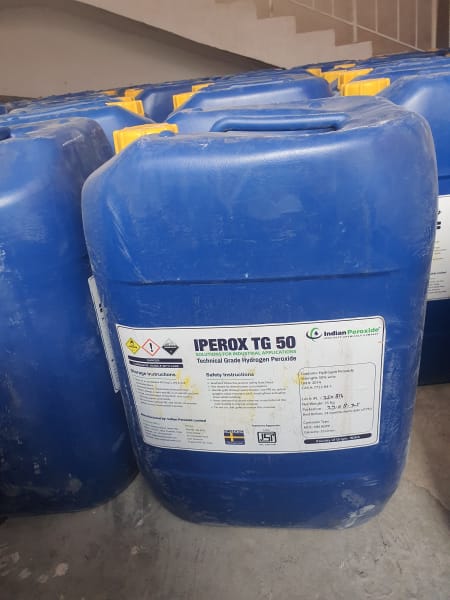
Hydrogen Peroxide 50%
Industrial-grade Hydrogen Peroxide 50% solution for textile bleaching, effluent water treatment, disinfection, and…
CAS 7722-84-1 · Technical Grade · Liquid
Related Technical Guides & Insights
View all →Dextrose Monohydrate in Kenya: The Science of Sweetness, Fermentation, and Pharma Grade Sourcing
Source premium Dextrose Monohydrate in Kenya. Compare food grade vs pharma BP/USP grades for bakery browning, beverage sweetness, and oral rehydration salts.
Coatings & Construction ChemicalsPigment Extenders & Paint Raw Materials: Why Formulators In Athi River Stop Overspending On Titanium Dioxide
Optimize paint formulations and cut raw material costs in Kenya. Master pigment extenders—Calcium Carbonate, Talc, Kaolin, and Barytes—to maximize TiO2 opacity.
Plastics & Rubber AdditivesCalcium Stearate in Kenya: The Science of PVC Lubrication, Masterbatch Processing & Masonry Waterproofing
Buy premium Calcium Stearate in Kenya. Optimize rigid PVC pipe extrusion, masterbatch pigment dispersion, and water-repellent concrete masonry formulations.