Ferrous Sulphate Heptahydrate vs Anhydrous: Chemical Differences and Practical Uses
Detailed chemical and commercial comparison between Ferrous Sulphate Heptahydrate (FeSO₄·7H₂O) and Anhydrous Ferrous Sulphate (FeSO₄): hydration states, elemental iron, thermal stability, and industrial economics.
Quick Answer — Ferrous Sulphate Heptahydrate vs Anhydrous: Chemical Differences and Practical Uses
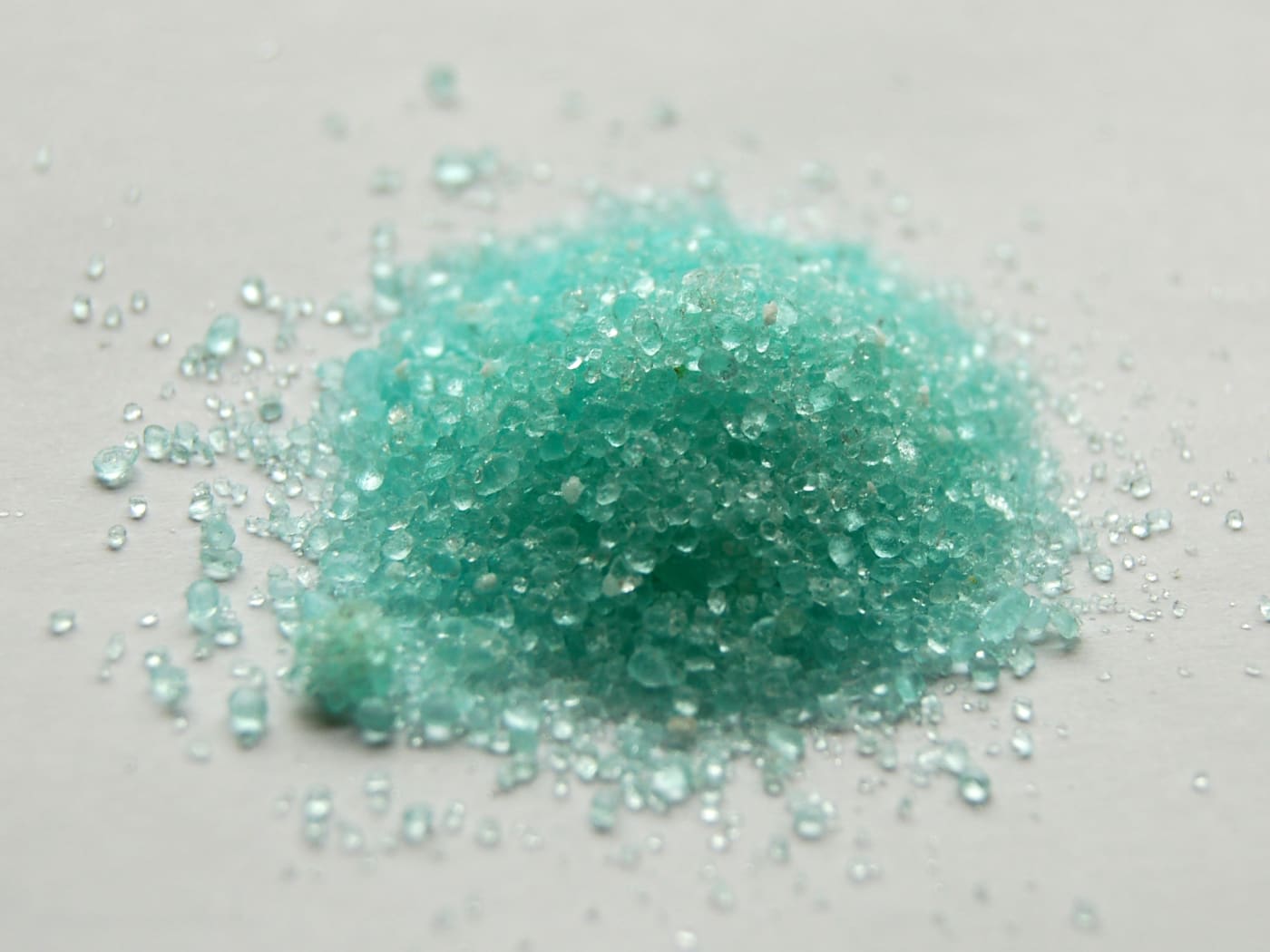
The core difference between Ferrous Sulphate Heptahydrate (FeSO₄·7H₂O, CAS 7782-63-0) and Anhydrous Ferrous Sulphate (FeSO₄, CAS 7720-78-7) is the presence of seven molecules of water of crystallization. Heptahydrate has a molecular weight of 278.01 g/mol and contains ~19.7% elemental iron, appearing as sea-green crystals that dissolve quickly in water. Anhydrous ferrous sulphate has a molecular weight of 151.91 g/mol and contains ~36.8% elemental iron, appearing as an off-white to yellowish powder. Anhydrous material is rarely used in bulk water treatment due to high manufacturing drying costs and extreme hygroscopicity.
Hydrated vs anhydrous forms of iron(II) sulphate represent different stoichiometric hydration levels, impacting molecular weight, iron concentration, hygroscopicity, and industrial handling.
Key Facts
- •Heptahydrate Formula: FeSO₄·7H₂O | MW: 278.01 g/mol | Elemental Fe: ~19.7%
- •Anhydrous Formula: FeSO₄ | MW: 151.91 g/mol | Elemental Fe: ~36.8%
- •Appearance: Heptahydrate is translucent green crystals; Anhydrous is off-white to buff powder
- •Hygroscopicity: Anhydrous is vigorously hygroscopic and cakes rapidly if exposed to air
- •Commercial Market: Over 95% of industrial iron sulphate traded in East Africa is heptahydrate or monohydrate
Primary Use Cases
When procuring iron salts for industrial water treatment, soil fertility, or manufacturing in Kenya, technical teams frequently encounter references to 'ferrous sulphate heptahydrate' alongside 'anhydrous ferrous sulphate'. While both chemicals share the core iron(II) sulphate moiety (FeSO₄), their hydration states fundamentally alter their molecular weight, elemental iron concentration, physical stability, dissolution kinetics, and commercial pricing.
Stoichiometric and Chemical Comparison Table
Understanding the mathematical and physical differences is critical for formulating dosing regimes and comparing procurement tenders:
- Chemical Formula: FeSO₄·7H₂O (Heptahydrate) vs FeSO₄ (Anhydrous)
- CAS Registry Number: 7782-63-0 (Heptahydrate) vs 7720-78-7 (Anhydrous)
- Molecular Weight: 278.01 g/mol (Heptahydrate) vs 151.91 g/mol (Anhydrous)
- Theoretical Iron Content: 20.09% Fe (Heptahydrate) vs 36.76% Fe (Anhydrous)
- Commercial Assay Iron: ~19.7% Fe (98% Heptahydrate) vs ~35.5% Fe (Technical Anhydrous)
- Physical Appearance: Sea-green crystalline granules vs Off-white to pale buff powder
- Bulk Density: 1.895 g/cm³ (Heptahydrate) vs ~3.65 g/cm³ (Anhydrous)
Thermal Dehydration and Manufacturing Realities
Anhydrous ferrous sulphate is produced by thermally dehydrating hydrated iron sulphate. In industrial rotary dryers, heptahydrate is heated past 64°C to strip five water molecules, yielding monohydrate (FeSO₄·H₂O). Removing the final water molecule requires heating above 250°C under an inert or reducing atmosphere to prevent thermal oxidation into ferric oxide (Fe₂O₃) and sulphur trioxide (SO₃):
FeSO₄·7H₂O (64°C–140°C) → FeSO₄·H₂O (250°C–300°C) → FeSO₄ (anhydrous)
This intensive calcination energy requirement makes anhydrous ferrous sulphate considerably more expensive to manufacture per unit of iron than heptahydrate. In East Africa, where thermal energy and imported fuel are costly, importing anhydrous material for commodity water treatment makes zero economic sense.
Hygroscopicity, Storage, and Dissolution
Anhydrous ferrous sulphate is aggressively hygroscopic. When exposed to ambient air—particularly in humid environments like Mombasa or Kisumu—it greedily absorbs moisture from the atmosphere to re-hydrate, generating heat and setting into rock-hard caked blocks. Maintaining it in free-flowing powder requires expensive, hermetically sealed foil-laminated packaging.
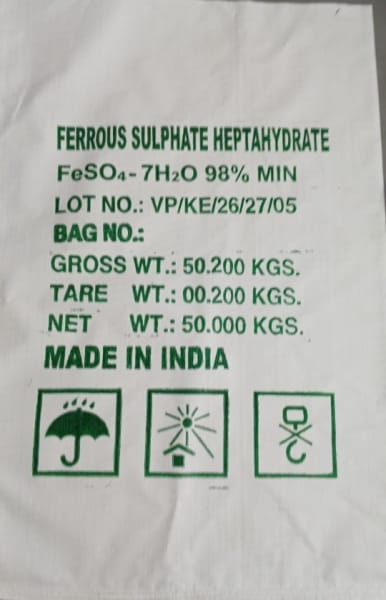
Conversely, Ferrous Sulphate Heptahydrate already contains its full complement of seven coordinated water molecules. When stored in standard heavy-duty woven polypropylene bags with heat-sealed polyethylene inner moisture liners (such as KIKI'S 50 kg bags, Lot VP/KE/26/27/05), it remains stable, free-flowing, and instantly soluble in ambient water dosing tanks.
Which Grade Should Industrial Plants Buy?
For wastewater treatment plants, municipal water boards, cement plants, and agricultural blenders across Kenya and East Africa, Ferrous Sulphate Heptahydrate 98% Min is the universally recommended commercial choice. It offers the lowest cost per active kilogram of Fe²⁺, dissolves rapidly without exotherm, and is readily available from KIKI'S Nairobi warehouse.
Article Frequently Asked Questions
Related Categories
Related Industries
Related Applications
Chemicals Mentioned in This Guide
Ferrous Sulfate Heptahydrate 98% Min
Ferrous Sulphate Heptahydrate 98% Min (FeSO₄·7H₂O, CAS 7782-63-0) is an industrial-grade iron(II) salt supplied in 50…
CAS 7782-63-0 · Industrial Grade · Crystal

Ferrous sulphate monohydrate Fe: 30%min 25kg bags Technical Grade for Industrial & Commercial Use (Ferrous sulphate monohydrate Fe: 30%min 25kg bags)
Ferrous sulphate monohydrate Fe: 30%min 25kg bags (Technical Grade) supplied by Kiki's Industrial Chemicals Ltd in 25kg…
Technical Grade · Powder

ABS/LAS 80% for Industrial Use (ABS/LAS)
ABS/LAS (80%) supplied by Kiki's Industrial Chemicals Ltd in 25kg bags across Kenya and East Africa.
Technical Grade · Powder

ATMP (50%)
ATMP (50%) supplied by Kiki's Industrial Chemicals Ltd in 200kg drum. Ideal for Water treatment chemicals.
50% · Standard Packaging
Related Technical Guides & Insights
View all →Ferrous Sulphate Uses: 50 Applications and Where They Make Commercial Sense
Comprehensive industrial reference categorizing 50 applications of Ferrous Sulphate Heptahydrate across water treatment, agriculture, cement manufacturing, chemical synthesis, and metallurgy in East Africa.
Guides & How-TosFerrous Sulphate Heptahydrate 98%: What Buyers in Kenya Need to Know Before Ordering
A comprehensive procurement guide for industrial chemical buyers in Kenya. Understand the difference between 98% compound purity and elemental iron, packaging standards, COA parameters, and regional sourcing options.