Acetone vs Isopropyl Alcohol vs Mineral Turpentine: Which Solvent Fits the Job?
A chemical and practical comparison of Kenya's three leading industrial solvents: solvency profiles, evaporation rates, substrate compatibility, and ideal industrial use cases.

Quick Answer — Acetone vs Isopropyl Alcohol vs Mineral Turpentine: Which Solvent Fits the Job?
Acetone, Isopropyl Alcohol (IPA 99.9%), and Mineral Turpentine represent three distinct solvent chemical families with fundamentally different capabilities. Acetone is an ultra-fast polar ketone best for uncured polyester resins, acrylics, and rapid metal degreasing. Isopropyl Alcohol is a medium-evaporating polar alcohol ideal for electronics cleaning, optics, pharmaceutical equipment, and sanitizing. Mineral Turpentine is a slow-evaporating non-polar petroleum hydrocarbon designed for oil-based alkyd paints, varnishes, asphalt, and heavy mechanical grease.
Acetone (propan-2-one, CAS 67-64-1, UN 1090) is an industrial ketone solvent supplied across Kenya by KIKI'S Industrial Chemicals Ltd in 20L HDPE jerrycans and 160kg steel drums.
Key Facts
- •Chemical Classification: Acetone is a ketone (CH3COCH3); IPA is an aliphatic alcohol (C3H8O); Mineral Turpentine is an aliphatic hydrocarbon mixture (C9-C12).
- •Evaporation Speed: Acetone (RER 5.6) dries almost immediately; IPA (RER 1.5) dries moderately; Mineral Turpentine (RER ~0.1) provides prolonged wet time.
- •Plastic Substrate Safety: IPA is safe on most plastics; Mineral Turpentine is plastic-safe but leaves oil; Acetone aggressively attacks ABS, PVC, and polystyrene.
- •Water Miscibility: Acetone and IPA are 100% water miscible; Mineral Turpentine is completely insoluble in water.
Primary Use Cases
In industrial manufacturing and maintenance facilities across Kenya, workshop shelves almost always hold three distinct solvents: acetone, isopropyl alcohol (IPA), and mineral turpentine (white spirit). Yet maintenance crews frequently treat them as interchangeable cleaning thinners, leading to ruined plastic parts, cloudy paint finishes, or fire incidents.
Each of these three chemicals operates via a completely different molecular mechanism. Matching the solvent to the contaminant, the substrate, and the process requirements ensures clean results and operational efficiency.
Chemical Identity and Physical Parameters
Comparing physical constants reveals why their performance diverges so significantly:
- Acetone (Propan-2-one): Boiling point 56.05°C; flash point -18°C; relative evaporation rate 5.6 (vs butyl acetate = 1.0); completely water miscible; density 0.791 g/mL.
- Isopropyl Alcohol (IPA 99.9%): Boiling point 82.4°C; flash point +12°C; relative evaporation rate 1.5; completely water miscible; density 0.786 g/mL.
- Mineral Turpentine (White Spirit): Boiling range 150°C to 200°C; flash point +38°C to +42°C; relative evaporation rate 0.1; insoluble in water; density 0.775 to 0.795 g/mL.
Solvency Chemistry: Polar vs Non-Polar
The chemical axiom 'like dissolves like' dictates which solvent cuts which contaminant:
Acetone (Ketone): Possesses high dipole moment and hydrogen-bond acceptor capacity combined with methyl groups. It dissolves synthetic polymers, cross-linking resin oligomers (polyester, epoxy), acrylics, cyanoacrylate instant adhesives, and synthetic lacquers that other solvents cannot touch.
Isopropyl Alcohol (Alcohol): Mildly polar with a hydroxyl (-OH) group. It dissolves light skin oils, flux residues from circuit board soldering, medical adhesives, and polar inks, while acting as a disinfectant against microbial contamination.
Mineral Turpentine (Hydrocarbon): Purely non-polar paraffinic, naphthenic, and aromatic hydrocarbon blend. It dissolves long-chain fatty acids, linseed oil, drying alkyd binders, road asphalt, heavy petroleum grease, and paraffin waxes.
Substrate Sensitivity and Compatibility
Selecting a solvent requires verifying that it will not destroy the underlying part being cleaned:
- Plastics and Synthetics: Acetone aggressively attacks polystyrene, ABS, PVC, and polycarbonates. IPA is safe on almost all industrial plastics (with slight caution on cast acrylics). Mineral Turpentine does not attack plastics but can leave a persistent petroleum residue.
- Surface Residue: Acetone and pure IPA evaporate completely with zero residue. Mineral Turpentine leaves a microscopic oily hydrocarbon film, making it unsuitable for cleaning surfaces before adhesive bonding, welding, or water-based painting.
- Flammability: Acetone is an extreme flash hazard (-18°C), IPA is an intermediate flammable liquid (+12°C), and Mineral Turpentine is a combustible liquid (+40°C), making turpentine the safest of the three in warm open workshops.
Application Summary and Best Use Cases
Use Acetone for: Fibreglass and composite resin tool cleaning, pre-weld aluminum/steel cleaning, lacquer thinning, spray gun flushing, and superglue removal.
Use Isopropyl Alcohol for: Electronics PCB defluxing, optical lens cleaning, cleanroom sanitization, pharmaceutical line cleaning, and medical surface prep.
Use Mineral Turpentine for: Thinning oil-based gloss enamels, cleaning architectural paint rollers, dissolving heavy engine grease, and cleaning mechanical bicycle chains.
One-Stop Industrial Solvent Supply: KIKI'S Industrial Chemicals supplies all three benchmark solvents: Acetone, Isopropyl Alcohol (IPA 99.9%), and Mineral Turpentine in 20L packs and 160kg-200L drums, ensuring complete solvent coverage for Kenyan industry.
Article Frequently Asked Questions
Related Categories
Chemicals Mentioned in This Guide
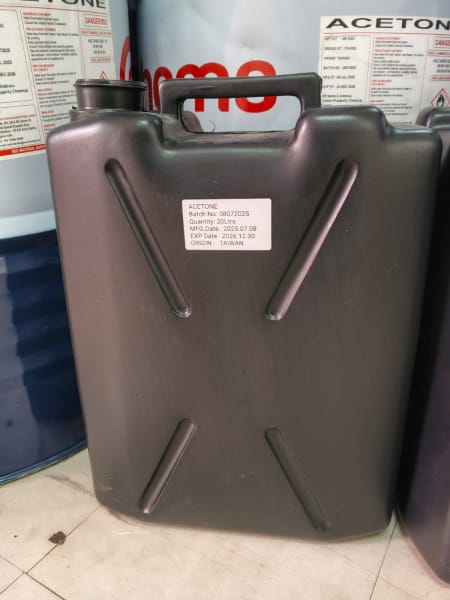
Acetone 20 Litres for Industrial and Commercial Use in Kenya
Industrial-grade Acetone in a convenient 20-litre heavy-duty HDPE jerrycan (99.5% min assay, CAS 67-64-1, UN 1090).…
CAS 67-64-1 · Industrial Solvent Grade (Virgin High-Purity) · Clear colourless volatile liquid
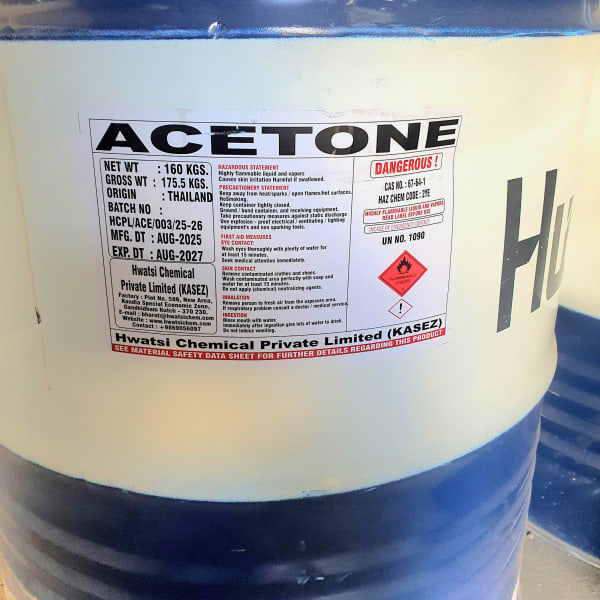
Acetone Industrial Solvent (Bulk 160kg Drums & Multi-Pack Supply)
High-purity virgin Acetone solvent (99.5% min assay, CAS 67-64-1, UN 1090) supplied in 160kg steel drums, 1,000L IBCs,…
CAS 67-64-1 · Industrial Solvent Grade (Virgin High-Purity) · Clear Colorless Volatile Liquid

ABS/LAS 80% for Industrial Use (ABS/LAS)
ABS/LAS (80%) supplied by Kiki's Industrial Chemicals Ltd in 25kg bags across Kenya and East Africa.
Technical Grade · Powder

ATMP (50%)
ATMP (50%) supplied by Kiki's Industrial Chemicals Ltd in 200kg drum. Ideal for Water treatment chemicals.
50% · Standard Packaging
Related Technical Guides & Insights
View all →What Is Acetone? Properties, Uses and Industrial Applications in Kenya
A comprehensive technical guide to acetone (propan-2-one, CAS 67-64-1): molecular structure, physical properties, solvency parameters, industrial applications, and procurement considerations for Kenyan manufacturers.
Buying GuideWhere to Buy Acetone in Nairobi, Kenya: A Practical Buyer's Guide
A practical procurement guide for sourcing industrial acetone in Nairobi, Kenya. Learn what specifications to verify, how to avoid contaminated recycled solvents, and how to evaluate suppliers.
Buying GuideAcetone 20 Litres: Who Needs This Pack Size and How to Order It in Kenya
Discover why the 20-litre acetone jerrycan is the preferred packaging for workshops, composite laminators, and maintenance teams in Kenya. Compare volume versus mass and learn how to order.
Industrial ApplicationsUsing Acetone for Fibreglass and Polyester Resin Tool Cleanup
Learn how to use industrial acetone safely and effectively for cleaning uncured polyester, vinyl ester, and gelcoat resins from fibreglass laminating tools, rollers, and spray equipment.