Acetone Safety: PPE, Vapour Exposure, Spills and First Aid Protocols
A complete chemical health and safety manual for industrial acetone: occupational exposure limits, personal protective equipment selection, vapour toxicology, spill control, and emergency first aid.

Quick Answer — Acetone Safety: PPE, Vapour Exposure, Spills and First Aid Protocols
While acetone exhibits low chronic and acute systemic toxicity compared to chlorinated or aromatic solvents, its extreme volatility creates immediate risks of inhalation narcosis, mucous membrane irritation, and chemical eye burns. Proper workplace safety requires butyl rubber gloves (standard nitrile breaks through in under 10 minutes), chemical splash goggles, organic vapour cartridge respirators in poorly ventilated spaces, and strict avoidance of skin washing. In the event of a spill, eliminate all ignition sources and absorb with inert mineral sorbents.
Acetone (propan-2-one, CAS 67-64-1, UN 1090) is an industrial ketone solvent supplied across Kenya by KIKI'S Industrial Chemicals Ltd in 20L HDPE jerrycans and 160kg steel drums.
Key Facts
- •Personal Protective Equipment: Mandate butyl rubber or Silver Shield laminate gloves; avoid standard disposable nitrile and latex gloves which fail rapidly.
- •Dermal Defatting Hazard: Acetone dissolves protective skin sebum within seconds, causing cracking, painful fissures, and increased absorption of co-contaminants.
- •Vapour Exposure Limits: Maintain workplace concentrations below the 8-hour TWA of 250 ppm (ACGIH) or 1000 ppm (OSHA) through mechanical cross-ventilation.
- •Emergency Spill Protocols: Neutralize spills using non-sparking shovels and inert diatomaceous earth; never sweep with dry plastic brooms or use combustible sawdust.
Primary Use Cases
In industrial chemical management, acetone is widely regarded as a relatively benign solvent when compared to benzene, toluene, or methylene chloride. Because the human liver naturally produces small quantities of acetone during lipid metabolism, biological tolerance is comparatively high.
However, this relative safety often fosters dangerous complacency in Kenyan factories and workshops. Operators frequently ignore chemical gloves, work without adequate air circulation, or rinse bare skin in solvent tubs. Understanding the toxicological realities, proper PPE selection, and emergency protocols protects workers from acute injuries and chronic occupational dermatitis.
Toxicology and Occupational Exposure Limits
Acetone (CAS 67-64-1) acts primarily as a central nervous system (CNS) depressant and an upper respiratory irritant when inhaled in significant concentrations:
- Threshold Limit Values: The American Conference of Governmental Industrial Hygienists (ACGIH) sets the 8-hour Time-Weighted Average (TWA) at 250 ppm, with a 15-minute Short-Term Exposure Limit (STEL) of 500 ppm. Kenya OSHA regulations mandate maintaining workplace air well within these thresholds.
- Acute Inhalation Symptoms: Mild exposure (above 300 ppm) causes nasal stinging, throat dryness, and eye watering. High concentrations (above 1000 ppm) induce headaches, lightheadedness, fatigue, dizziness, and mild mental confusion. Extreme vapour pooling can cause loss of consciousness.
- Sensory Olfactory Fatigue: Acetone has a recognizable pungent, sweet ketone odor detectable around 20 to 100 ppm. However, workers quickly develop olfactory fatigue, losing their ability to smell the vapour even as dangerous concentrations accumulate.
Selecting Proper Personal Protective Equipment (PPE)
Standard workshop gloves fail completely when challenged by pure ketone solvents. Specifying verified chemical-resistant PPE is non-negotiable:
- Glove Material: Butyl rubber provides the highest chemical resistance against acetone, offering breakthrough protection exceeding 4 to 8 hours. Multilayer laminate film gloves (such as Silver Shield / 4H) also provide superior chemical barrier properties.
- Why Nitrile Fails: Standard disposable 4-mil to 8-mil nitrile gloves swell, degrade, and allow chemical permeation in less than 8 to 10 minutes. Thin latex gloves degrade within seconds. If nitrile must be worn for splash protection, gloves must be replaced immediately upon contact.
- Eye Protection: Safety glasses with side shields are insufficient for decanting. Operators must wear EN 166 or ANSI Z87.1 certified chemical splash goggles to prevent splashing liquid into eyes.
- Respiratory Protection: Where ambient mechanical ventilation cannot maintain airborne vapour levels below 250 ppm, equip operators with half-face respirators fitted with NIOSH-approved organic vapour (OV) black cartridges.
Emergency First Aid Protocols
Every facility storing acetone must display clear first aid instructions and maintain functioning eyewash facilities within a 10-second unobstructed walking path:
- Eye Contact: Hold eyelids open and flush immediately with a steady, gentle stream of clean water or sterile isotonic eyewash solution for at least 15 minutes. Remove contact lenses if easy to do. Obtain immediate medical evaluation by an ophthalmologist.
- Inhalation: Immediately remove the affected person to fresh outdoor air. Keep the patient warm and at rest. If breathing is labored or has stopped, administer artificial respiration and seek emergency medical assistance.
- Skin Contact: Remove contaminated clothing immediately. Wash affected skin thoroughly with mild soap and lukewarm water. Apply a moisturising barrier cream to soothe defatted skin. Do not apply harsh chemical cleansers.
- Ingestion: Never induce vomiting, as aspirated liquid can enter the lungs and cause chemical pneumonitis. If the patient is conscious and alert, rinse mouth thoroughly with water and give one to two glasses of water to dilute. Seek immediate emergency medical attention.
Safe Chemical Spill Response
Spill control for acetone demands immediate action to manage explosive vapour formation:
Small Spills (Under 5 Litres): Immediately eliminate all nearby ignition sources, including hot surfaces, radiant heaters, and running equipment. Ensure full cross-ventilation. Apply an inert non-combustible absorbent such as diatomaceous earth, bentonite clay, or expanded vermiculite. Never use dry sawdust, wood shavings, or combustible cellulose rags. Sweep with non-sparking brass or bronze tools into a sealable, grounded metal disposal container.
Large Spills (Over 20 Litres): Evacuate non-essential personnel downwind. Cordon off the area with a minimum 25-metre safety perimeter. Cover the spill with an alcohol-resistant fire-fighting foam blanket (AR-AFFF) to suppress vapour release, and contact the local county fire department and licensed environmental remediation responders.
Workplace Rule: Never allow workers to clean paint, grease, or resin off their hands using acetone. Washing skin in acetone strips natural lipid barriers instantly, causes painful cracked skin, and drives dissolved toxic resins, styrenes, and metal catalysts directly through the dermal barrier into the bloodstream.
Article Frequently Asked Questions
Related Categories
Chemicals Mentioned in This Guide
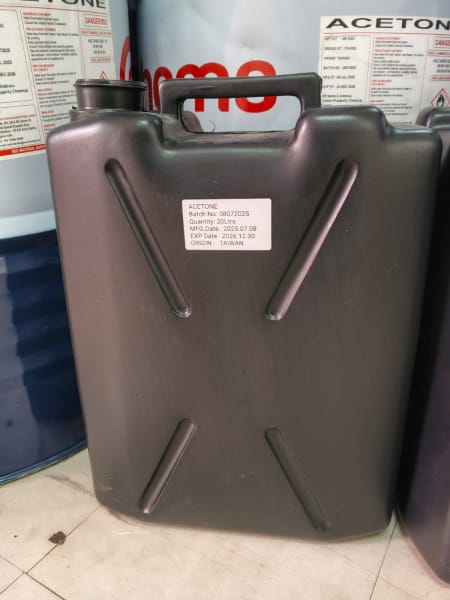
Acetone 20 Litres for Industrial and Commercial Use in Kenya
Industrial-grade Acetone in a convenient 20-litre heavy-duty HDPE jerrycan (99.5% min assay, CAS 67-64-1, UN 1090).…
CAS 67-64-1 · Industrial Solvent Grade (Virgin High-Purity) · Clear colourless volatile liquid
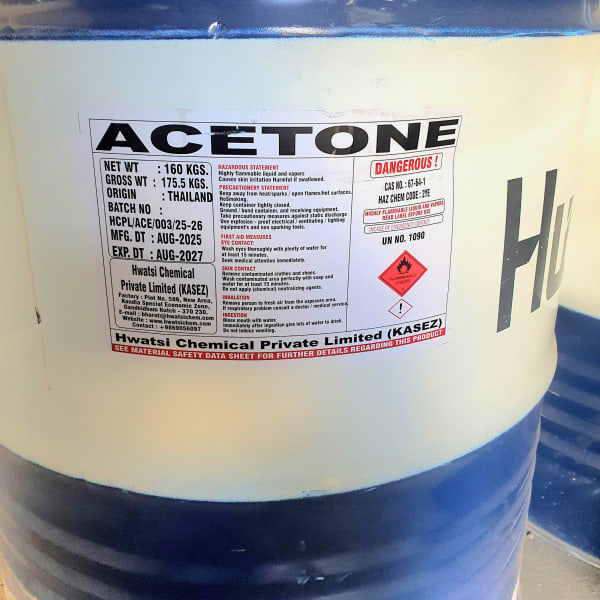
Acetone Industrial Solvent (Bulk 160kg Drums & Multi-Pack Supply)
High-purity virgin Acetone solvent (99.5% min assay, CAS 67-64-1, UN 1090) supplied in 160kg steel drums, 1,000L IBCs,…
CAS 67-64-1 · Industrial Solvent Grade (Virgin High-Purity) · Clear Colorless Volatile Liquid

ABS/LAS 80% for Industrial Use (ABS/LAS)
ABS/LAS (80%) supplied by Kiki's Industrial Chemicals Ltd in 25kg bags across Kenya and East Africa.
Technical Grade · Powder

ATMP (50%)
ATMP (50%) supplied by Kiki's Industrial Chemicals Ltd in 200kg drum. Ideal for Water treatment chemicals.
50% · Standard Packaging
Related Technical Guides & Insights
View all →What Is Acetone? Properties, Uses and Industrial Applications in Kenya
A comprehensive technical guide to acetone (propan-2-one, CAS 67-64-1): molecular structure, physical properties, solvency parameters, industrial applications, and procurement considerations for Kenyan manufacturers.
Buying GuideWhere to Buy Acetone in Nairobi, Kenya: A Practical Buyer's Guide
A practical procurement guide for sourcing industrial acetone in Nairobi, Kenya. Learn what specifications to verify, how to avoid contaminated recycled solvents, and how to evaluate suppliers.
Buying GuideAcetone 20 Litres: Who Needs This Pack Size and How to Order It in Kenya
Discover why the 20-litre acetone jerrycan is the preferred packaging for workshops, composite laminators, and maintenance teams in Kenya. Compare volume versus mass and learn how to order.
Industrial ApplicationsUsing Acetone for Fibreglass and Polyester Resin Tool Cleanup
Learn how to use industrial acetone safely and effectively for cleaning uncured polyester, vinyl ester, and gelcoat resins from fibreglass laminating tools, rollers, and spray equipment.