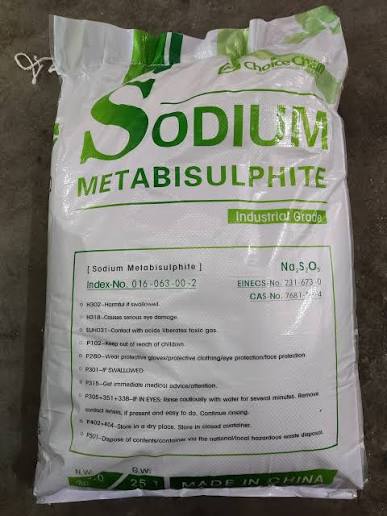
Sodium Metabisulphite is an industrial-grade powder formulated for mining chemicals & flotation applications. KIKI'S Industrial Chemicals supplies commercial volumes from Nairobi to manufacturers and processing facilities across Kenya and the East African region.
Sodium Metabisulphite is a commercial chemical supplied by KIKI'S Industrial Chemicals for industrial manufacturing in Kenya and East Africa.
Key Facts
•Product: Sodium Metabisulphite
•Grade: Industrial Grade
•Form: Powder
•Packaging: 25 / 1200kg bags
•Primary Sector: Mining Chemicals & Flotation
•Supply Reach: Kenya and East Africa (Dispatched from Nairobi Warehouse)
High-purity Sodium Metabisulphite (Na2S2O5 98%) used as a powerful reducing agent, antichlor, oxygen scavenger in water treatment, wine/food preservative (E223), and cyanide destruction agent in gold mining leaching.
Sodium Metabisulphite (Na2S2O5, CAS 7681-57-4), also known as sodium pyrosulfite or SMBS, is a white crystalline powder with a faint sulfur dioxide odour. It is an essential inorganic reducing agent widely utilized across East Africa in mining (cyanide neutralization), water treatment (dechlorination and RO membrane protection), food & beverage processing (E223 preservative and antioxidant), textile processing, and leather tanning.
Technical Description
In aqueous solution, Sodium Metabisulphite reacts with water to release bisulfite ions (HSO3-) and sulfur dioxide (SO2). This rapid reduction mechanism makes it ideal for neutralizing residual chlorine and chloramines in industrial water treatment prior to reverse osmosis (RO) filtration, preventing polyamide membrane oxidation. In gold leaching plants, SMBS is dissolved to supply SO2 for the INCO SO2/air cyanide destruction process, rapidly degrading free and WAD cyanides into less toxic cyanate ions.
Complete Chemical Specifications
Commercial Specification
96% min [Method: Standard COA]
Physical Form
Powder [Method: Visual]
Chemical Formula
Na2S2O5 [Method: XRD / NMR]
Molecular Weight
190.10 g/mol [Method: Calculated]
Physical & Chemical Properties
Appearance
White to light yellow crystalline powder
Odour
Pungent, sulfurous SO2 odour
pH
4.0 – 4.8 (5% aqueous solution at 20°C)
Density
1.48 g/cm³ (bulk density ~1.2–1.3 g/cm³)
Boiling Point
Decomposes above 150°C without boiling
Melting Point
Decomposes at 150°C (302°F)
Solubility
Soluble in water (650 g/L at 20°C); slightly soluble in ethanol
Commercial Availability
Stock Status
InStock
Lead Time
Same-day dispatch in Nairobi / 24-48 hrs countrywide Kenya
MOQ
25 kg bag
Delivery Regions
Nairobi Commercial Hub, Kenya Nationwide Delivery, East Africa Regional Supply
Contact Kiki's sales engineering team for COA batch verification, bulk volume pricing, or technical dosing guidance.
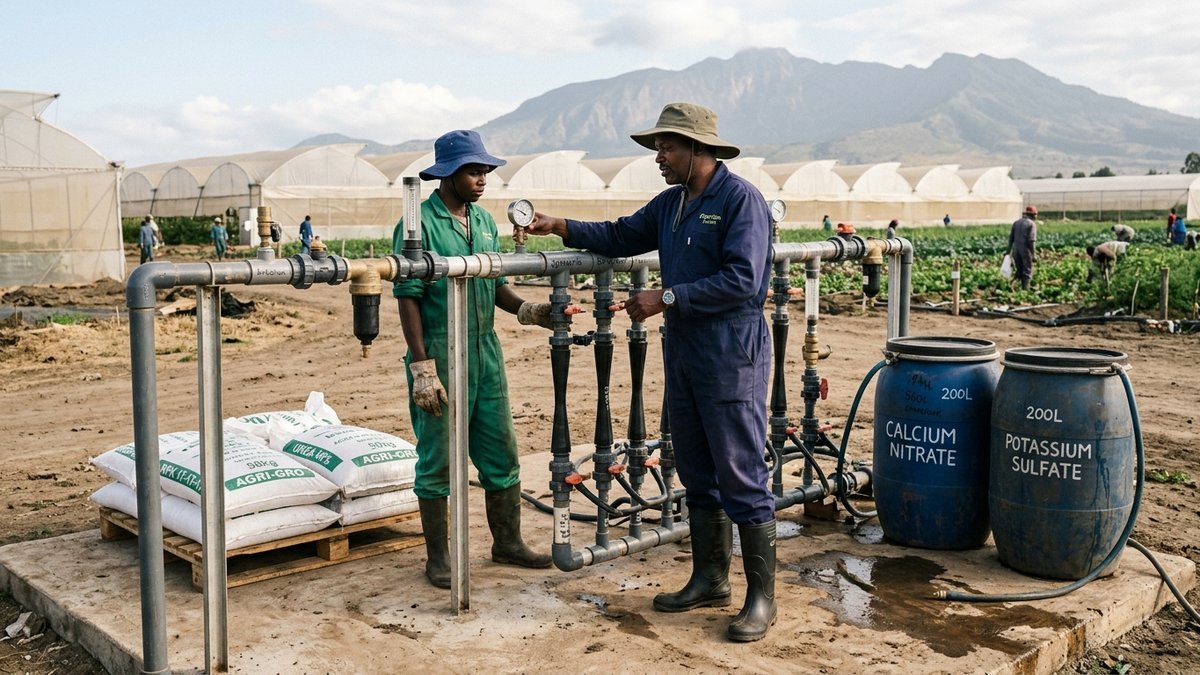
From high-altitude greenhouse floriculture in Naivasha to open-field grain farming across Uasin Gishu, agricultural productivity hinges on water chemistry, soil pH equilibrium, and clean post-harvest sanitization. KIKI'S supplies technical acids, calcium amendments, and irrigation line descalers that keep East African agribusiness growing consistently.
•RO membrane dechlorination antichlor in water treatment plants
•Cyanide destruction in gold mining CIL/CIP tailings effluent
•Food & beverage antioxidant and preservative (E223)
•Reducing agent in textile dyeing and bleaching processes
•Chrome reduction and bleaching in leather tanning operations
•Oxygen scavenger in oilfield water injection systems
Storage Guidelines
Store in a cool, dry, well-ventilated warehouse away from direct sunlight, moisture, strong acids, and oxidizing agents. Keep containers tightly sealed in moisture-proof polyethylene-lined bags. Avoid temperatures above 50°C to prevent thermal decomposition and toxic sulfur dioxide gas evolution.
Handling Advisory
Wear full personal protective equipment including chemical splash goggles, half-mask respirator with sulfur dioxide/dust cartridges, nitrile gloves, and protective coveralls. Avoid dust generation and inhalation. In case of spills, sweep dry material into clean, labelled containers without creating airborne dust; neutralize residue with dilute sodium carbonate solution.
Safety & Chemical Handling Advisory
Safety Advisory
Eye contact: Immediately flush with running water for 15+ minutes holding eyelids open; seek urgent medical aid. Skin contact: Wash thoroughly with soap and water; remove contaminated clothes. Inhalation: Move victim to fresh air; administer oxygen if breathing is difficult. Ingestion: Rinse mouth with water; do NOT induce vomiting; seek immediate medical advice.
Transport:UN 2693, Class 8 (Corrosive Solids, Acidic, Inorganic, N.O.S.) / Non-restricted in dry packaged quantities under 500kg per local ADR guidelines
Packing Group:PG III
Hazard Statements
• H302: Harmful if swallowed
• H318: Causes serious eye damage
• EUH031: Contact with acids liberates toxic gas (sulfur dioxide)
• P301+P312: IF SWALLOWED: Call a POISON CENTER or doctor if you feel unwell
• P305+P351+P338: IF IN EYES: Rinse cautiously with water for several minutes. Remove contact lenses if present and easy to do. Continue rinsing
PPE Requirements
Chemical safety goggles & face shieldHalf-face respirator with SO2/P3 dust filtersHeavy-duty nitrile or neoprene glovesProtective apron or chemical suitSafety boots
Technical, regulatory, and supply guidance for Sodium Metabisulphite (SMBS / Sodium Pyrosulfite) 97–98% Technical & Food Grade.
Sodium Metabisulphite (SMBS) is used as a primary source of sulfur dioxide (SO2) in the INCO SO2/air cyanide destruction process. It oxidizes toxic free and WAD cyanides in gold leach tailings into environmentally safe cyanate ions prior to discharge into tailings storage facilities.