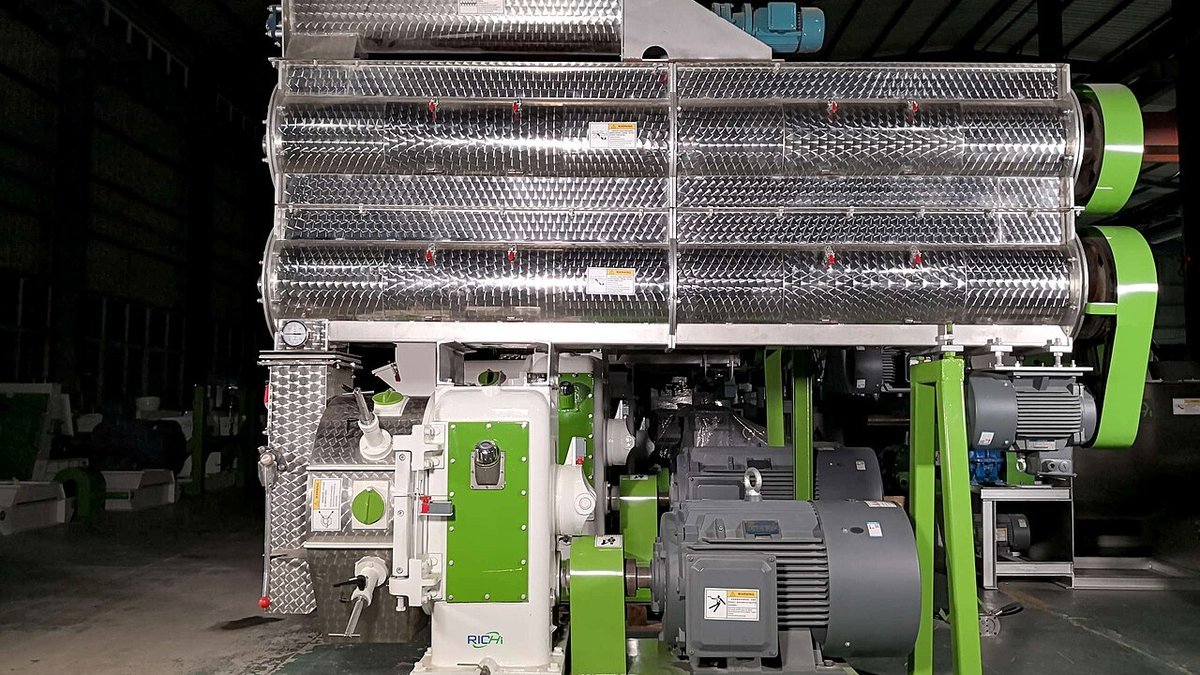
Heavy-duty animal feed conditioning and ring-die pellet mill extruder in a feed mill
Chemical application profile

Animal Feed Formulations

Compounding commercial poultry, dairy, and livestock feeds requires precise mineral bioavailability, stable acid preservation, and uniform micromixing. KIKI'S supplies feed-grade limestone flour, calcium carbonate, and acidifiers to feed millers across Kenya.

Target SectorsAnimal Feed & Livestock Chemicals Supplier in Kenya · Agricultural & Horticultural Chemicals Supplier in Kenya · Food & Beverage Chemical Ingredients & CIP Sanitizers Kenya
Packaging25kg Bags · 200L Drums · IBC Tankers · Bulk Delivery
DocumentationBatch COA, TDS & SDS Available on Request

Quick Answer — Animal Feed Formulations

For animal feed formulations applications, KIKI'S Industrial Chemicals supplies documented industrial-grade raw materials and specialty formulation chemicals. We provide consistent chemical inputs and technical documentation to commercial operators across Kenya and the East African market.

Animal feed formulation chemistry involves compounding bioavailable minerals, pH acidifiers, and antimicrobial preservatives into livestock rations to optimize growth, eggshell quality, and feed conversion efficiency.

Key Facts

  • •Application: Animal Feed Formulations
  • •Commercial Supply: Industrial chemical grades with full TDS and SDS documentation
  • •Regional Distribution: Dispatched from Nairobi to production plants across Kenya and East Africa
  • •Procurement Options: Commercial bags, drums, IBC totes, and scheduled delivery agreements

Primary Use Cases

Skeletal mineralization and eggshell hardening in commercial poultry feedsRumen buffering and calcium supplementation in dairy cattle concentratesGut acidification and pathogen control in swine and poultry dietsPrevention of mold growth and mycotoxin accumulation in stored feed bags

Technical Process

Biochemical Balance in Commercial Livestock Nutrition

Commercial feed compounding is a balance of metabolizable energy, amino acid profiles, and bioavailable macro-minerals. In poultry layer operations across Thika and Nakuru, calcium deficiency or poor particle size distribution leads to immediate egg breakage, soft-shell anomalies, and reduced laying cycles.

Calcium Carbonate (limestone flour) acts as the primary inorganic calcium source. Coarse grits dissolve slowly in the gizzard during the dark hours when eggshell calcification occurs, while pulverized flour delivers rapid systemic calcium for skeletal maintenance. Simultaneously, organic acidifiers like propionic and formic acid reduce feed pH below 4.5, suppressing Salmonella and E. coli colonization in the gut while protecting stored bagged meal from tropical mold spoilage.

Mixing Mechanics and Mineral Homogeneity

During commercial batching in horizontal ribbon or paddle mixers, mineral premixes must disperse homogenously within a 3 to 4 minute cycle without density segregation. Uniform micro-mesh particle sizing prevents heavy mineral fractions from settling at the bottom of feeder troughs, guaranteeing that every bird receives identical nutritional intake.

Heavy-duty animal feed conditioning and ring-die pellet mill extruder in a feed mill

Nutritional binders, trace minerals, and mold inhibitors for commercial livestock and poultry feed formulations in Kenya.

Standard Application Process

  1. 1

    Grain & Protein Base Milling

    Hammer milling of cereal grains and oilseed cakes to targeted uniform grist size for optimal pelleting.

  2. 2

    Macro-Mineral Premix Addition

    Dosing high-purity feed-grade calcium carbonate and dicalcium phosphate according to target species requirements.

  3. 3

    Acidifier & Antimicrobial Blending

    Injecting organic acid preservatives to lower free moisture activity and inhibit fungal growth in storage.

  4. 4

    Homogenous Ribbon Mixing

    High-efficiency dry blending ensuring coefficient of variation (CV) under 5% across the entire feed batch.

  5. 5

    Conditioning & Steam Pelleting

    Thermal conditioning at 75–85°C followed by die extrusion to gelatinize starches and pasteurize pathogens.

Recommended Chemicals for Animal Feed Formulations

Showing 1–24 of 348 catalogued products

Filter Full Catalogue (348) →
Mining Chemicals & Flotation
ABS/LAS (Technical Grade, Powder) in commercial industrial packaging

ABS/LAS 80% for Industrial Use (ABS/LAS)

ABS/LAS (80%) supplied by Kiki's Industrial Chemicals Ltd in 25kg bags across Kenya and East Africa.

Used for: Animal Feed Formulations
25kg bags

Technical Grade · Powder

View Product
Mining Chemicals & Flotation
ATMP (Technical Grade, Liquid) in commercial industrial packaging

ATMP 50% for Industrial Use (ATMP)

ATMP (50%) supplied by Kiki's Industrial Chemicals Ltd in 200kg drums across Kenya and East Africa.

Used for: Animal Feed Formulations
200kg drums

Technical Grade · Liquid

View Product

Key Performance Advantages

  • ✓
    Optimized Eggshell & Bone Integrity

    High elemental calcium bioavailability ensures thick, crack-resistant eggshells and strong skeletal development.

  • ✓
    Extended Feed Shelf-Life

    Active acid preservation prevents mycotoxin formation during humid warehousing and transport.

  • ✓
    Superior Feed Conversion (FCR)

    Balanced mineral ratios maximize animal metabolic absorption and daily weight gain.

  • ✓
    Zero Heavy Metal Toxicity

    Tested low lead (<10 ppm) and arsenic (<2 ppm) levels ensuring full compliance with KEBS animal feed standards.

Key Industrial Use Cases

Commercial poultry layer mashes and broiler starter/finisher crumblesDairy cattle high-yield lactation meal mineral supplementationSow gestation and piglet creep feed acid-mineral compoundingHatchery biosecurity and feed mill batching equipment sanitization

COMMERCIAL & TECHNICAL GUIDANCE

FAQs — Animal Feed Formulations

Technical and process guidance for animal feed formulations in Kenya and East Africa.

Laying hens require a 70:30 ratio of coarse limestone chips (2–4mm) to fine powder. Coarse particles remain in the gizzard overnight, slowly releasing calcium during shell formation when the bird is not feeding.