CIP Chemicals in Kenya: The Clean-In-Place Protocol That Stops Milk Spoilage Before It Starts
Master dairy and beverage CIP chemical protocols in Kenya. Formulate 1.5-2.0% caustic wash, 1.0% nitric acid descaling, and PAA sanitation to eliminate milkstone and spoilage bacteria.
Quick Answer: CIP Chemicals in Kenya: The Clean-In-Place Protocol That Stops Milk Spoilage Before It Starts
Clean-In-Place (CIP) chemicals in Kenya's dairy and food processing plants rely on a four-stage chemical sequence: (1) Warm water pre-rinse (45–50°C), (2) Hot alkaline wash with 1.5–2.0% Sodium Hydroxide (NaOH at 70–80°C) with wetting agents to saponify milk fats and dissolve proteins, (3) Acid wash with 0.8–1.2% Nitric or Phosphoric Acid (55–65°C) to dissolve mineral milkstone (calcium phosphate), and (4) Cold terminal sanitation using 150–200 ppm Peracetic Acid (PAA) or Chlorine Dioxide immediately before production.
Clean-In-Place (CIP) chemicals are formulated detergent, alkaline, acidic, and sanitizing solutions circulated through closed piping, pasteurizers, and processing vessels to remove organic soils, mineral stone, and microbial biofilms without dismantling plant equipment.
Key Facts
- •Pre-rinsing above 55°C causes milk proteins (beta-lactoglobulin) to denature and permanently bake onto stainless steel plates, doubling caustic consumption.
- •Caustic soda removes organic soil (fat and protein) but is completely ineffective against inorganic milkstone, which requires periodic nitric or phosphoric acid recirculation.
- •Under-dosing caustic below 1.2% NaOH or circulating below 65°C fails to hydrolyze thermophilic spore-formers like Bacillus cereus, causing premature pasteurized milk shelf-life failure across Nairobi supermarkets.
- •Hard borehole wash water in the Rift Valley (calcium/magnesium > 200 ppm) precipitates with un-sequestered caustic, creating stubborn carbonate scale inside heat exchanger plates.
At 5:45 AM inside an industrial creamery outside Naivasha, the production floor smells of damp steam, floor sanitizers, and cooling skim milk. The morning shift supervisor runs a finger across the internal sealing gasket of plate heat exchanger PHE-02.
His glove comes away with a faint, chalky yellowish sheen.
"Milkstone," he mutters to his lead QA tech. "The pasteurizer passed conductivity check at 0300 hours, but the plates are still holding mineral scale. If we run today's 40,000-litre UHT intake through this block, we'll lose three whole batches to souring by Thursday noon."
This is the hidden crisis of food and dairy processing across East Africa. Quality assurance leads fight a perpetual, high-stakes battle against two microscopic adversaries: thermophilic bacteria (Bacillus cereus, Lactobacillus) hiding inside microscopic surface pits, and mineral milkstone—a stubborn composite of calcium phosphate, denatured whey protein, and oxidized butterfat.
When pasteurized milk spoils in retail chillers in Nairobi, Westlands, or Mombasa two days before its stamped expiry date, the cause is rarely poor refrigeration at the retail depot. In 90% of cases, the failure occurred twelve days earlier inside a Clean-In-Place (CIP) loop where someone skimped on caustic concentration, used the wrong acid to strip milkstone, or ignored the impact of high-carbonate Rift Valley borehole water.
---
The Anatomy of Dairy Soil: Why Water and Soap Fail
Raw bovine milk is an intricate physicochemical emulsion containing approximately 87.3% water, 3.9% milkfat, 3.25% protein (casein and whey), 4.6% lactose, and 0.65% mineral salts (predominantly calcium and phosphate).
When milk is pumped across hot plate pasteurizers (heated to 72°C–85°C for HTST, or 138°C–142°C for UHT), these constituents separate and deposit onto contact surfaces in two distinct physicochemical layers:
- Organic Soil Layer (Proteins and Butterfat): Casein micelles aggregate into sticky gels, while hydrophobic triglycerides adhere tenaciously to smooth metal surfaces.
- Inorganic Soil Layer (Milkstone): Calcium phosphate (Ca3(PO4)2) precipitates out of solution at elevated temperatures. Because calcium phosphate exhibits inverse solubility—becoming less soluble as the temperature rises—it crystallizes directly onto the hottest surfaces: your pasteurizer heating plates and holding tubes.
A standard detergent cannot penetrate this matrix. The butterfat shields the proteins from chemical attack, while the mineral milkstone acts as an impermeable ceramic shield that harbors bacterial spores beneath it.
To achieve sanitary zero-defect conditions required by the Kenya Bureau of Standards (KEBS KS EAS 67:2007) and global FSSC 22000 audits, plants must execute a rigorous four-stage chemical CIP sequence.
---
The 4-Stage Industrial Dairy CIP Protocol
A high-performance automated or semi-automated CIP system does not rely on guessing. It balances four thermodynamic variables—the TACT Circle: Temperature, Action (flow turbulence), Concentration, and Time.
| CIP Stage | Target Soil / Objective | Primary Chemistry | Concentration | Temperature Range | Contact Time | Flow Velocity |
|---|---|---|---|---|---|---|
| 1. Warm Water Pre-Rinse | Loose milk solids, bulk free fat, residual sugar | Potable softened water (TDS < 150 ppm) | N/A | 45°C – 50°C | 10 – 15 min | > 1.5 m/s |
| 2. Hot Alkaline Wash | Butterfat saponification, protein hydrolysis | Sodium Hydroxide (NaOH) 99% Flakes / Liquid + Sequestering Agents | 1.5% – 2.0% active NaOH | 70°C – 80°C (return) | 20 – 30 min | 1.5 – 2.0 m/s | | 3. Intermediate Rinse | Caustic residue removal, pH neutralization | Potable water | N/A | Ambient (20°C – 25°C) | 5 – 10 min | > 1.5 m/s |
| 4. Acid Descaling Wash | Calcium phosphate milkstone, water scale | Nitric Acid (HNO3) 68% or Nitric-Phosphoric Blend | 0.8% – 1.2% active acid | 55°C – 65°C | 15 – 20 min | 1.5 m/s | | 5. Final Disinfection | Residual spore destruction, zero-pathogen state | Peracetic Acid (PAA) 15% / Hydrogen Peroxide | 150 – 200 ppm active PAA | Ambient (15°C – 25°C) | 10 – 15 min | > 1.5 m/s |
---
Chemical Mechanics: What Happens Inside the Pipes
1. Fat Saponification and Protein Dissolution (Alkaline Phase)
During the alkaline recirculation cycle, concentrated Sodium Hydroxide reacts with triglycerides in butterfat via base-catalyzed ester hydrolysis (saponification):
Triglyceride + 3 NaOH → Glycerol + 3 Sodium Carboxylates (Soluble Soap)
The fatty acids are converted into soluble soaps that act as surfactants, helping emulsify remaining free fats. Simultaneously, the strongly alkaline environment (pH > 12.5) cleaves peptide bonds in casein and denatured whey, breaking tough insoluble protein films into soluble amino acid peptides that wash out with the caustic drain.
The Golden Rule: The return caustic temperature must stay above 70°C. If the return temperature drops below 60°C, emulsified butterfat solidifies and redeposits inside the downstream holding tubes and valves as a waxy film.
2. Mineral Milkstone Dissolution (Acid Phase)
Caustic soda is blind to calcium phosphate. Circulating a 3% caustic wash for five hours will not remove milkstone.
To dissolve mineral stone, plants circulate food-grade Nitric Acid (HNO3) or a balanced Nitric-Phosphoric blend:
Ca3(PO4)2 + 6 HNO3 → 3 Ca(NO3)2 + 2 H3PO4
Calcium nitrate is exceptionally water-soluble and flushes away instantly. Furthermore, nitric acid provides a vital metallurgical benefit: it passivates AISI 304 and 316 stainless steel. It oxidizes free iron from the steel surface, reforming a microscopic protective chromium oxide (Cr2O3) passive layer that shields tanks and pipes from pitting and corrosion.
Cautionary Engineering Note: Never substitute cheap Hydrochloric Acid (HCl) for CIP descaling. Free chloride ions (Cl⁻) aggressively penetrate the chromium oxide layer of stainless steel, causing irreversible stress-corrosion micro-cracking and pinhole leaks in pasteurizer plates. At Kiki's Industrial Chemicals, our dairy processing clients across the Rift Valley rely on our technical team to audit raw borehole water hardness before calculating their caustic-to-acid dosing ratios, ensuring milkstone never establishes a foothold.
---
3 Costly Operational Mistakes Dairy Plants Make in East Africa
Mistake 1: Pre-rinsing with Boiling Water (> 60°C)
In an effort to "sterilize early," operators frequently open steam valves during the initial flush. This is a disaster. Whey protein denatures at 58°C. Boiling water bakes the protein directly onto the stainless steel, creating a rubbery varnish that resists even concentrated caustic. Pre-rinse with lukewarm water (45°C–50°C) until the discharge water runs completely clear.
Mistake 2: Ignoring Rift Valley Borehole Water Hardness
In Naivasha, Nakuru, and the central Rift, industrial boreholes frequently supply water with 250 to 500 ppm mineral hardness. When unsequestered caustic soda flakes are mixed into this raw water, the hydroxide ions instantly react with dissolved magnesium and calcium:
Ca²⁺ + 2 OH⁻ + CO2 → CaCO3 ↓ + H2O
Instead of cleaning the pipes, you precipitate thousands of grams of white chalk inside your lines. Always blend caustic soda with chelating agents like EDTA or sodium gluconate, or treat boiler/CIP water through industrial cation-exchange softeners.
Mistake 3: Relying on Household Chlorine Bleach for Terminal Sanitizing
Sodium Hypochlorite is unstable, off-gasses rapidly in warm factory environments, leaves chlorinous odor taints that ruin milk aroma, and severely pits stainless steel if dosing exceeds 200 ppm. Peracetic Acid (PAA) is the undisputed gold standard: it works at cold ambient temperatures, breaks down into harmless water and acetic acid, and requires zero post-rinse under KEBS food-contact guidelines.
---
Sourcing Industrial CIP Chemicals in Kenya: Specifications Checklist
When ordering bulk CIP raw materials from Kiki's Industrial Chemicals in Nairobi, ensure your procurement team specifies:
- Sodium Hydroxide (Caustic Soda): 99% pure membrane-grade flakes or micro-pearls in 25kg multi-wall polypropylene bags with moisture-barrier PE liners. Low chloride content (< 100 ppm) to protect stainless steel.
- Nitric Acid Food Grade: 68% concentrated technical/food grade in 35kg heavy-duty UN-rated polyethylene carboys or 250kg composite IBCs.
- Phosphoric Acid 85% Food Grade: High-purity thermal/food grade for delicate CIP loops and beverage syrup lines.
- Peracetic Acid (PAA 15%): Stabilized equilibrium solution (15% peracetic acid, 23% hydrogen peroxide, 10% acetic acid) with valid batch Certificate of Analysis (COA).
- Sodium Metasilicate & Surfactant Boosters: Low-foaming wetting agents engineered for high-pressure spray balls and CIP return pumps.
The 5:45 AM shift at the Naivasha plant ended on a completely different note two weeks after rebalancing their chemical cycle. With a 1.8% caustic wash at 74°C followed by a 1.0% nitric rinse, the pasteurizer plates gleamed silver under the inspection torch. No chalk. No yellow butterfat haze. Just clean, cold stainless steel ready for 40,000 litres of premium milk.
---
Need immediate delivery of Caustic Soda 99% Flakes, Nitric Acid 68%, or Food-Grade Sanitizers to Nairobi, Naivasha, Eldoret, or Thika? Request a technical bulk quote from Kiki's Industrial Chemicals.
Article Frequently Asked Questions
Chemicals Mentioned in This Guide
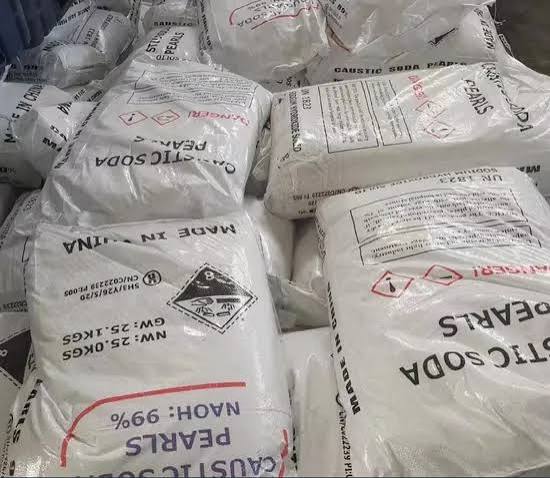
Caustic Soda Flakes /Pearls
Caustic Soda Flakes /Pearls (98.5/99% min) supplied by Kiki's Industrial Chemicals Ltd in 25kg bag. Ideal for Pulp &…
CAS 1310-73-2 · 98.5/99% min · Standard Packaging

Hydrochloric Acid ( Muriatic Acid 31% - 35% )
Hydrochloric Acid ( Muriatic Acid 31% - 35% ) (Tech Grade Pickling & pH Control) supplied by Kiki's Industrial…
Tech Grade Pickling & pH Control · Standard Packaging
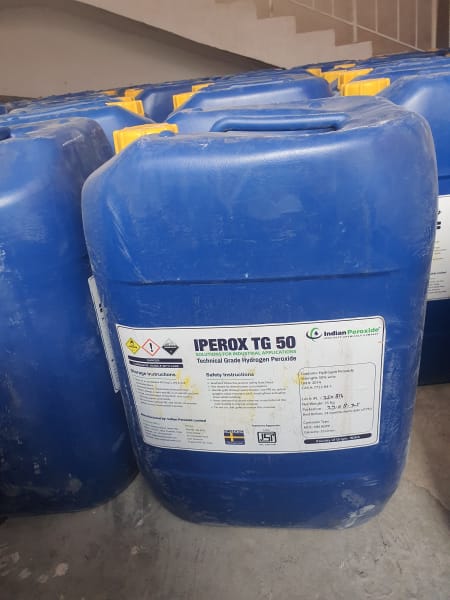
Hydrogen Peroxide 50%
Industrial-grade Hydrogen Peroxide 50% solution for textile bleaching, effluent water treatment, disinfection, and…
CAS 7722-84-1 · Technical Grade · Liquid

Sodium Hypochlorite ( Liquid Chlorine 10% - 15% )
Sodium Hypochlorite ( Liquid Chlorine 10% - 15% ) (Water Bleaching & Disinfection) supplied by Kiki's Industrial…
Water Bleaching & Disinfection · Standard Packaging
Related Technical Guides & Insights
View all →Potable Water Disinfection: Calcium Hypochlorite vs Sodium Hypochlorite vs TCCA 90
Compare Calcium Hypochlorite 65-70%, Sodium Hypochlorite 10-15%, and TCCA 90 tablets for potable water chlorination, food plants, and commercial treatment in Kenya.
Water TreatmentBoiler & Cooling Tower Chemical Treatment: Scaling, Corrosion & Biofouling Prevention
Complete technical guide to industrial boiler and cooling tower chemicals in Kenya. Prevent scale buildup, oxygen corrosion, and Legionella biofilm.
Industrial ApplicationsClean-in-Place (CIP) Chemical Selection for Food, Beverage & Dairy Processing Plants
Engineering guide to Clean-in-Place (CIP) chemical regimes in Kenya. Caustic wash, acid descaling, and peracetic acid sanitation for food and dairy plants.