
Cocodiethanolamide 86% (CDEA) (Commercial Surfactant Grade)
Cocodiethanolamide 86% (CDEA) supplied by KIKI'S Industrial Chemicals in 200kg plastic drum for industrial,…
CAS 68603-42-9 · Commercial Surfactant Grade · Liquid
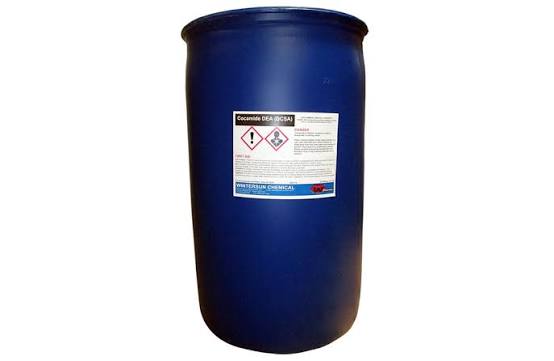
Formulating commercial shampoos, liquid hand soaps, and dishwashing liquids in Kenya requires non-ionic and amphoteric foam boosters like CDEA and CAPB to stabilize lather, lower irritation, and build luxurious viscosity. KIKI'S supplies premium cosmetic and detergent-grade surfactant boosters across East Africa.
For foam booster & viscosity builder applications, KIKI'S Industrial Chemicals supplies documented industrial-grade raw materials and specialty formulation chemicals. We provide consistent chemical inputs and technical documentation to commercial operators across Kenya and the East African market.
Foam boosters and viscosity builders comprise secondary non-ionic and amphoteric surfactants added to cleaning and personal care formulations to enhance lather volume, stabilize foam, and build solution thickness.
Key Facts
Primary Use Cases
In commercial cleaning and personal wash formulations, consumers equate rich, creamy foam and luxurious thickness with cleaning efficacy. However, primary anionic surfactants like SLES and LABSA produce transient, coarse bubbles that rapidly drain and collapse in the presence of oily soils or hard water minerals.
Secondary surfactants—principally non-ionic Coconut Diethanolamide (CDEA / Cocamide DEA 86%) and amphoteric Cocamidopropyl Betaine (CAPB 30%)—function as micellar stabilizers. By inserting their polar headgroups between the negatively charged sulfate heads of primary anionic surfactants, they dramatically reduce electrostatic repulsion. This compaction allows surfactant molecules to pack tightly at the air-water interface, generating dense, long-lasting micro-foam and enhancing foam volume.
Furthermore, CDEA and CAPB modify solution rheology by shifting the electrolyte viscosity curve to the left. This allows formulators to achieve high Brookfield viscosity (>3,000 cPs) using significantly less sodium chloride salt, preventing product cloudiness and cold-weather precipitation while lowering dermal irritation.

Cocamide DEA, betaines, and amine oxides for maximizing foam volume and building body in personal care and detergent formulations.
Primary Surfactant Dilution
Dissolving SLES 70% or neutralized LABSA into treated demineralized water under low-shear mixing to prevent air entrapment.
CDEA Foam Booster Incorporation
Adding Cocamide DEA 86% at 1.5–3.5% concentration, warming gently to 35–40°C if needed for rapid dissolution.
Amphoteric Betaine Addition
Blending Cocamidopropyl Betaine (CAPB) to build skin mildness and enhance micellar packing.
Controlled Electrolyte Titration
Slowly metering 20% sodium chloride brine solution while measuring viscosity until the target peak curve is reached.
pH Trim & De-Aeration
Adjusting final pH to 5.5–6.5 with citric acid solution and resting the batch to allow micro-bubbles to rise and clear.
Showing 1–2 of 2 catalogued products
Cocodiethanolamide 86% (CDEA) supplied by KIKI'S Industrial Chemicals in 200kg plastic drum for industrial,…
CAS 68603-42-9 · Commercial Surfactant Grade · Liquid
Premium Cocodiethanolamine (CDEA 86%) non-ionic foam booster, thickener, and emulsifier for shampoos, liquid soaps, and…
CAS 68603-42-9 · Cosmetic & Industrial Detergent Grade · Viscous Amber Yellow Liquid
Generates tight, creamy foam that resists collapse in hard water and heavy grease conditions.
Cuts sodium chloride electrolyte demand by 30–50%, avoiding cloud point issues in cold seasons.
Amphoteric co-surfactants mitigate the harsh, defatting tendencies of primary anionic detergents.
Improves fragrance solubilization and oil suspension in clear liquid hand soaps and shampoos.
COMMERCIAL & TECHNICAL GUIDANCE
Technical and process guidance for foam booster & viscosity builder in Kenya and East Africa.
Standard dosage ranges from 1.5% to 3.5% by weight. In liquid dishwashing formulations, 2.0% to 2.5% provides optimal foam stabilization and allows easy salt thickening without product haze.