
Quick Answer — Corn Starch (Native & Industrial Converter Grade)

Corn starch (CAS 9005-25-8) is a natural polysaccharide polymer supplied in fine white powder form by KIKI'S Industrial Chemicals in Nairobi. It is used as the primary adhesive binder in corrugated carton manufacturing, textile warp sizing, paper coating, and industrial binder formulations across Kenya and East Africa.

Corn starch is an industrial biopolymer extracted from maize, functioning as a high-tack adhesive, thickening agent, and structural binder when thermally gelatinized.

Key Facts

  • •Chemical Formula: (C6H10O5)n | CAS: 9005-25-8
  • •Form: Fine white free-flowing powder, passing 100 mesh ≥ 99.5%
  • •Starch Content: ≥ 98.0% Dry Basis | Moisture: ≤ 13.5%
  • •Gelatinization Range: 68°C to 75°C
  • •Packaging: 25 kg multi-wall paper bags with PE moisture barrier
  • •Stock Location: Nairobi warehouse, dispatched nationwide in Kenya and across East Africa

Primary Use Cases

Stein-Hall corrugated carton board adhesive formulationTextile yarn warp sizing and finishingPaper mill surface sizing and dry strength enhancementIndustrial binder for briquetting, foundry cores, and mineral pellets
25kg bag of Native Corn Starch supplied by KIKI'S Industrial Chemicals Nairobi Kenya
Food & Feed Additives

Corn Starch (Native & Industrial Converter Grade)

Product Code: KIC-STR-001

Also known as: Corn Starch, Maize Starch, Corn Flour, Native Starch

Synonyms: Amylum Maydis, Zea Mays Starch Powder, Industrial Maize Starch

Industrial-grade and food-compatible Native Corn Starch (CAS 9005-25-8) supplied in 25 kg multi-wall bags by KIKI'S Industrial Chemicals for corrugator adhesives, paper sizing, textile finishing, and food formulation across Kenya and East Africa.

CAS Number
9005-25-8
Formula
(C6H10O5)n
IUPAC Name
Starch
Molecular Weight
Variable (Macromolecular polymer)
EC Number
232-679-6
Chemical Family
Polysaccharide Biopolymer / Carbohydrate
Grade
Industrial Grade
Purity
Starch Content 98.0% min (Dry Basis)
Physical Form
Powder

Available Packaging

25kg Multi-Wall Paper Bag with PE Liner1000kg Bulk Big Bag (Jumbo Bag)

Product Overview

Corn starch is an essential polymeric carbohydrate extracted from the endosperm of the maize kernel (Zea mays). In industrial manufacturing across Kenya, corn starch plays two fundamentally different roles depending on whether it is left in its native state or chemically modified.

Native corn starch contains approximately 25% linear amylose and 75% branched amylopectin. In water at ambient room temperature, the starch granules remain insoluble. When heated past their gelatinization threshold (approximately 68°C to 75°C), the granules swell irreversibly, absorb water, rupture, and form a coherent, viscous adhesive paste.

KIKI'S Industrial Chemicals supplies premium corn starch from our Nairobi distribution centre. We serve commercial corrugated carton manufacturers in Industrial Area and Athi River, paper mills in Thika, textile sizing plants, and food formulators requiring consistent viscosity, controlled moisture (below 13.5%), and verified purity.

Technical Description

Gelatinization Mechanism and Stein-Hall Adhesion

In the corrugated paperboard industry, corn starch is formulated using the Stein-Hall two-stage adhesive system. The carrier portion of the starch is chemically cooked with caustic soda (sodium hydroxide) and heat to create a viscous liquid carrier. Uncooked raw starch slurry and borax (sodium tetraborate) are then blended in.

When the corrugated flute tips contact the linerboard on the corrugator hot plates (at temperatures above 150°C), the raw starch immediately gelatinizes in situ. The borax forms complex chemical cross-links with the starch hydroxyl groups, creating an instantaneous green bond that locks the flute and liner together before the board exits the double-facer.

Native vs Modified Starch: Making the Right Selection

It is critical for procurement teams to understand the functional boundary between native corn starch and modified starches:

  • Native Corn Starch: Untreated starch that sets into a firm, rigid gel upon cooling (retrogradation). Ideal for corrugated box board adhesion, mineral briquette binding, and food thickening where thermal cooking is part of the standard process.
  • Oxidized / Thin-Boiling Starches: Chemically treated with sodium hypochlorite to reduce paste viscosity while maintaining high solids content. Typically selected for surface sizing and coating on paper machines.
  • Cationic Starches: Chemically substituted with quaternary ammonium groups to carry a positive charge. Used at the wet end of paper mills to bond with negatively charged cellulose fibres, dramatically improving filler retention and dry strength.

Complete Chemical Specifications

Starch Content (Dry Basis)
≥ 98.0% [Method: Polarimetric / Enzymatic]
Moisture Content
≤ 13.5% w/w [Method: Oven Drying at 105°C]
Total Ash Content
≤ 0.20% w/w [Method: Muffle Furnace Ashing 550°C]
Protein Content (N × 6.25)
≤ 0.40% w/w [Method: Kjeldahl Method]
Fineness (Passing 100 Mesh)
≥ 99.5% [Method: Standard Sieve Analysis]
Sulphur Dioxide (SO2)
≤ 30 ppm [Method: Monier-Williams Titration]

Physical & Chemical Properties

Appearance
Fine, free-flowing white to pale cream powder
Odour
Neutral, characteristic cereal odour, free from rancidity or mustiness
pH
5.0 to 7.0 (20% aqueous slurry at 25°C)
Density
Bulk density 0.55 to 0.65 g/cm³
Boiling Point
Not applicable (decomposes thermally above 150°C)
Melting Point
Gelatinization range 68°C to 75°C
Solubility
Insoluble in cold water; swells and gelatinizes in water above 68°C to form a viscous paste

Commercial Availability

Stock Status
InStock
Lead Time
Immediate dispatch from Nairobi warehouse (24 to 48 hours within Kenya; 3 to 5 days across East Africa)
MOQ
1 unit (25 kg bag) for industrial trials; full pallet (1 metric ton) for commercial supply
Delivery Regions
Nairobi Industrial Area, Mombasa, Thika, Nakuru, Eldoret, Kisumu, Uganda (Kampala), Tanzania (Dar es Salaam / Arusha), Rwanda (Kigali)

Specify whether your process requires native untreated corn starch or a modified starch derivative. State your batch moisture constraints and end-use application (corrugation, textile sizing, food processing, or industrial binding) so our technical desk can verify compatibility.

Commercial Sectors

Target Industries

Modern flexographic printing press for flexible packaging and film conversion in an industrial facility
Industry Sector

Printing, Inks & Packaging Chemical Raw Materials Kenya

Commercial flexographic printing, rotogravure flexible packaging, and corrugated carton manufacturing in Kenya demand virgin solvents with tight distillation profiles and high-tack starch adhesives. Solvents with erratic evaporation ruin dot gain and cause ink ghosting, while weak adhesives delaminate carton flutes under humid storage. KIKI'S supplies premium printing solvents, diluents, and paper converting chemicals.
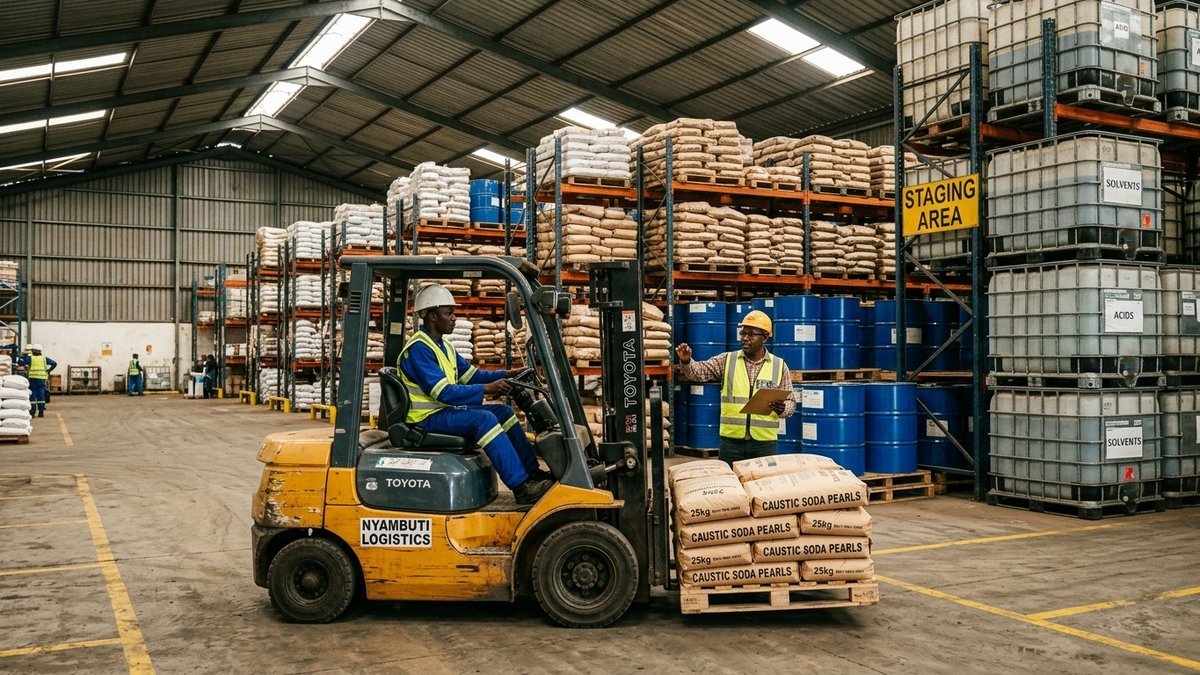

Forklift driver transporting palletized raw material bags through high-bay chemical distribution warehouse in Nairobi
Industry Sector

Industrial Chemicals for Manufacturing Plants in Kenya

In manufacturing clusters across Nairobi, Athi River, and Baba Dogo, continuous production depends on reliable supply of process chemicals, boiler water conditioners, and high-flashpoint cleaning solvents. A production stoppage caused by boiler scale or a missing raw material costs millions of shillings per hour. KIKI'S provides the reliable chemical supply that keeps Kenyan manufacturing plants operating at peak output.

manufacturing facilities served across East Africa:200+
Quality control technician sampling beverage batch from stainless steel sanitary tank in Thika, Kenya
Industry Sector

Food & Beverage Chemical Ingredients & CIP Sanitizers Kenya

In commercial dairies across Eldoret and Nyahururu, tea factories in Kericho, and beverage bottling plants along Thika Road, food chemistry is about safety and uncompromising regulatory compliance. A single contamination event or off-spec acid can spoil a 20,000-liter pasteurizer run. KIKI'S supplies certified food-grade acids, processing aids, and CIP sanitizers with verified batch traceability.

food & beverage producers trust our supply:50+
Continuous textile fabric dyeing machine with chemical IBC tote supply and dyed knit fabric tub
Industry Sector

Textile Chemicals, Dyes & Leather Processing Auxiliaries Kenya

Kenya's textile mills and export garment manufacturers in the Athi River Export Processing Zone (EPZ), alongside historic mills in Eldoret, demand process auxiliaries that deliver brilliant color yield, stable bath pH, and soft fabric finish. In textile wet processing, uneven dye migration, fiber degradation, or poor wash fastness causes entire bolt rejections. KIKI'S supplies technical bleaching agents, reducing salts, fixatives, and tanning chemicals.

Process Compatibility

Suitable Applications

Use Cases

  • •Corrugated carton adhesive preparation on automated Stein-Hall mixing systems
  • •Textile warp sizing for protective yarn coating during high-speed weaving
  • •Surface sizing in paper mills to improve surface smoothness, printability, and burst strength
  • •Industrial binder for charcoal briquettes, foundry cores, and mineral pelleting
  • •Food formulation for confectionery dusting, custard powder bases, and soup thickening (subject to food-grade verification)

Storage Guidelines

Warehouse Storage and Moisture Management in Kenya

Corn starch is hygroscopic and readily equilibrates with atmospheric humidity. Bags must be stored on clean wooden or plastic pallets raised at least 15 cm above concrete warehouse floors to prevent moisture migration and mould formation.

Maintain a cool, dry warehouse environment (below 25°C and relative humidity below 65%). Ensure stock rotation under First-In, First-Out (FIFO) principles. Standard commercial shelf life is 24 months from the date of manufacture when stored in intact, unopened multi-wall bags with sealed inner liners.

Handling Advisory

Combustible Dust and Safe Plant Handling

While corn starch is completely non-toxic, dry starch dust suspended in air creates a deflagration hazard (Class St 1 combustible dust). Ensure all pneumatic conveying lines, hopper dumps, and mixing silos are grounded and bonded to prevent electrostatic discharge.

Use local exhaust ventilation at dumping stations. Clean up dry powder spills using HEPA-filtered vacuum systems rather than compressed air blowers, which suspend explosive dust clouds in the plant atmosphere.

Safety & Chemical Handling Advisory

Safety Advisory

Inhalation: Move to fresh air. If coughing persists, seek medical advice. Eye Contact: Flush cautiously with clean water for 15 minutes. Skin Contact: Wash off with soap and water.

GHS:Non-hazardous substance under GHS criteria; combustible organic dust when suspended in air
Signal Word:WARNING
Transport:Non-regulated for road, rail, and sea transport (Non-hazardous freight)

Hazard Statements

  • • May form combustible dust concentrations in air during high-velocity pneumatic transfer or dry milling

Precautionary Statements

  • • P210: Keep away from heat, hot surfaces, sparks, open flames and other ignition sources. No smoking.
  • • P241: Use explosion-proof electrical, ventilating and lighting equipment in dust handling zones.
  • • P260: Avoid breathing dust.
  • • P280: Wear protective dust mask and safety goggles when handling bulk powder.

PPE Requirements

NIOSH-approved N95 dust respiratorSafety goggles with side shieldsIndustrial work glovesAntistatic workwear in bulk handling zones

COMMERCIAL & TECHNICAL GUIDANCE

Frequently Asked Questions — Corn Starch (Native & Industrial Converter Grade)

Technical, regulatory, and supply guidance for Corn Starch (Native & Industrial Converter Grade).

Native corn starch is the pure, unadulterated carbohydrate polymer isolated directly from the maize grain. It requires thermal cooking (above 68°C) to gelatinize and forms a firm gel upon cooling. Modified starches undergo chemical, thermal, or enzymatic treatments (such as oxidation, etherification, or cross-linking) to alter gelatinization temperature, paste stability, acid tolerance, or charge, making them suitable for specialized paper coating, cold-water solubility, or freeze-thaw food stabilization.

Related Chemical Products

Technical Guides & Resources for Corn Starch (Native & Industrial Converter Grade)

Knowledge Centre →