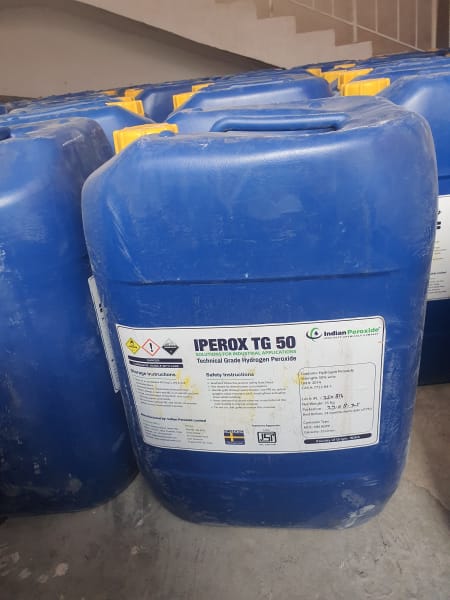
Hydrogen Peroxide 50% Solution (Textile Bleaching Peroxide)
Industrial-grade Hydrogen Peroxide 50% solution for textile bleaching, effluent water treatment, disinfection, and…
CAS 7722-84-1 · Technical Grade · Liquid

Integrated EPZ textile mills, yarn spinning units, and commercial dyehouses across Thika, Athi River, and Eldoret require high-whiteness, low-damage oxidative bleaching to prepare raw natural cotton, polyester-cotton blends, and linen for vibrant dyeing. KIKI'S supplies technical Hydrogen Peroxide 50%, Caustic Soda Flakes 99%, Soda Ash Light, and Sodium Hypochlorite engineered for uniform whiteness indices, seed-coat motes destruction, and high tensile strength retention.
For textile fiber bleaching applications, KIKI'S Industrial Chemicals supplies documented industrial-grade raw materials and specialty formulation chemicals. We provide consistent chemical inputs and technical documentation to commercial operators across Kenya and the East African market.
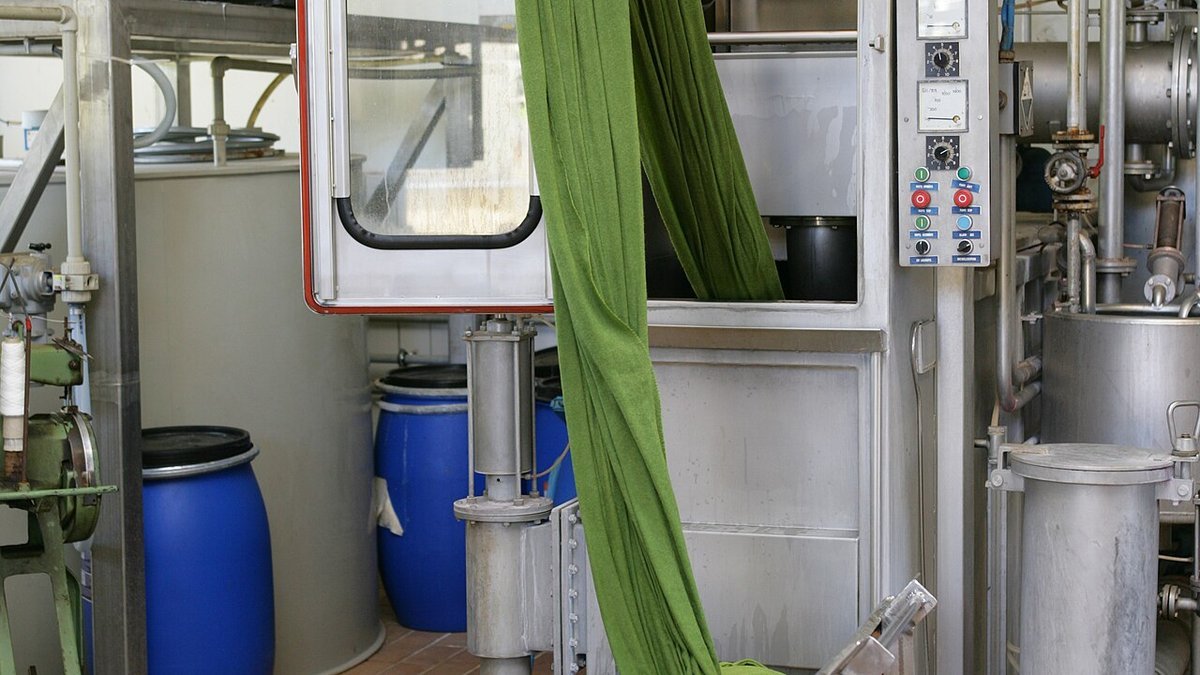
Textile fiber bleaching is the chemical process of removing natural color pigments, motes, and impurities from raw fibers and fabrics using stabilized oxidizing agents to achieve uniform whiteness and high dye receptivity.
Key Facts
Primary Use Cases
Raw cotton fibers contain natural brown-yellow pigments (flavonoids and carotenoids), residual cottonseed fragments (motes), and pectins that create a dull, non-uniform base that prevents level pale and bright shade dyeing. Hydrogen Peroxide (H2O2 50%) is the industry standard eco-friendly bleaching agent, functioning via oxidative destruction of light-absorbing conjugated double bonds in natural chromophores.
In water, hydrogen peroxide is relatively unreactive. Dosing Caustic Soda (NaOH) shifts the equilibrium to generate the active bleaching nucleophile—the perhydroxyl anion (OOH–). The reaction bath is operated at pH 10.8–11.2 and heated to 95–98°C. At this optimum thermodynamic state, perhydroxyl anions selectively attack and solubilize color bodies and disperse seed fragments without hydrolyzing the cellulose polymer backbone.
Uncontrolled decomposition of hydrogen peroxide caused by trace transition metal ions (iron, copper, manganese in borehole water) generates aggressive hydroxyl free radicals (•OH). These non-selective radicals cause localized catalytic depolymerization of cellulose, resulting in microscopic holes ('pinholing') and severe fabric strength loss. Formulators incorporate sodium silicate and organic phosphonate stabilizers along with mild Soda Ash buffering to sequester metal ions, ensuring smooth, steady bleaching and a Berger whiteness index >78.

Hydrogen peroxide 50%, caustic soda, sodium silicate stabilizer, and optical brightening agents for textile bleaching ranges.
Scouring & Wetting
Treating raw gray cotton with caustic soda and wetting agents at 80°C to saponify natural oils and swell fibers.
Bleach Liquor Dosing
Charging Hydrogen Peroxide 50% (3–5 g/L), organic peroxide stabilizer, and caustic soda to establish pH 11.0.
High-Temperature Bleaching
Ramping dyehouse liquor to 95–98°C in jet dyeing machines or continuous steamers with 45–60 minutes dwell time.
Hot Rinsing & Catalase Demasking
Progressive hot overflow rinsing and enzymatic catalase dosing to completely destroy residual bath peroxide.
Whiteness & Tensile Strength QC
Spectrophotometer measurement of Berger whiteness and verifying fiber tensile strength retention exceeds 90%.
Showing 1–1 of 1 catalogued products
Industrial-grade Hydrogen Peroxide 50% solution for textile bleaching, effluent water treatment, disinfection, and…
CAS 7722-84-1 · Technical Grade · Liquid
Achieves clean, bright white bases (Berger whiteness >78) essential for brilliant pastel and neon reactive dyeing.
Stabilized bleaching chemistry sequesters trace heavy metals, completely eliminating fabric fiber holes and tears.
Oxidizes and dissolves stubborn black cottonseed particles without requiring aggressive mechanical scraping.
Hydrogen peroxide breaks down naturally into water and oxygen, reducing chemical COD loads in mill effluent plants.
COMMERCIAL & TECHNICAL GUIDANCE
Technical and process guidance for textile fiber bleaching in Kenya and East Africa.
Hydrogen peroxide is mildly acidic and inactive on its own. Adding Caustic Soda raises the dyebath pH to 10.8–11.2, which ionizes the peroxide into active perhydroxyl anions (OOH–). These anions are the true chemical bleaching agents that oxidize and destroy natural color bodies.